EU Regulation 2018/858 Explained
Regulation (EU) 2018/858 establishes the legal framework for vehicle type approval and market surveillance within the European Union. It defines how vehicles must be assessed for compliance before they are placed on the European market and introduces mechanisms to ensure that approved vehicles continue to meet regulatory requirements throughout their lifecycle.
Introduction to Regulation (EU) 2018/858
The European automotive market requires a harmonized system that ensures vehicles meet common safety, environmental, and technical standards. Regulation (EU) 2018/858 was introduced to modernize and strengthen the vehicle type approval system across EU member states.
The regulation replaced the earlier Directive 2007/46/EC and introduced updated procedures for vehicle approval, conformity verification, and market surveillance.
Purpose of the Regulation
The regulation was designed to improve the reliability and transparency of the European vehicle approval system. It ensures that vehicles placed on the market meet consistent standards while strengthening oversight of manufacturers and approval authorities.
By establishing harmonized rules across the European Union, the regulation helps maintain fair competition while protecting safety and environmental objectives.
How the Type Approval Framework Works
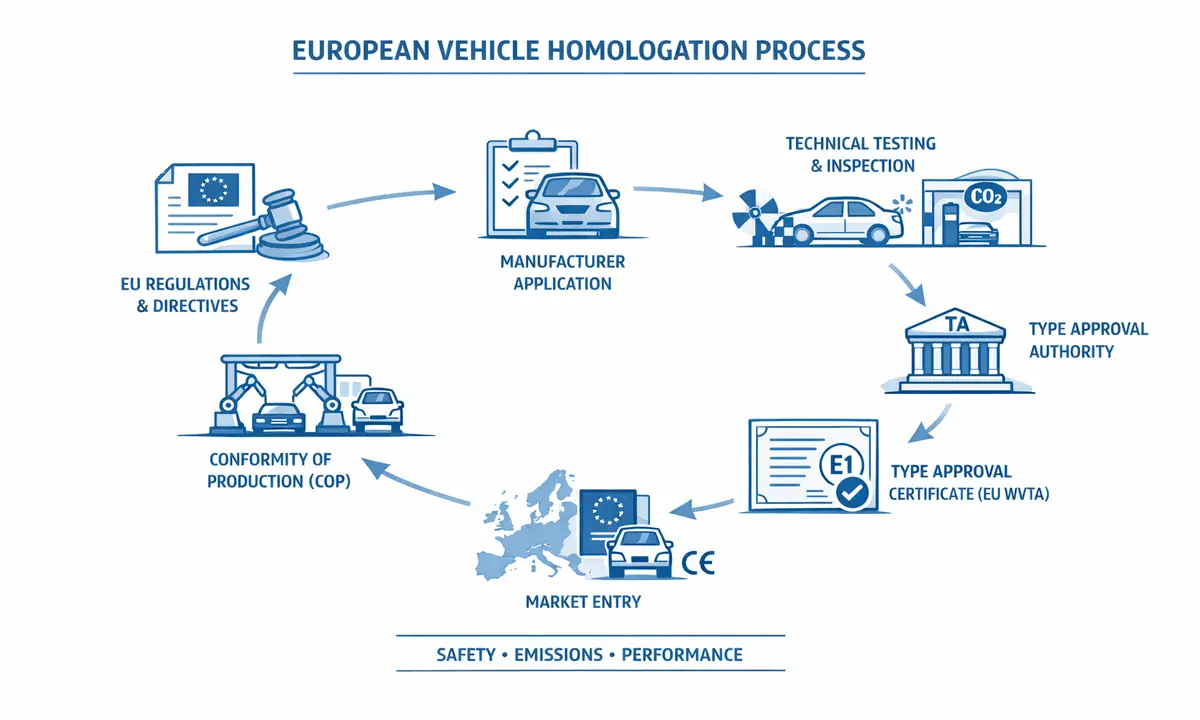
Under the framework defined by Regulation (EU) 2018/858, vehicles must undergo a type approval process before they can be marketed in the European Union. During this process, authorities evaluate whether the vehicle design complies with applicable technical regulations.
Once a vehicle type receives approval, the manufacturer may produce vehicles that conform to that approved specification.
Key Elements of the Regulation
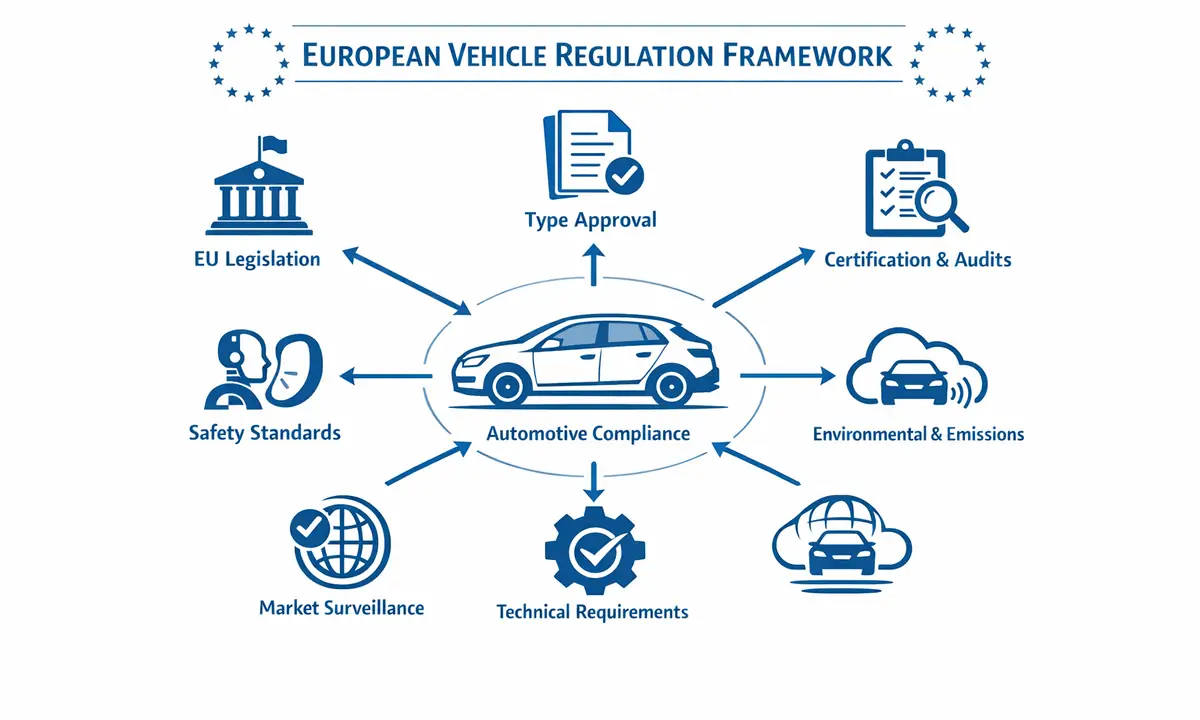
The regulation defines several core components of the vehicle approval system.
- Vehicle type approval procedures
- Responsibilities of manufacturers
- Approval authority roles
- Market surveillance mechanisms
- Conformity of production requirements
These elements collectively ensure that vehicles placed on the market comply with the regulatory framework.
Responsibilities of Manufacturers
Manufacturers must demonstrate that their vehicles comply with all relevant regulatory requirements. This includes providing technical documentation, conducting required tests, and ensuring that vehicles produced remain consistent with the approved vehicle type.
Manufacturers are also responsible for maintaining records and cooperating with authorities during compliance verification procedures.
Role of Market Surveillance
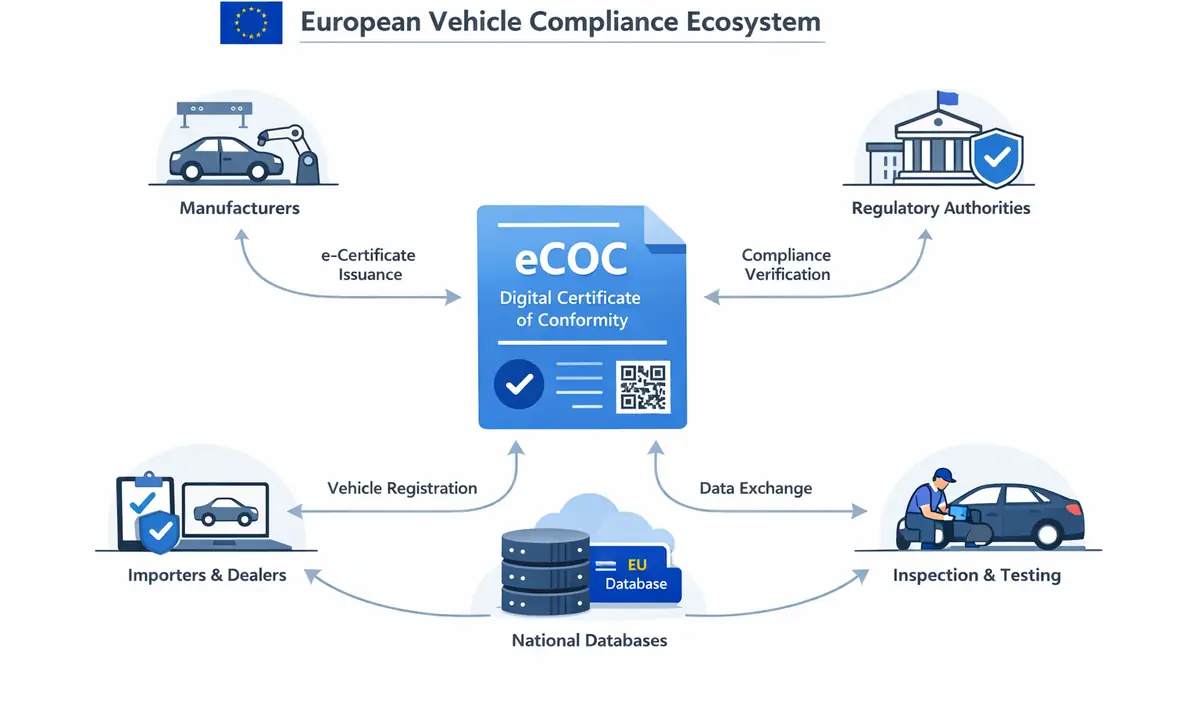
Regulation (EU) 2018/858 introduced stronger market surveillance mechanisms. These mechanisms allow authorities to verify that vehicles placed on the market continue to comply with regulatory requirements even after type approval has been granted.
This helps ensure that regulatory compliance is maintained throughout the lifecycle of vehicles.
Benefits of the Updated Regulatory Framework
The regulation strengthens the reliability of the European vehicle approval system while improving transparency and oversight.
- Improved consistency across member states
- Stronger regulatory enforcement
- Enhanced market surveillance capabilities
- Better cooperation between authorities
These improvements contribute to maintaining high safety and environmental standards within the European automotive market.
Frequently Asked Questions
What replaced Directive 2007/46/EC?
Regulation (EU) 2018/858 replaced Directive 2007/46/EC as the legal framework for vehicle type approval in the European Union.
Why was Regulation 2018/858 introduced?
The regulation was introduced to strengthen the vehicle approval system and improve regulatory oversight across the EU.
Who must comply with the regulation?
Vehicle manufacturers placing vehicles on the European market must comply with the requirements defined in the regulation.
Does the regulation apply to all vehicles?
The regulation applies to vehicles within the scope defined by the European vehicle type approval framework.
External references
No external references have been added yet.