Guides

Technical Guides

Practical guides explaining compliance processes and technical best practices for manufacturers.

Start Here

Start with the core technical guide

Begin with the main eCoC XML guide, then connect it to authority pages and the foundational eCoC and IVI pillars.

Category articles

18 articles

Electronic Certificate of Conformity XML file concept illustration
Guides 6 min read 23 Mar 2026

What Is an Electronic Certificate of Conformity XML File

An electronic Certificate of Conformity XML file is the machine-readable representation of eCoC data used in digital vehicle compliance systems. It turns approved conformity information into a structure that can be validated, exchanged, and processed more consistently across workflows.

Read More →
IVI versus eCoC comparison illustration
Guides 6 min read 23 Mar 2026

IVI vs eCoC: What Is the Difference

IVI and eCoC are closely related concepts in European vehicle compliance, but they do not describe the same thing. IVI focuses on structured vehicle information, while eCoC focuses on vehicle conformity information used in approval and registration workflows.

Read More →
How eCoC, IVI, and EUCARIS work together illustration
Guides 6 min read 23 Mar 2026

How eCoC, IVI, and EUCARIS Work Together

eCoC, IVI, and EUCARIS are different parts of the same digital vehicle compliance ecosystem. eCoC represents conformity information, IVI structures vehicle data, and EUCARIS supports cross-border authority exchange.

Read More →
eCoC XML structure illustration
Guides 8 min read 7 Mar 2026

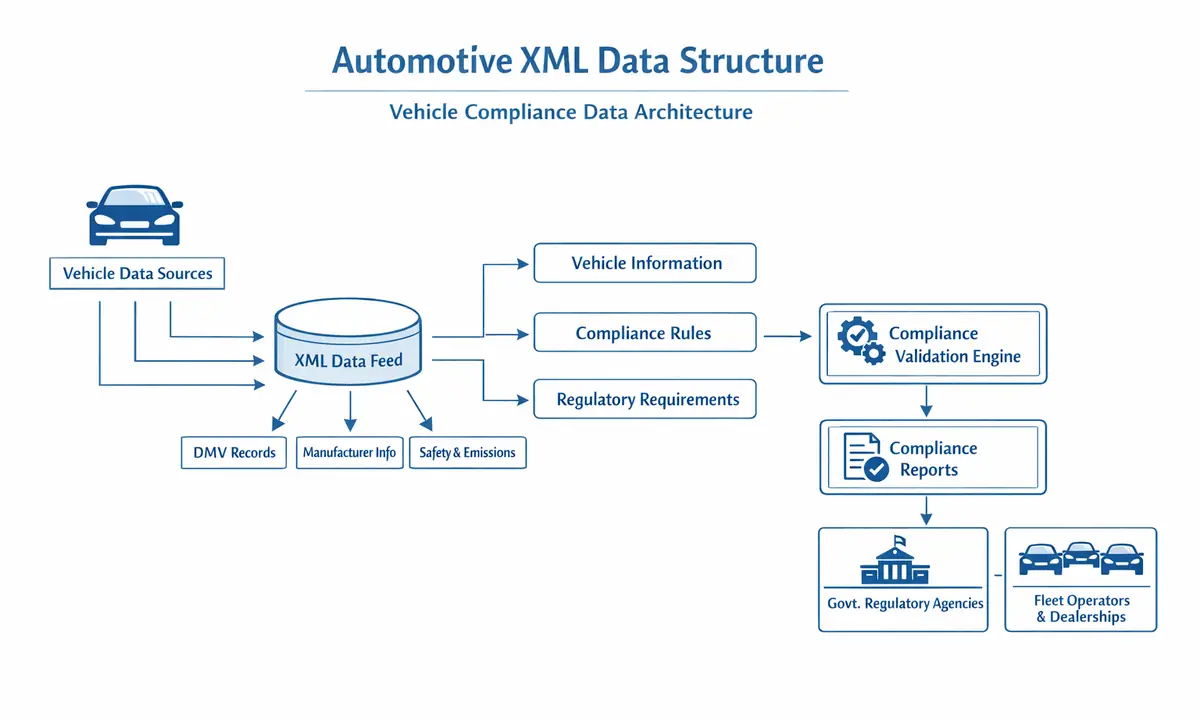
How eCoC XML Works

eCoC XML is the structured XML representation of electronic Certificate of Conformity data used in digital compliance environments. It matters because XML makes vehicle conformity information easier to validate, exchange, and process across manufacturer and authority systems.

Read More →
How eCoC Validation Works hero image
Guides 5 min read 7 Mar 2026

How eCoC Validation Works

Before electronic Certificates of Conformity can be accepted, they must pass multiple validation checks. This article explains the concept of eCoC validation.

Read More →
eCoC validation challenges illustration
Guides 6 min read 7 Mar 2026

Common eCoC Validation Challenges

Electronic Certificates of Conformity rely on structured vehicle data that must accurately represent the approved characteristics of a vehicle. Ensuring that this data is consistent and compliant with regulatory frameworks can present several challenges for manufacturers and regulatory stakeholders.

Read More →
eCoC data management complexity illustration
Guides 6 min read 7 Mar 2026

Why eCoC Data Management is Difficult

Electronic Certificates of Conformity rely on structured technical vehicle information that must remain consistent with the vehicle type approval documentation. While the concept of digital conformity data may appear straightforward, managing this information in practice can become complex for manufacturers and regulatory stakeholders.

Read More →
IVI data consistency challenges illustration
Guides 6 min read 7 Mar 2026

Common IVI Data Consistency Challenges

Initial Vehicle Information (IVI) is designed to represent vehicle conformity data in a structured digital format. While this structured approach improves the reliability of regulatory information exchange, maintaining consistency within complex vehicle datasets can present practical challenges.

Read More →
Common eCoC XML data issues illustration
Guides 6 min read 7 Mar 2026

Common eCoC XML Data Issues

Electronic Certificates of Conformity rely on structured data formats to represent vehicle compliance information. When this information is organized in XML structures, it becomes possible for regulatory systems to process the data automatically. However, managing structured vehicle data can introduce a variety of challenges.

Read More →
Structured vehicle data and compliance systems illustration
Guides 6 min read 7 Mar 2026

Why Structured Vehicle Data Requires Specialized Compliance Systems

Modern automotive regulatory frameworks increasingly rely on structured vehicle data to represent conformity information. While this approach allows regulatory systems to exchange information efficiently, managing structured vehicle data can present practical challenges for organizations involved in vehicle compliance.

Read More →
Vehicle conformity data consistency illustration
Guides 5 min read 7 Mar 2026

Why Vehicle Conformity Data Must Be Consistent

Vehicle conformity data plays a central role in modern automotive regulatory systems. This information confirms that a vehicle corresponds to an approved vehicle type and satisfies the regulatory framework under which it was approved. Maintaining consistency within this data is essential for ensuring reliable regulatory processes.

Read More →
Standardized vehicle data exchange illustration
Guides 5 min read 7 Mar 2026

Why Vehicle Data Exchange Requires Standardized Formats

Modern automotive regulatory systems depend on the ability to exchange vehicle information reliably between multiple stakeholders. These stakeholders may include manufacturers, approval authorities, regulatory bodies, and vehicle registration organizations. To support this exchange, vehicle information must be represented using standardized data formats.

Read More →
Vehicle conformity documentation and regulatory data alignment illustration
Guides 5 min read 7 Mar 2026

Why Vehicle Conformity Documentation Must Align With Regulatory Data

Vehicle conformity documentation plays a central role in confirming that a vehicle corresponds to an approved vehicle type. At the same time, modern regulatory systems increasingly rely on structured digital data representing the same information. Ensuring that documentation and structured regulatory data remain aligned is essential for reliable compliance processes.

Read More →
Vehicle conformity verification with reliable data illustration
Guides 5 min read 7 Mar 2026

Why Vehicle Conformity Verification Requires Reliable Data

Vehicle conformity verification is a fundamental part of automotive regulatory systems. Authorities must confirm that vehicles correspond to approved specifications before they are registered or placed on the road. Reliable regulatory data plays a critical role in enabling this verification process.

Read More →
Regulatory vehicle data interpretation illustration
Guides 5 min read 7 Mar 2026

Why Regulatory Vehicle Data Must Be Interpreted Carefully

Vehicle regulatory data is used by authorities, manufacturers, and compliance systems to confirm that vehicles meet the technical requirements defined by automotive regulations. While structured data formats help standardize vehicle information, interpreting this data correctly remains an important challenge.

Read More →
Vehicle compliance workflow and structured processes illustration
Guides 5 min read 7 Mar 2026

Why Vehicle Compliance Workflows Need Structured Processes

Vehicle compliance processes involve managing technical vehicle information, regulatory documentation, and structured data used in approval and registration procedures. Because these processes require coordination between multiple stakeholders, structured workflows play an important role in ensuring reliable regulatory outcomes.

Read More →
Automotive compliance system infrastructure illustration
Guides 5 min read 7 Mar 2026

Why Automotive Compliance Systems Require Dedicated Infrastructure

Modern automotive regulatory systems depend on structured vehicle data, regulatory documentation, and coordinated workflows that ensure vehicles comply with approval requirements. Managing this information effectively often requires dedicated infrastructure designed to support complex compliance processes.

Read More →
Structured vehicle compliance data management illustration
Guides 5 min read 7 Mar 2026

Why Structured Vehicle Compliance Data Must Be Maintained Carefully

Modern automotive regulatory frameworks increasingly rely on structured datasets that describe the technical and regulatory characteristics of vehicles. These datasets represent approval information, technical specifications, and conformity references that authorities use when verifying regulatory compliance.

Read More →