
Electronic Certificate of Conformity (eCoC)
Educational articles explaining the electronic Certificate of Conformity, its purpose, structure, digital format, and role in European vehicle compliance systems.
The ecoceu blog provides educational resources about vehicle conformity data, EU type approval, and digital compliance systems used across the European automotive regulatory ecosystem.
These pillar guides explain the foundations of eCoC, IVI, and digital vehicle conformity data exchange.
Browse the blog by major subject area to understand the European digital vehicle compliance ecosystem faster.
Educational articles explaining the electronic Certificate of Conformity, its purpose, structure, digital format, and role in European vehicle compliance systems.
Guides explaining IVI messages, IVI 2.0 data structure, validation rules, and vehicle data exchange mechanisms.
Articles explaining the EUCARIS vehicle information exchange network and how vehicle data flows between EU member states.
Educational articles about European vehicle type approval systems and manufacturer responsibilities.
Articles explaining multistage vehicle manufacturing, body builders, and stage manufacturer responsibilities.
Articles explaining European automotive regulations related to conformity documentation and compliance.
Practical guides explaining compliance processes and technical best practices for manufacturers.
These are the most recently published articles in the ecoceu knowledge base and serve as a fresh crawl path into current topic clusters.
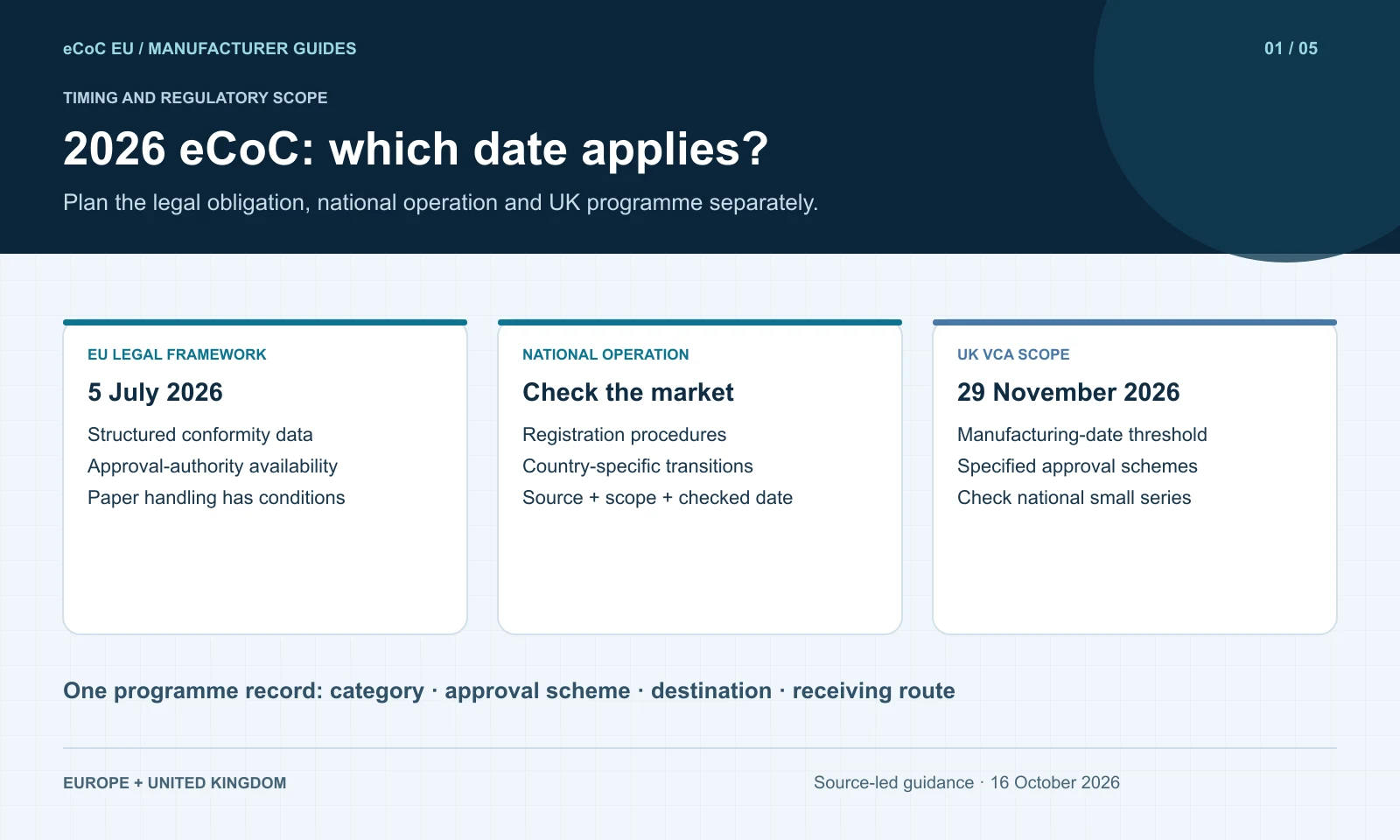
Plan your eCoC rollout by approval scheme, production date and destination market. EU legal obligations, national registration transitions and UK VCA requirements need separate checks.
Read More →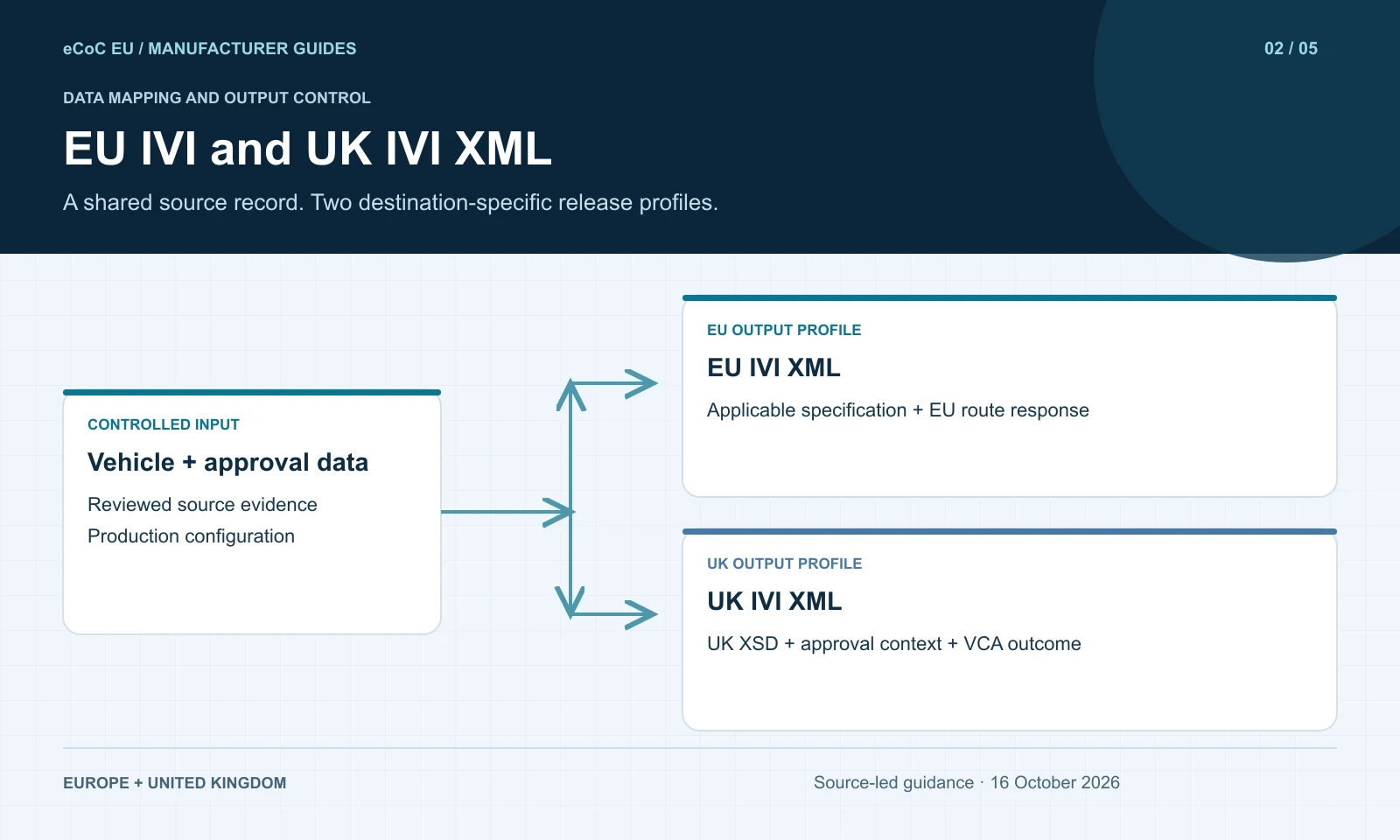
Reuse controlled vehicle data across EU and UK programmes while preserving each destination's IVI schema, approval context and submission requirements.
Read More →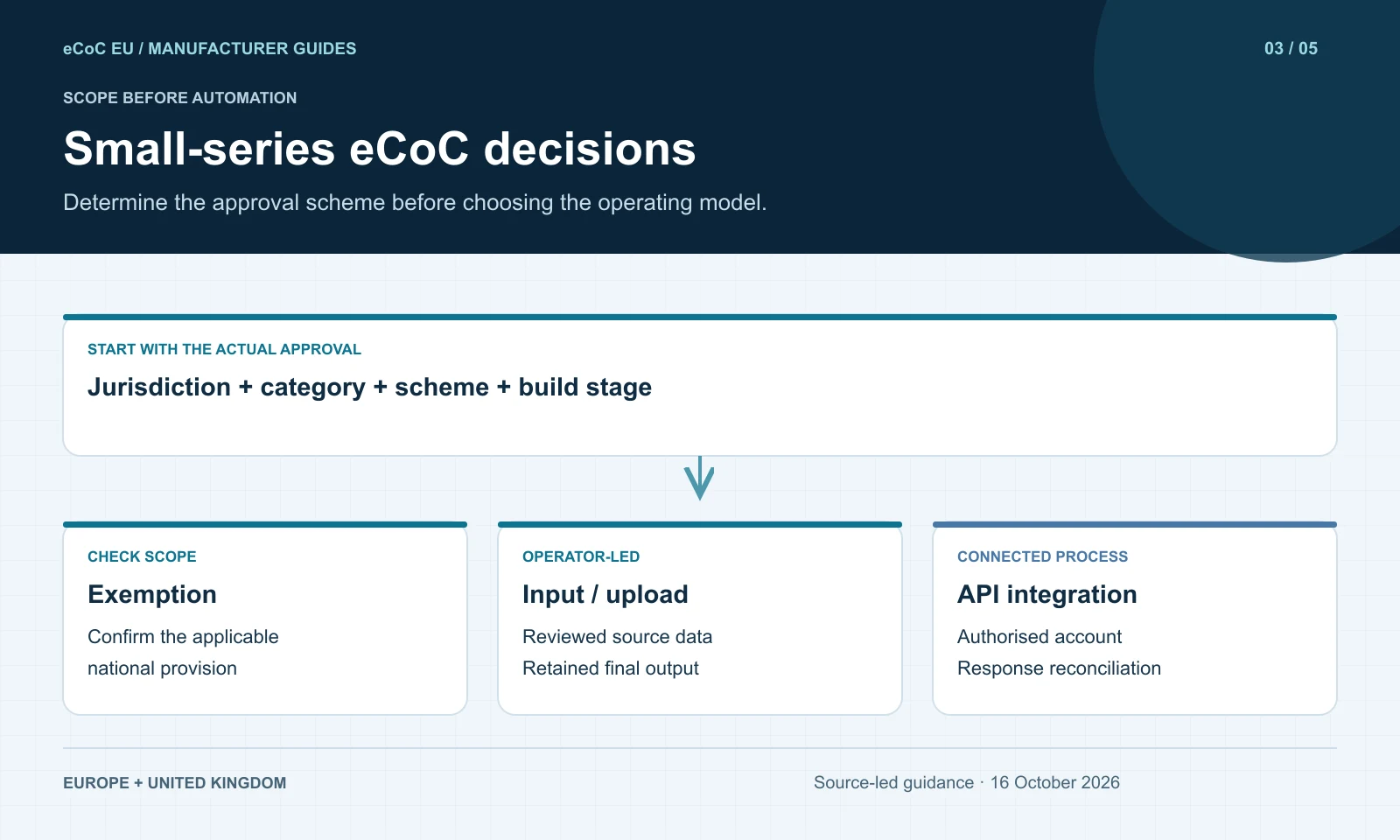
A small production volume does not by itself establish an eCoC exemption. Begin with the approval scheme, then choose a submission process that matches your legal scope and operating needs.
Read More →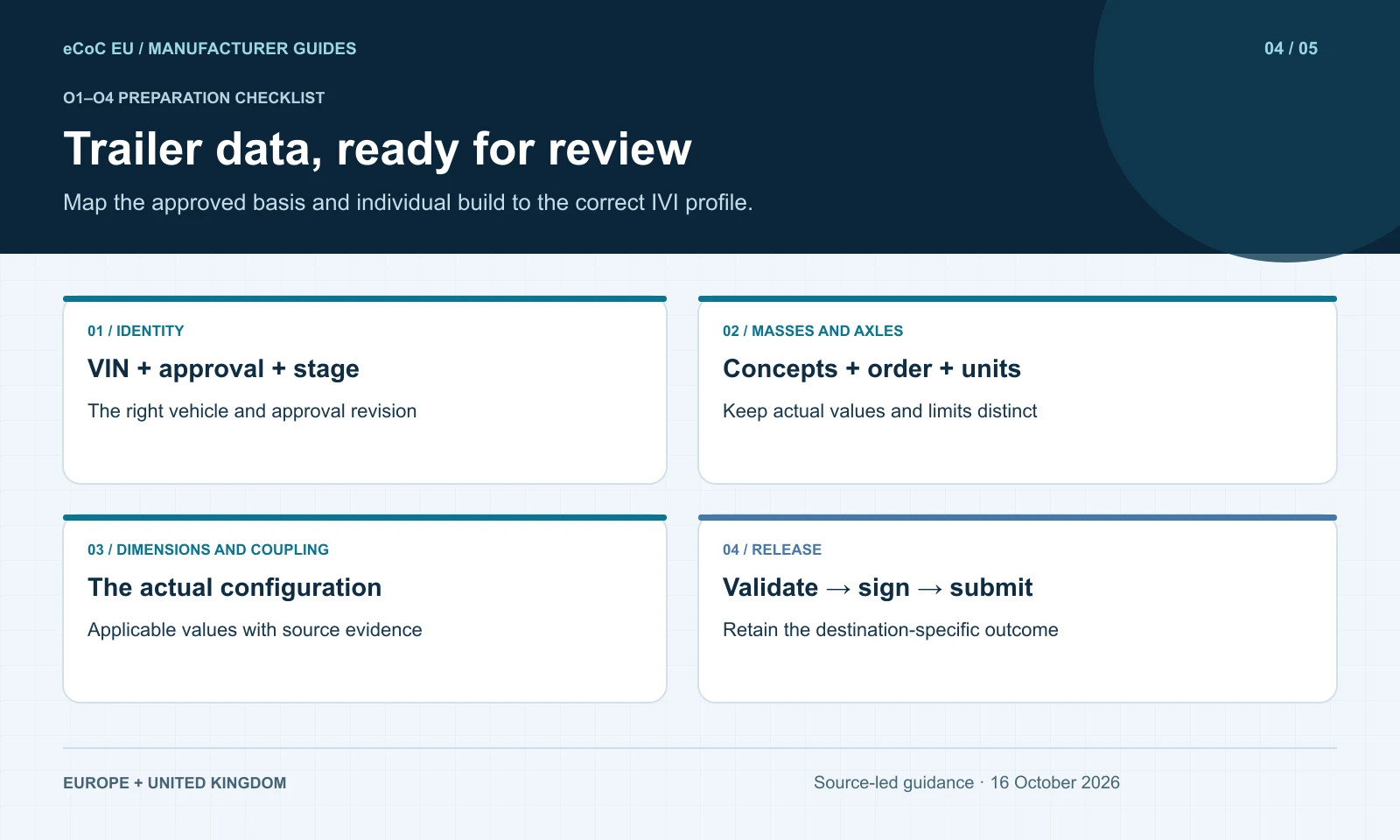
Use this preparation checklist to connect a trailer's approved configuration and production values to a controlled eCoC output for the relevant European or UK route.
Read More →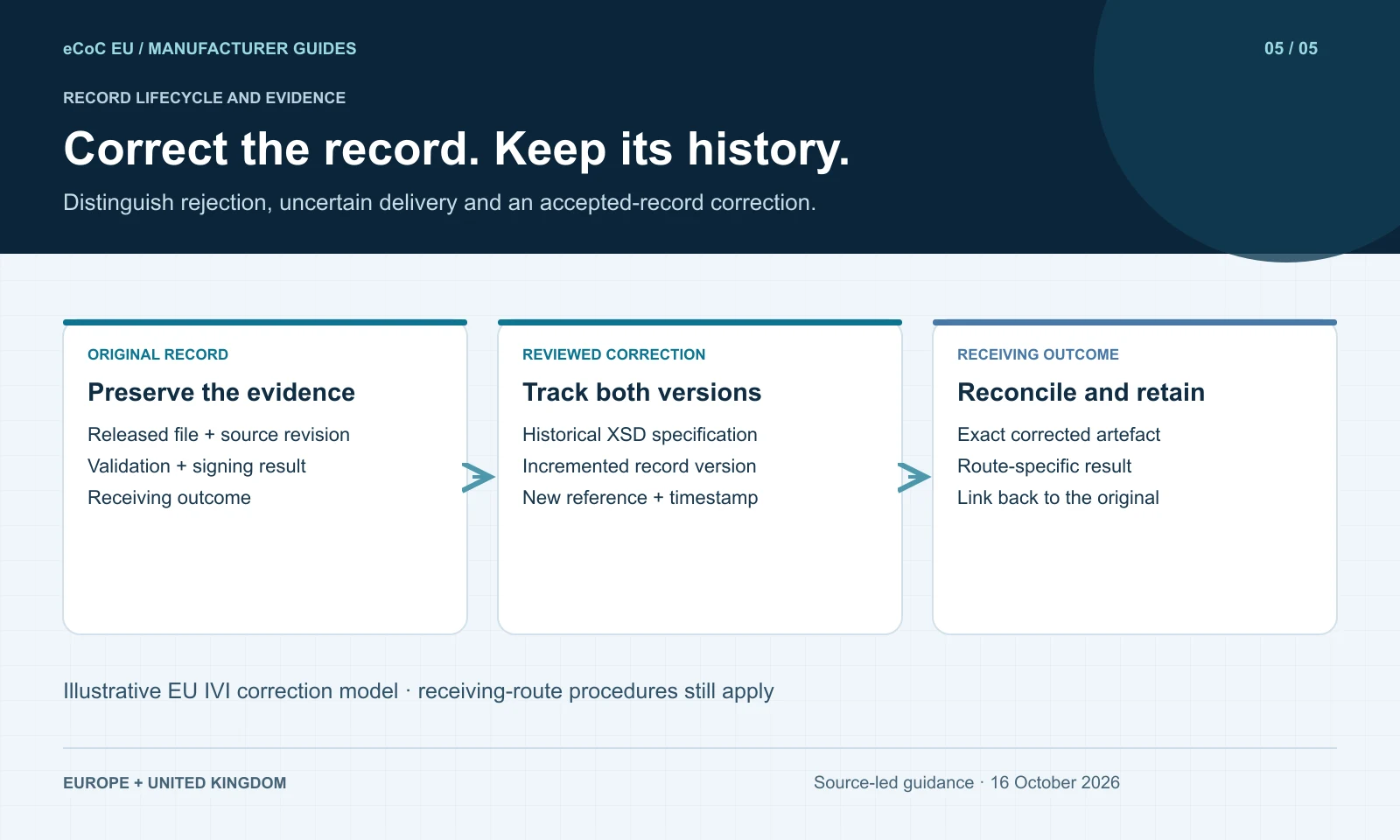
Distinguish a rejected file, an uncertain transmission and a correction to an accepted eCoC. Each situation needs a different investigation and a traceable next step.
Read More →
KBA plans to open the IVI 2.x test environment in October 2026 and begin live operation on 5 November 2026. Manufacturers should prepare vehicle data, validation, electronic sealing and submission monitoring before testing starts.
Read More →These reference pages define the main entity and regulatory clusters on the site and are linked directly from the blog landing page to strengthen crawl paths and topic ownership.
Foundational reference page for electronic Certificate of Conformity queries.
Core reference for cross-border vehicle data exchange and authority connectivity.
Primary explainer for structured vehicle information in digital compliance workflows.
The approval framework behind downstream conformity and registration processes.
Reference page on why approval-data drift breaks downstream conformity workflows.
Legal anchor for the modern European vehicle approval and surveillance model.
Extended pillar guide for electronic Certificate of Conformity workflows, system context, and operational scope.
Follow-up pillar page covering the structure and practical meaning of IVI 2.0 data.
Reference page for the National Access Point layer used in structured vehicle data exchange.
Technical owner guide for the XML layer behind electronic Certificate of Conformity workflows.
Authority page connecting eCoC, IVI, EUCARIS, approval, and compliance infrastructure in one system view.
Search-focused educational page tying the main compliance entities together for new readers and crawlers.
New readers should begin with the hub page to understand how eCoC, IVI, EUCARIS, type approval, multistage vehicles, and compliance systems fit together.