The Complete Guide to eCoC (Electronic Certificate of Conformity)
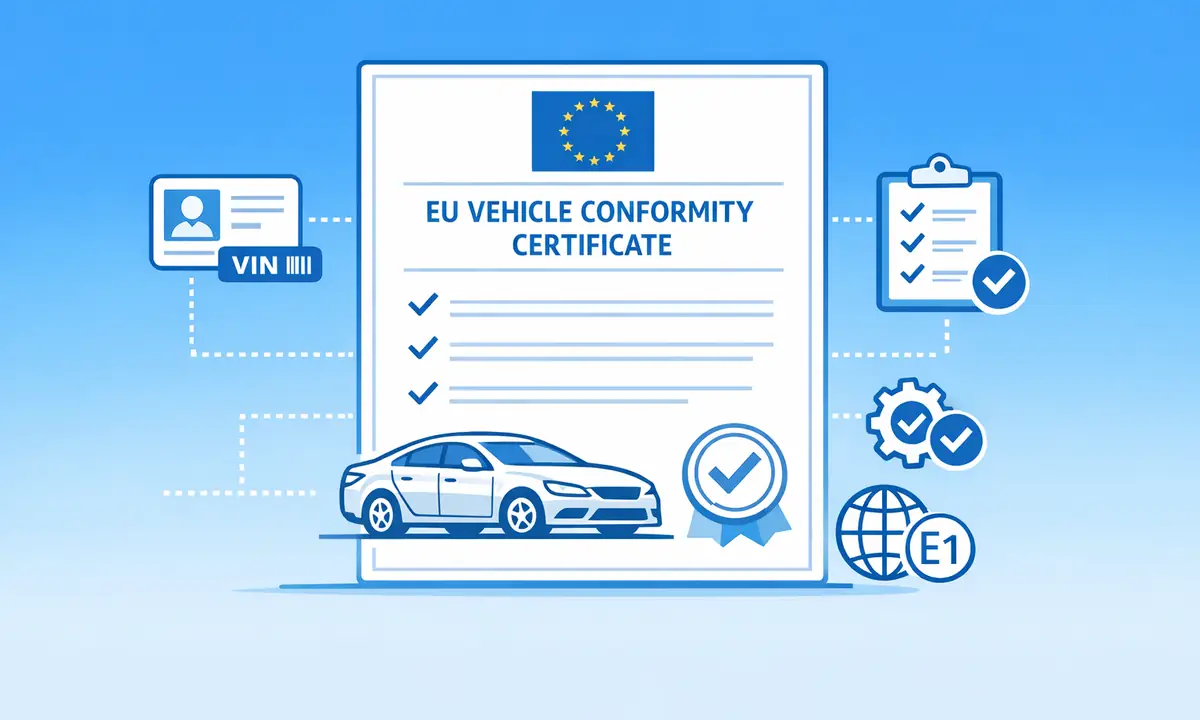
The electronic Certificate of Conformity, commonly referred to as eCoC, represents the digital evolution of the traditional vehicle Certificate of Conformity used within the European vehicle type approval framework. It enables standardized digital exchange of vehicle compliance information across manufacturers, authorities, and registration systems.
Introduction to eCoC
Vehicle compliance within the European Union relies on a regulatory system known as vehicle type approval. Under this system, a vehicle manufacturer must demonstrate that a vehicle type meets all relevant safety, environmental, and regulatory requirements before the vehicle can be placed on the market.
Once a vehicle type receives approval, every vehicle produced under that type must conform to the approved specifications. The Certificate of Conformity confirms this compliance.
The electronic Certificate of Conformity transforms this confirmation into structured digital data that can be exchanged electronically between stakeholders.
The Purpose of eCoC in European Vehicle Compliance
The European automotive market consists of multiple member states, each operating its own vehicle registration authority. When vehicles move across borders or are registered in different jurisdictions, authorities must verify that those vehicles comply with European type approval rules.
Traditional paper-based certificates made this process slower and more prone to administrative complexity. The eCoC concept addresses these challenges by enabling standardized digital data exchange.
How the eCoC System Works
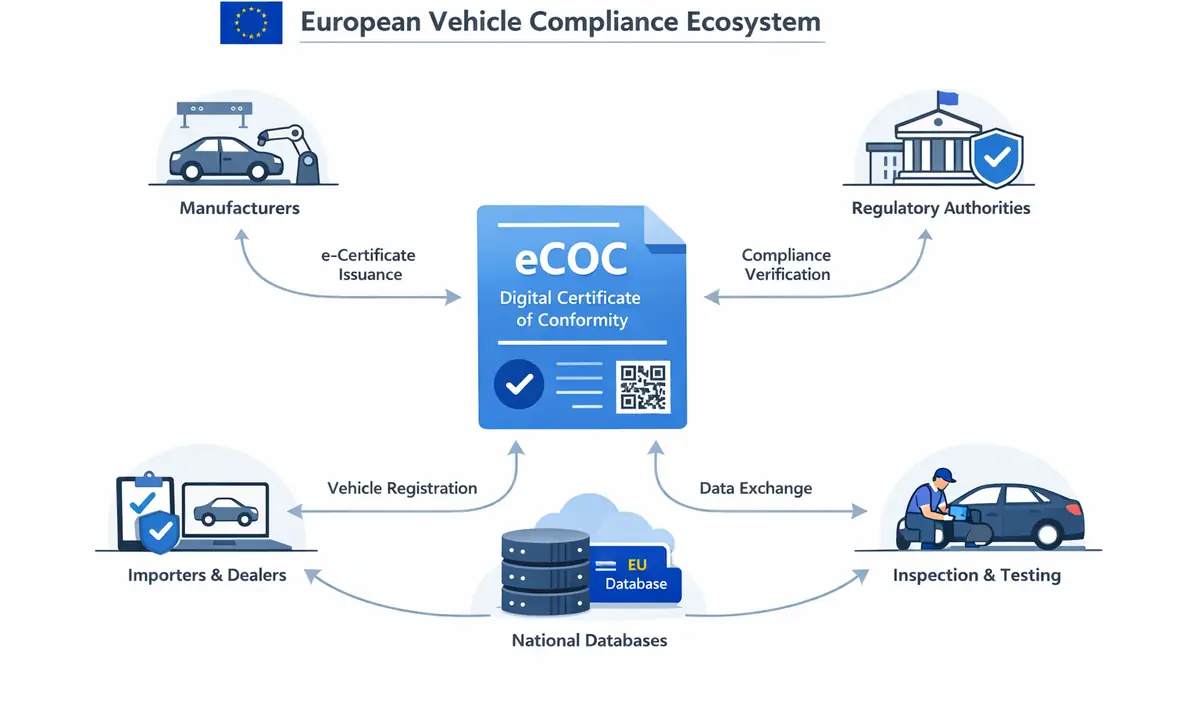
The eCoC ecosystem can be understood as a structured information flow involving several stakeholders:
- Vehicle manufacturers that produce vehicles under an approved type
- Approval authorities responsible for granting type approvals
- Vehicle registration authorities in EU member states
- Data exchange systems supporting regulatory processes
The electronic Certificate of Conformity allows these stakeholders to work with consistent vehicle data that represents the approved characteristics of a vehicle.
Key Components of an eCoC
An electronic Certificate of Conformity typically contains multiple categories of vehicle data. These data elements allow registration authorities to verify that a vehicle corresponds to the approved type.
- Vehicle identification information such as the Vehicle Identification Number
- Manufacturer details and production information
- Type approval references identifying the approved vehicle type
- Technical vehicle characteristics such as dimensions and masses
- Environmental and emissions information
- Vehicle category classifications
These elements collectively provide the regulatory information required for vehicle registration processes.
How eCoC Supports Vehicle Registration
Vehicle registration authorities rely on conformity data to verify that vehicles comply with the applicable regulatory framework. The electronic Certificate of Conformity provides a standardized digital source for this information.
By working with structured data instead of paper documents, authorities can process registrations more efficiently while maintaining regulatory oversight.
eCoC in the EU Regulatory Framework
The electronic Certificate of Conformity operates within the broader context of the European vehicle type approval system. This system ensures that vehicles placed on the European market meet harmonized regulatory standards.
Within this framework, the eCoC acts as the digital confirmation that a specific vehicle conforms to the approved vehicle type.
Digital Transformation of Vehicle Compliance
The transition from paper documentation to digital conformity systems reflects a wider trend in regulatory processes. Digital systems provide improved transparency, faster processing, and better integration between authorities and manufacturers.
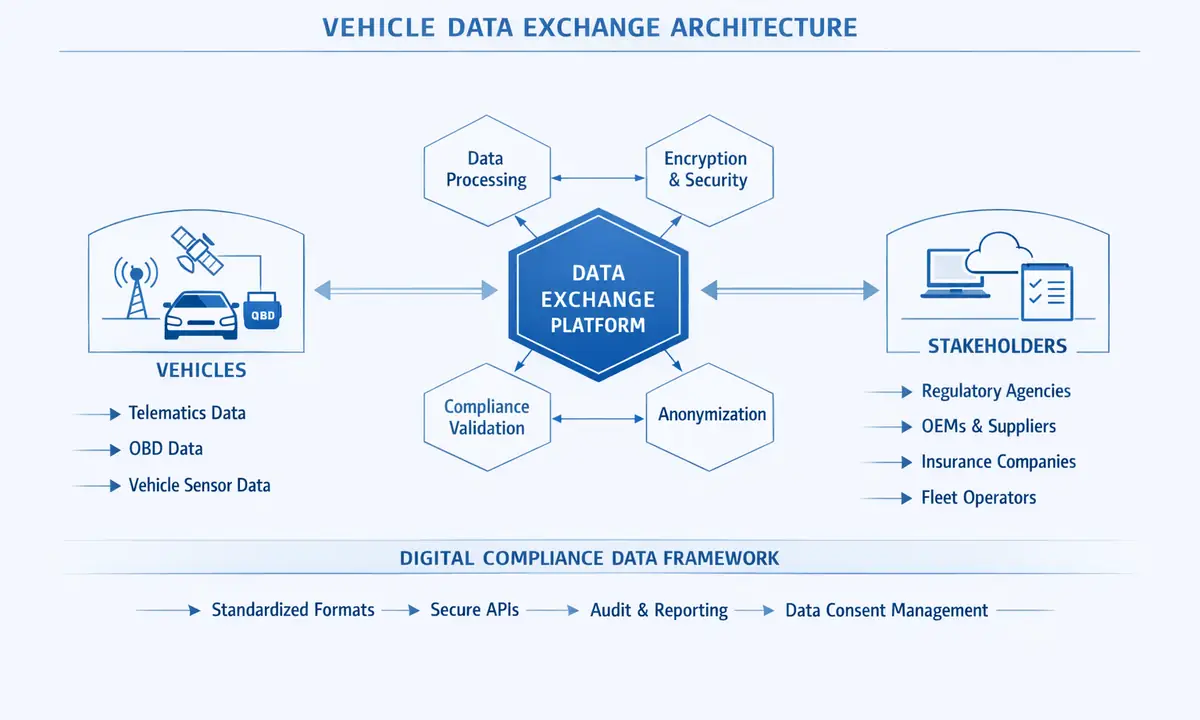
As automotive regulation continues to evolve, structured vehicle data exchange will become increasingly important for compliance and registration processes.
Common Questions About eCoC
What is the difference between CoC and eCoC?
The traditional Certificate of Conformity is a paper document issued by a manufacturer. The electronic Certificate of Conformity represents the same information in structured digital form.
Why was eCoC introduced?
The electronic format supports faster, more reliable exchange of vehicle conformity data between manufacturers and authorities.
Who issues an eCoC?
Vehicle manufacturers issue Certificates of Conformity for vehicles produced under an approved type.
What information does an eCoC contain?
An eCoC contains technical vehicle information, approval references, and other regulatory data used for vehicle registration and compliance verification.
External references
No external references have been added yet.