How eCoC XML Works
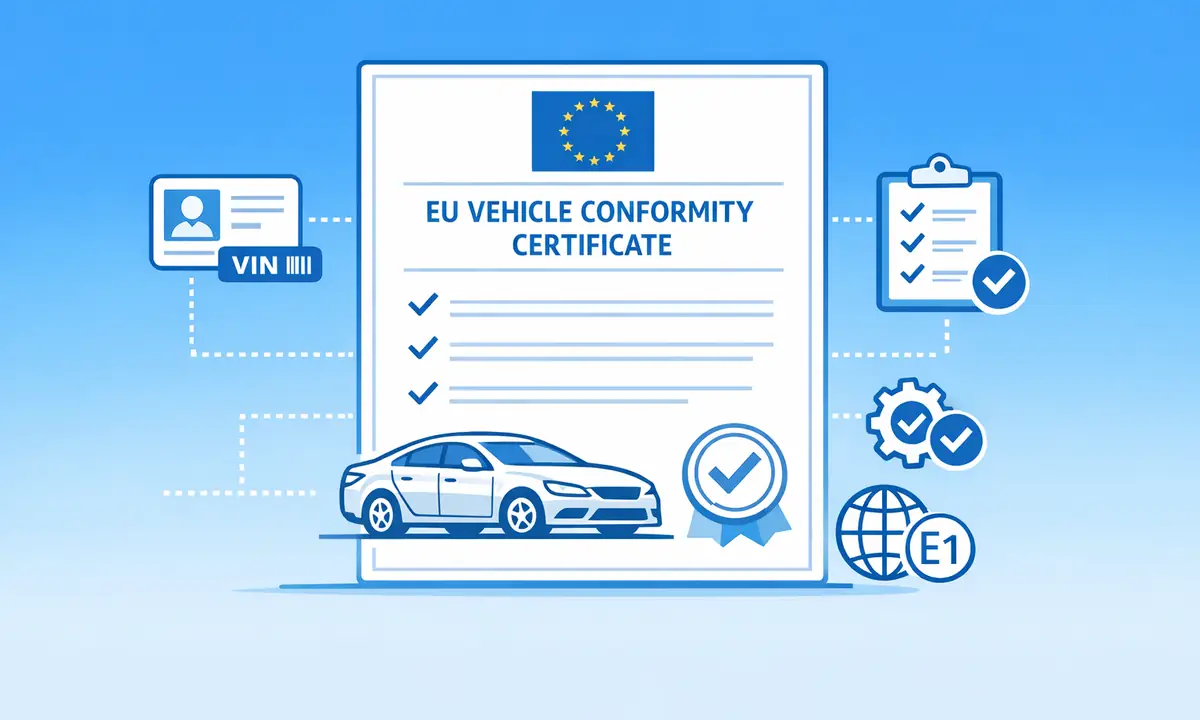
The electronic Certificate of Conformity relies on structured digital data formats to represent vehicle conformity information. One of the most common ways to structure this information is through XML, which allows complex vehicle data to be organized in a standardized and machine-readable format.
Introduction to eCoC XML
In modern vehicle compliance systems, conformity information is no longer exchanged only through documents. Instead, structured digital formats are used to represent regulatory data in a way that can be processed automatically by information systems.
XML, or Extensible Markup Language, is widely used for this purpose because it provides a flexible structure for representing hierarchical data.
Why XML is Used for Vehicle Data
Vehicle conformity information contains many interconnected technical data elements. These elements include identification information, regulatory references, technical characteristics, and manufacturer details.
XML is particularly well suited for this type of information because it allows complex datasets to be organized clearly and consistently.
Structure of eCoC XML Data
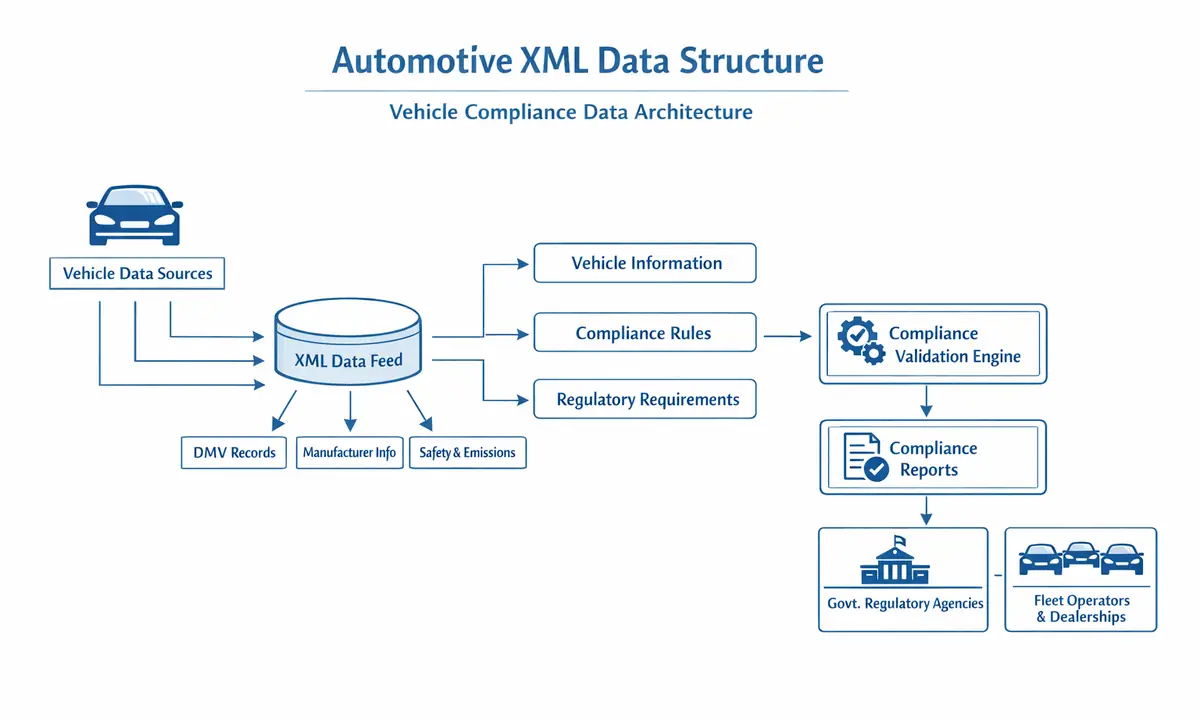
An XML document representing vehicle conformity data typically follows a hierarchical structure. This structure organizes information into logical groups that describe different aspects of a vehicle.
- Vehicle identification data
- Manufacturer information
- Vehicle category and classification
- Technical specifications
- Regulatory approval references
Each of these groups can contain multiple data elements describing specific characteristics of the vehicle.
How Structured Vehicle Data is Organized
XML structures represent information through nested elements. Each element describes a particular piece of data and can contain additional sub-elements.
This hierarchical approach allows vehicle data to be represented in a clear and organized format, making it easier for regulatory systems to interpret and process the information.
Benefits of Structured Data Formats
Using structured formats such as XML provides several advantages for regulatory systems and data exchange processes.
- Standardized data representation
- Improved interoperability between systems
- More efficient data processing
- Reduced risk of misinterpreting regulatory information
These advantages make structured formats essential for modern digital compliance systems.
XML and Digital Vehicle Compliance
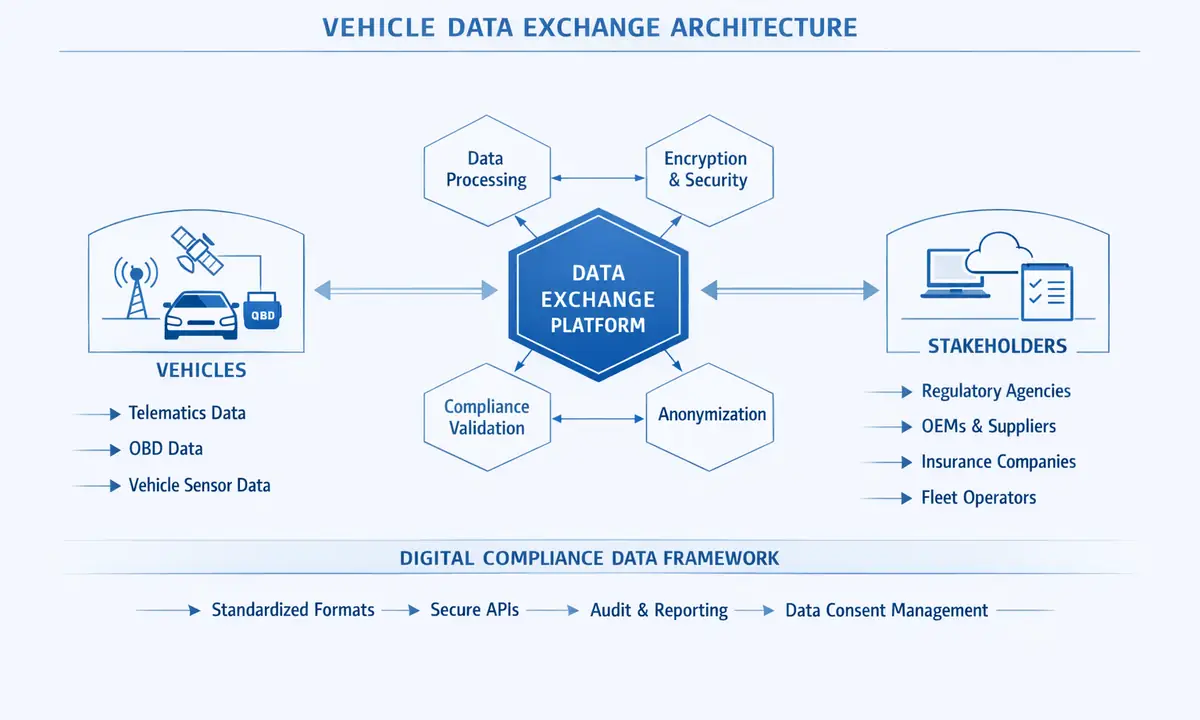
As vehicle regulation becomes increasingly data-driven, structured digital formats play a critical role in ensuring that vehicle information can be exchanged reliably between systems.
XML-based structures allow regulatory authorities and manufacturers to work with consistent datasets that accurately represent vehicle conformity information.
Frequently Asked Questions
What is XML?
XML stands for Extensible Markup Language and is used to represent structured data in a hierarchical format.
Why is XML used for vehicle data?
XML provides a flexible and standardized way to represent complex technical information such as vehicle conformity data.
Is XML a document format?
XML is a data structure format rather than a document format. It allows systems to exchange structured information.
What kind of information can be stored in XML?
XML can represent many types of structured data, including technical specifications, identification information, and regulatory references.
External references
No external references have been added yet.