EU Vehicle Type Approval Explained
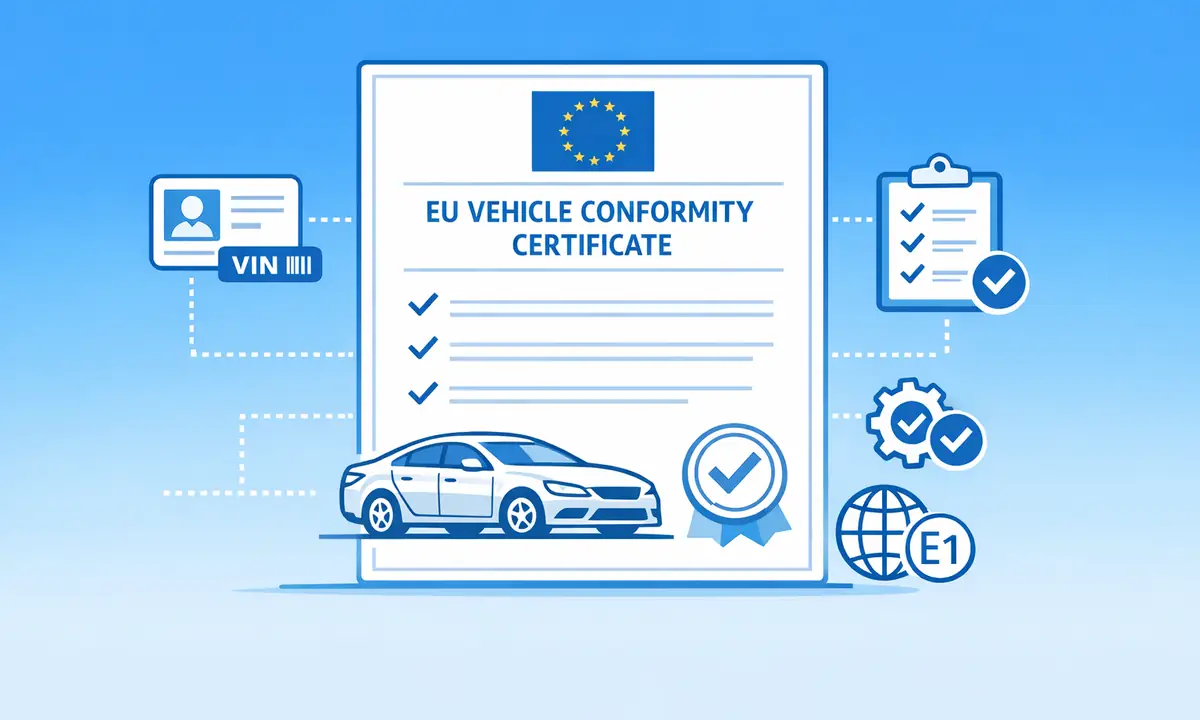
The European vehicle type approval system is a regulatory framework that ensures vehicles placed on the European market meet harmonized safety, environmental, and technical requirements. Before a manufacturer can sell a vehicle within the European Union, the vehicle type must first receive official approval confirming that it complies with applicable regulations.
Introduction to Vehicle Type Approval
Vehicle type approval is a process through which authorities verify that a vehicle design meets all relevant regulatory requirements before production vehicles are placed on the market. Instead of testing every individual vehicle, regulators assess a representative model known as a vehicle type.
Once a vehicle type has been approved, the manufacturer may produce vehicles that conform to that approved specification.
Purpose of the Type Approval System
The primary purpose of the type approval system is to ensure that vehicles meet consistent standards across all European Union member states. This harmonized approach allows vehicles approved in one country to be recognized across the entire EU market.
The system helps protect road safety, environmental standards, and consumer interests by ensuring that vehicles comply with established regulations before entering circulation.
How Vehicle Type Approval Works
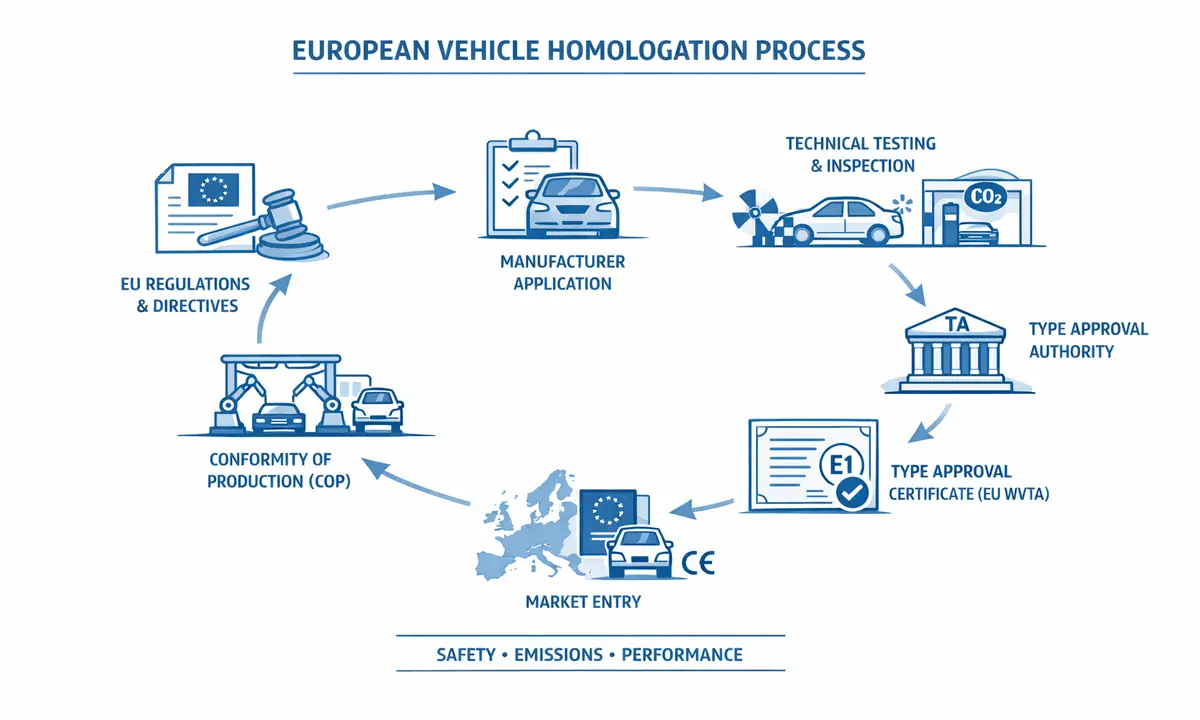
The vehicle type approval process typically involves several stages of technical assessment. A manufacturer submits documentation and test results demonstrating that the vehicle complies with applicable requirements.
Authorities evaluate this information and verify that the vehicle meets regulatory standards related to safety systems, emissions performance, structural characteristics, and other technical aspects.
Once the assessment is complete and compliance has been confirmed, the authority grants a type approval certificate for the vehicle type.
Key Elements of Type Approval
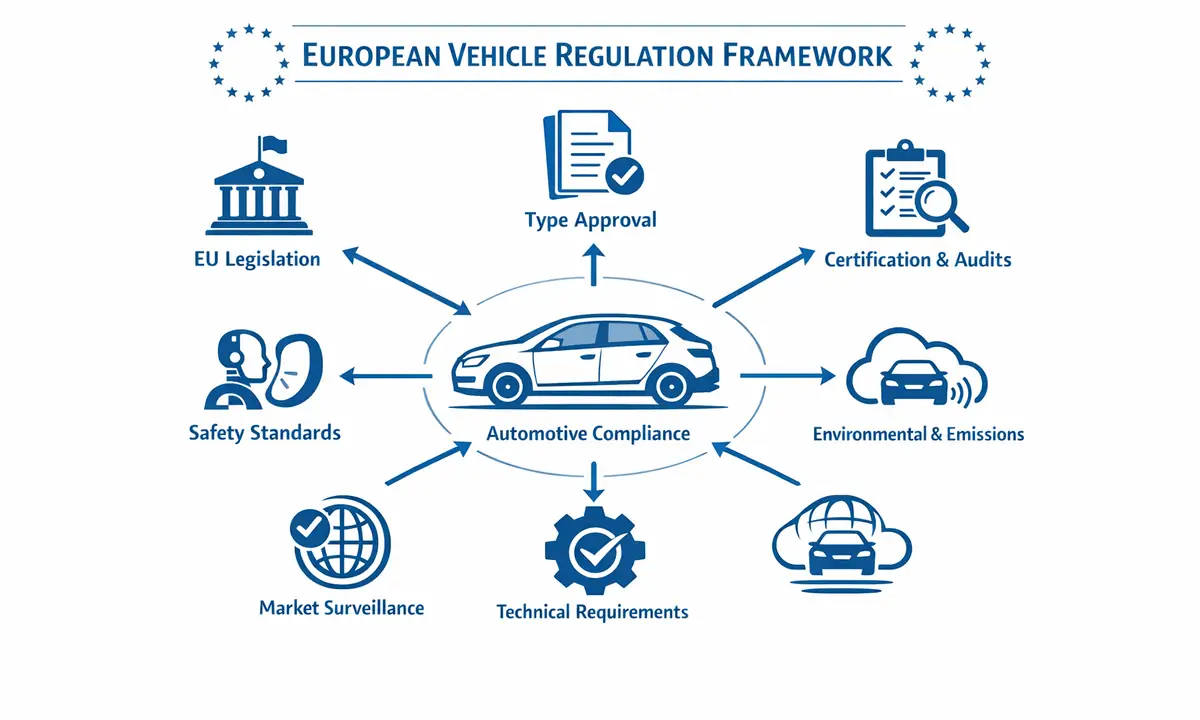
The approval process focuses on verifying that the vehicle design satisfies a wide range of regulatory requirements. These requirements cover different aspects of vehicle performance and construction.
- Vehicle safety systems
- Environmental performance
- Structural integrity
- Lighting and signaling systems
- Braking and control systems
- Vehicle identification and documentation
Each of these elements must meet defined regulatory standards before approval can be granted.
Role of Manufacturers
Manufacturers are responsible for demonstrating that their vehicles comply with regulatory requirements. This involves providing technical documentation, test results, and engineering information describing the vehicle design.
After approval is granted, manufacturers must ensure that all vehicles produced under the approved type remain consistent with the approved specifications.
Type Approval and Vehicle Registration
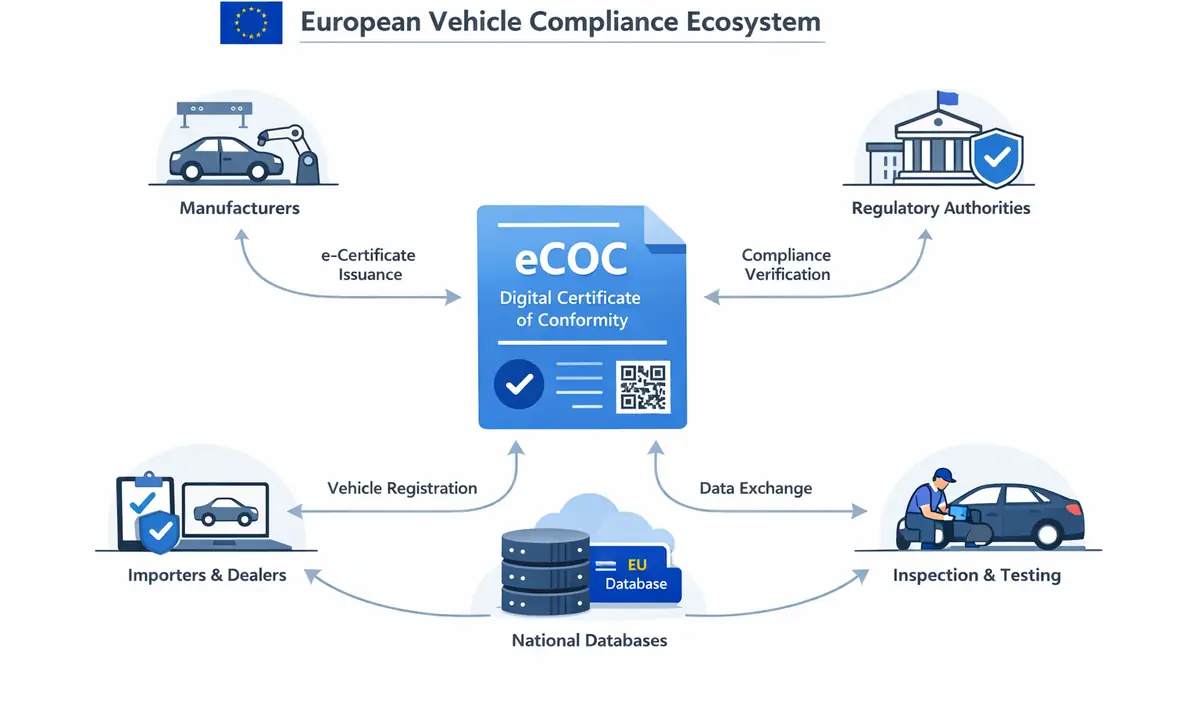
Once a vehicle type has been approved, individual vehicles produced under that type can be registered in EU member states. The approval confirms that the vehicle design already meets regulatory standards.
Registration authorities rely on approval documentation and vehicle conformity information to verify that a vehicle corresponds to the approved type.
Benefits of Harmonized Approval
The European vehicle type approval system allows manufacturers to obtain approval for a vehicle type once and then market the vehicle across the entire European Union.
This harmonized framework reduces regulatory fragmentation and ensures that safety and environmental standards are applied consistently across member states.
- Facilitates cross-border vehicle trade
- Ensures consistent safety standards
- Supports environmental regulation
- Provides regulatory certainty for manufacturers
Frequently Asked Questions
What is a vehicle type?
A vehicle type refers to a group of vehicles that share the same essential design characteristics and technical configuration.
Who grants vehicle type approval?
Type approval is granted by designated approval authorities responsible for evaluating compliance with regulatory requirements.
Why is type approval required?
It ensures that vehicles placed on the market meet safety, environmental, and technical standards established by European regulations.
Does type approval apply to individual vehicles?
No. Type approval applies to a vehicle design. Individual vehicles produced under that design must conform to the approved specifications.
External references
No external references have been added yet.