What Is eCoC Software
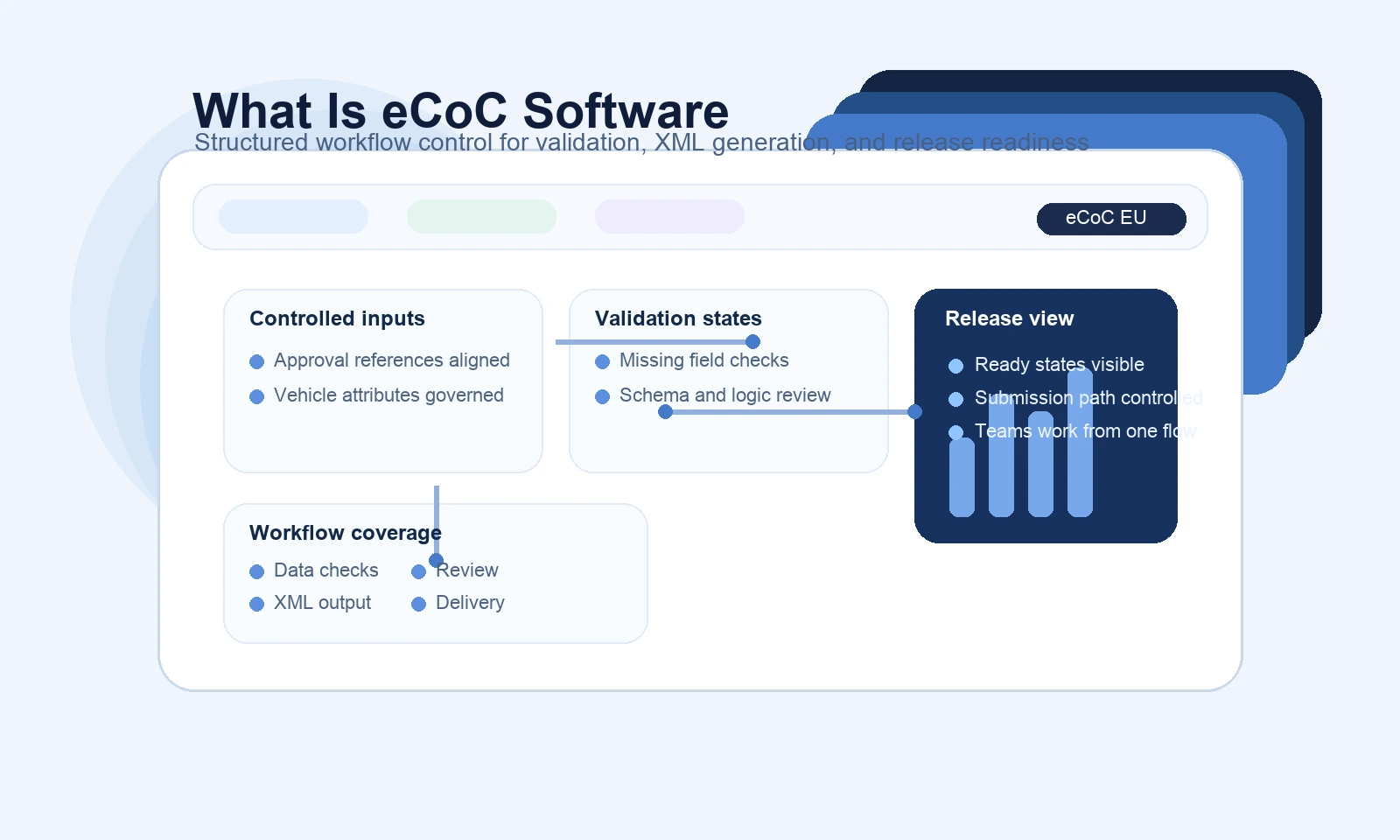
This software is the operational system used to manage controlled conformity workflows in a structured, repeatable way. Instead of treating conformity output as a last-step document task, manufacturers use software to control the data, validation logic, structured output generation, and release process behind each conformity release.
For searchers looking for a direct answer, this category of software is not only a certificate generator. It is the workflow layer that helps teams prepare, validate, and release structured conformity data with less ambiguity and more control.
What this page covers
- What eCoC software means in practice
- How it differs from simple XML generation tools
- Why manufacturers need controlled workflow software for eCoC operations
What eCoC software actually does
In practical terms, eCoC software gives manufacturers a system for managing the operational steps behind the electronic Certificate of Conformity. That includes taking approved vehicle information, checking that it is complete and consistent, preparing structured outputs, and controlling the release of those outputs to downstream systems.
The core value is operational reliability. If conformity data is scattered across spreadsheets, emails, and disconnected export tools, teams spend more time reconciling information than managing a dependable release process.
Why manufacturers use software instead of document-only handling
Document-only handling breaks down as volume, model complexity, and market variation increase. A manufacturer may need to manage multiple programs, approval references, technical variants, and downstream delivery requirements at the same time. That is difficult to control without a shared system.
This workflow software gives teams one place to organize approved data, apply checks, and control how release-ready outputs are produced. In that sense, it sits much closer to a compliance operating layer than to a single-purpose certificate utility.
How eCoC software fits into a workflow
A strong workflow usually begins with approved vehicle and type data. From there, the software helps teams verify that the right attributes, references, and conformity information are present before output is generated. That is why eCoC software is tightly connected to EU vehicle type approval rather than only to final certificate formatting.
Once the source information is controlled, the software can support generation of structured outputs, validation steps, review states, and delivery preparation. The goal is not only speed. The goal is reducing operational uncertainty before an output reaches authority-facing systems.
eCoC software vs XML generation tools
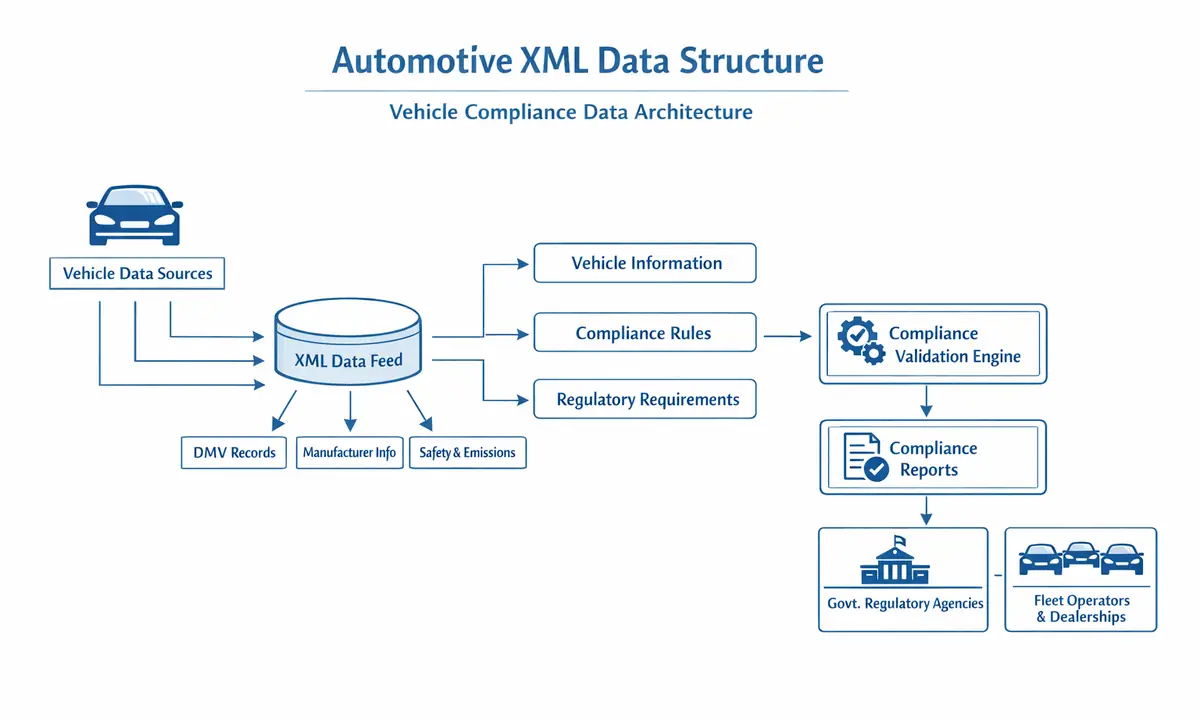
A basic structured-output generator can produce a file if the input is already correct. This workflow software has a broader job. It helps teams govern the information before generation starts and gives them visibility into whether the output is actually ready to release.
This is why software and XML are related but not interchangeable. If you want to understand the data layer itself, the best supporting resource is how eCoC XML works. For a wider operating view, the broader system context is covered in the complete guide to eCoC.
Key capabilities teams expect from eCoC software
Manufacturers usually need more than one function from a conformity workflow platform. The most important capabilities are the ones that reduce manual reconciliation and make release readiness clearer.
- Controlled source data handling for approval-sensitive attributes
- Validation before machine-readable output generation or release
- Traceable workflow states across teams
- Repeatable output preparation for downstream authority processes
- Better visibility into issues before submission or handoff
Why software matters for compliance operations
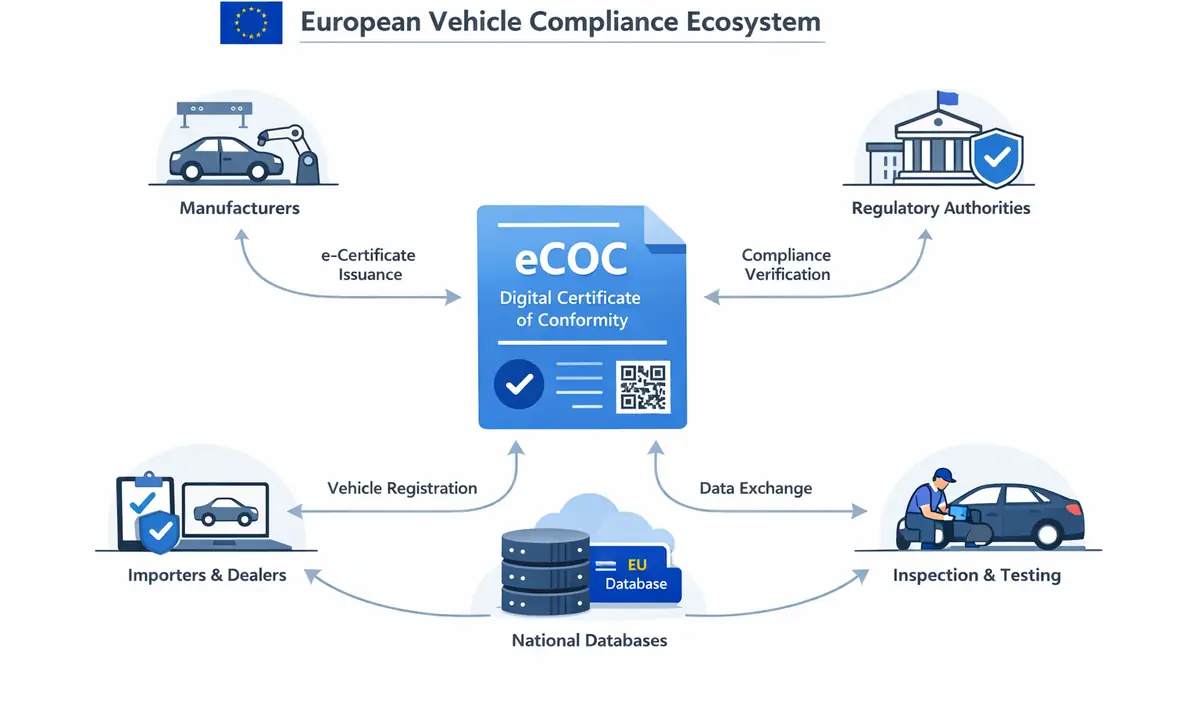
Compliance teams do not only need output files. They need confidence that the output reflects the approved basis and that the supporting vehicle information is still aligned across the workflow. That is why eCoC software belongs inside the larger context of vehicle compliance systems rather than sitting outside the process as an isolated document tool.
When the workflow is structured, teams can see where issues come from, which data is incomplete, and what needs to be reviewed before release. Without that structure, the same questions get resolved repeatedly in manual ways.
What eCoC software helps manufacturers avoid
The biggest operational cost usually comes from inconsistency. If approved data, conformity logic, and output preparation drift apart, teams spend time rechecking information instead of moving the workflow forward.
Software helps reduce that drift by giving manufacturers a governed place to coordinate checks, approvals, and outputs. For organizations looking at software options directly, the commercial page on eCoC software explains how that operating model is applied at platform level.
When a manufacturer typically needs eCoC software
Teams usually feel the need for this workflow software when volume grows, more markets are involved, or more people need to collaborate around the same conformity output process. At that point, manual methods stop being efficient because too much depends on hidden knowledge and repeated checking.
The need becomes even clearer when eCoC handling has to align with broader digital compliance initiatives. That is why eCoC software often appears alongside articles about digital vehicle compliance in Europe and structured vehicle data operations.
Frequently Asked Questions
What is eCoC software?
This software is the system used to manage structured conformity data, validation, output generation, and release workflows in a controlled operational process.
Is eCoC software the same as an XML generator?
No. Machine-readable output generation is one function inside the workflow. This workflow software also helps control source data, validation steps, review states, and release readiness.
Why do manufacturers need eCoC software?
Manufacturers need it when manual certificate handling becomes too fragmented to control reliably across approvals, variants, teams, and downstream delivery requirements.