What Vehicle Type Approval Means for Manufacturers
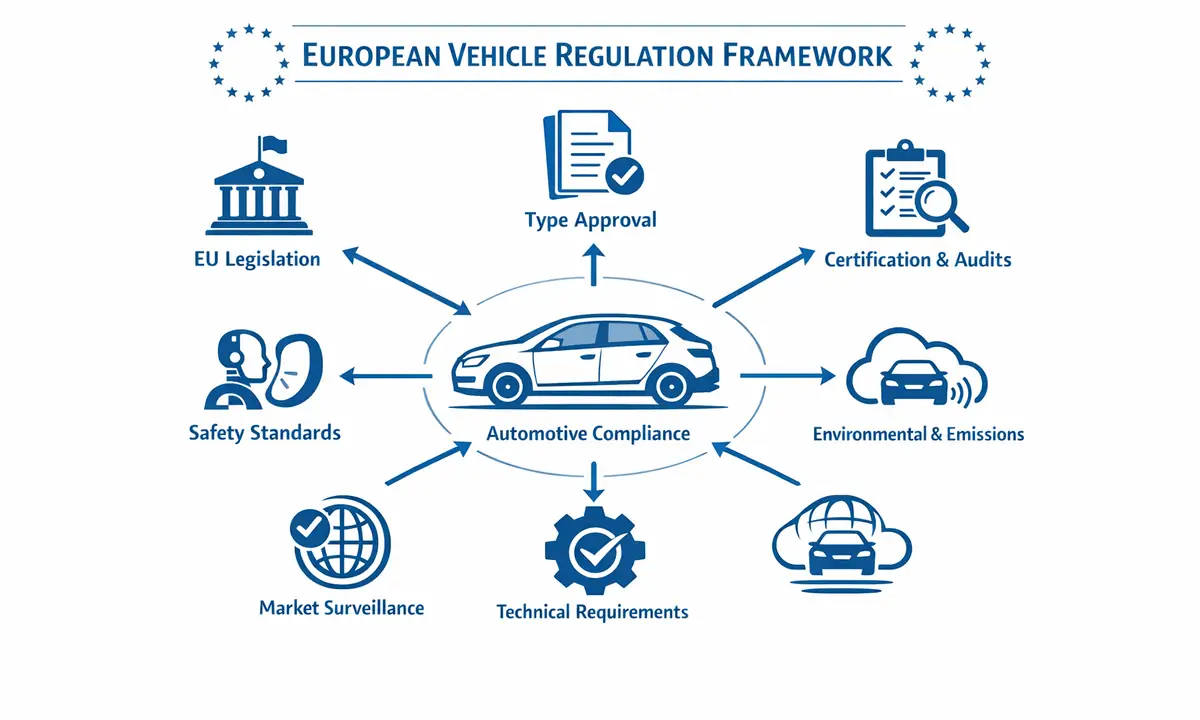
Vehicle type approval matters to manufacturers because it defines the approved basis on which vehicles can be produced and placed on the market. It also shapes the conformity data, documentation, and downstream workflows that manufacturers have to manage accurately.
Approval defines the regulatory baseline
For manufacturers, type approval is not only a legal milestone. It is the baseline that determines how a vehicle type is described, validated, and referenced across later workflows.
Why approval data continues to matter after approval
Approval does not end the importance of the data. The same approved specifications continue to matter in production, conformity handling, registration support, and regulatory verification.
Manufacturer impact
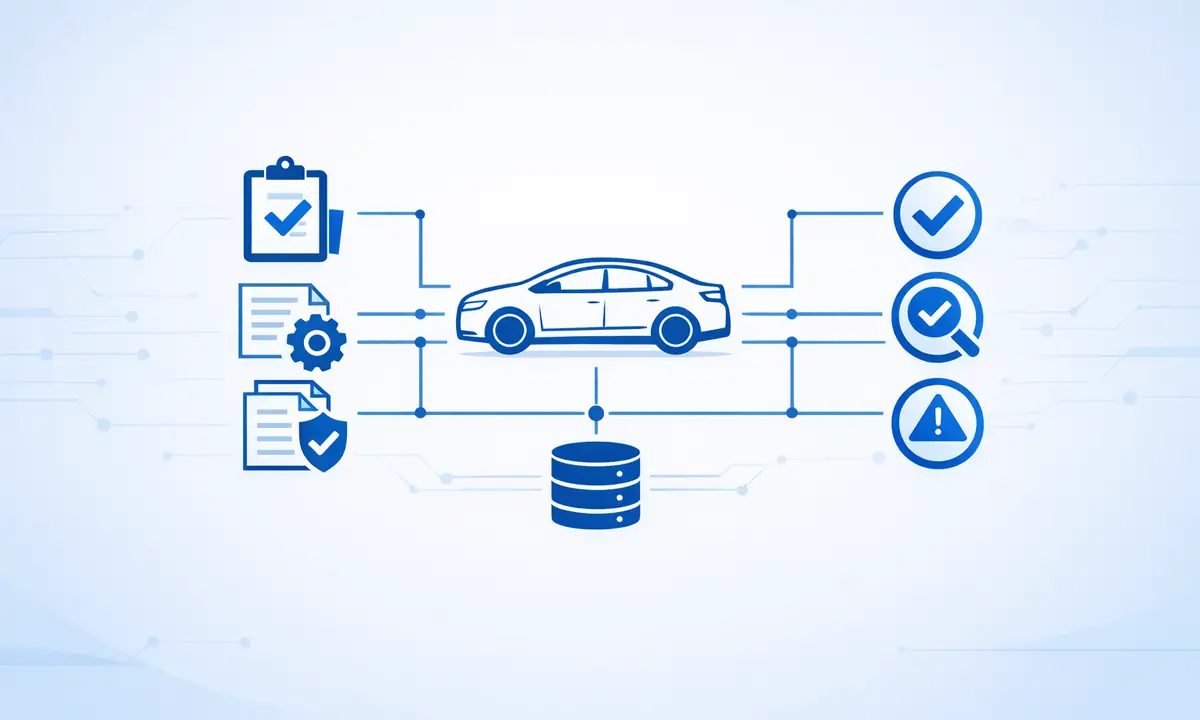
Manufacturers need the approved vehicle data, supporting documentation, and downstream conformity information to remain aligned. If those layers drift apart, the operational burden grows quickly.
- Approval data must stay accurate
- Conformity information must reflect approved specifications
- Structured digital workflows reduce ambiguity at scale
Frequently Asked Questions
Why does type approval matter for manufacturers?
Because it defines the approved basis that later production, conformity, and registration-related workflows rely on.
Approval is a maintained production boundary
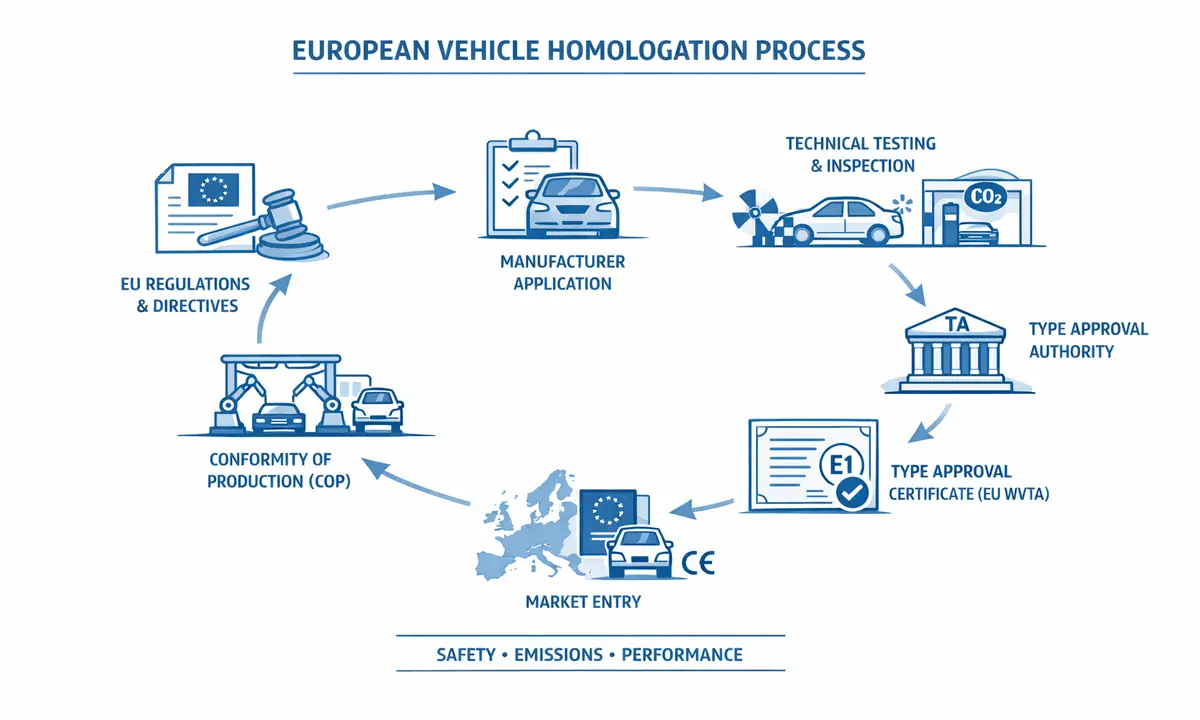
For a manufacturer, type approval is not finished when the approval document is issued. Production vehicles must continue to correspond to the approved definition, and changes to design, systems, software, suppliers, or manufacturing conditions may need assessment before they enter production. The organisation therefore needs a controlled link between the approved configuration and the configuration it actually builds.
That link affects engineering change management, production conformity, certificate preparation, market selection, and release decisions. A production value should not be accepted merely because it is technically possible. It must also belong to the applicable type, variant, version, and regulatory context.
Responsibilities across manufacturer teams
Homologation teams interpret approval scope and maintain formal references. Engineering owns technical definitions and changes. Production and quality teams confirm what was built. Data and software teams transform those records into structured outputs. Clear ownership prevents a downstream system from becoming the place where unresolved approval questions are decided implicitly.
When a value fails validation, the team should determine whether the problem is incorrect source data, a mapping defect, a rule-version mismatch, or a real deviation from the approved basis. Each cause requires a different response. Reformatting the output cannot correct a vehicle that falls outside its approval scope.
Evidence a manufacturer should retain
Keep the applicable approval version, controlled vehicle configuration, relevant production checks, data transformations, validation result, exception approvals, and released conformity output together. This record supports later correction and market-surveillance questions without requiring teams to reconstruct the decision from separate systems.
Where national or route-specific submission instructions apply, record those separately from the EU approval framework. A manufacturer can then update a technical delivery route without confusing that change with a change to the approved vehicle definition.
Managing a change after approval
When engineering proposes a change, the manufacturer should identify the affected type, variant, version, systems, regulatory acts, and technical evidence before production adoption. Homologation then determines whether the change stays within the approved scope, requires an extension or another approval action, or cannot be introduced for the intended market. The decision and effective production point should be visible to the data systems that prepare conformity information.
This prevents a timing gap in which production has adopted a new configuration while certificate generation still uses the old approval basis. Effective dates alone may be insufficient; VIN ranges, plant events, market configurations, and staged production can also determine which definition applies.
Production conformity and individual certificates
Type approval concerns the approved vehicle definition. Conformity of production concerns the manufacturer’s ability to keep production aligned with that definition. The certificate for an individual vehicle depends on both: it uses approved characteristics but must describe the vehicle actually produced. Treating these as separate data silos makes discrepancies likely.
A release workflow should therefore confirm the applicable approval, production configuration, individual identifiers, required tests or checks, and unresolved deviations before output generation. Validation rules can automate many comparisons, but the manufacturer remains responsible for the approved basis and the decision to release.
Questions manufacturers should answer
- Which controlled record defines the approved configuration for this vehicle?
- Which changes are effective for this production unit and market?
- Has homologation assessed every approval-sensitive change?
- Can the released conformity output be reproduced from retained sources and versions?
- Are authority-specific delivery results recorded separately from internal readiness?
Approval-aware system design
Software should not reduce approval scope to a free-text reference attached at the end of certificate generation. The approved type, variant, version, vehicle category, effective configuration, and relevant constraints should shape which values can be selected and which checks run. Users still need controlled exception handling because no generic rule set can replace every approval decision.
Access control also matters. The person preparing data, the person interpreting an approval change, and the person authorising release may hold different roles. Recording those decisions protects both operational speed and accountability.
Official and technical references
These sources support the regulatory and technical statements in this guide. Always check the current consolidated text and the instructions of the authority responsible for your submission route.