
How Vehicle Compliance Data Flows Across Europe
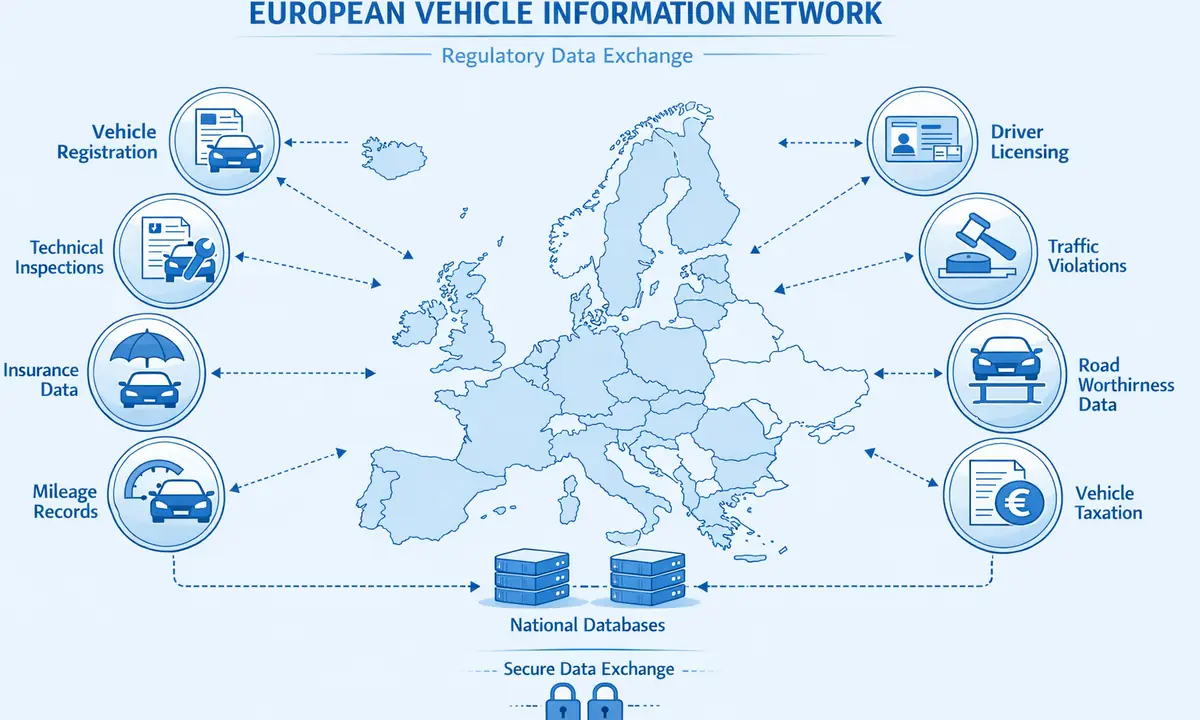
Modern vehicle regulation in Europe relies on the exchange of structured data between manufacturers, regulatory authorities, and vehicle registration systems. Instead of relying exclusively on paper documentation, many regulatory processes now depend on digital information exchange.
The Need for Cross-Border Data Exchange
The European automotive market operates across many countries, each with its own vehicle registration systems and administrative procedures. Vehicles may be manufactured in one country, approved in another, and registered in a third.
To support these processes, regulatory authorities must be able to exchange reliable vehicle conformity information.
Vehicle Compliance Information
Vehicle compliance data describes the regulatory and technical characteristics of a vehicle. This information confirms that the vehicle satisfies the applicable regulatory framework and corresponds to the approved vehicle type.
Examples of vehicle compliance information may include:
- Vehicle identification data
- Manufacturer details
- Type approval references
- Technical vehicle characteristics
- Environmental information
This data must remain consistent with the approval documentation associated with the vehicle.
Digital Transformation of Vehicle Information
As regulatory systems evolve, many authorities are adopting digital methods for exchanging vehicle information. Structured data formats allow vehicle information to be transmitted between systems in a consistent and machine-readable form.
This digital approach improves the efficiency and reliability of regulatory processes.
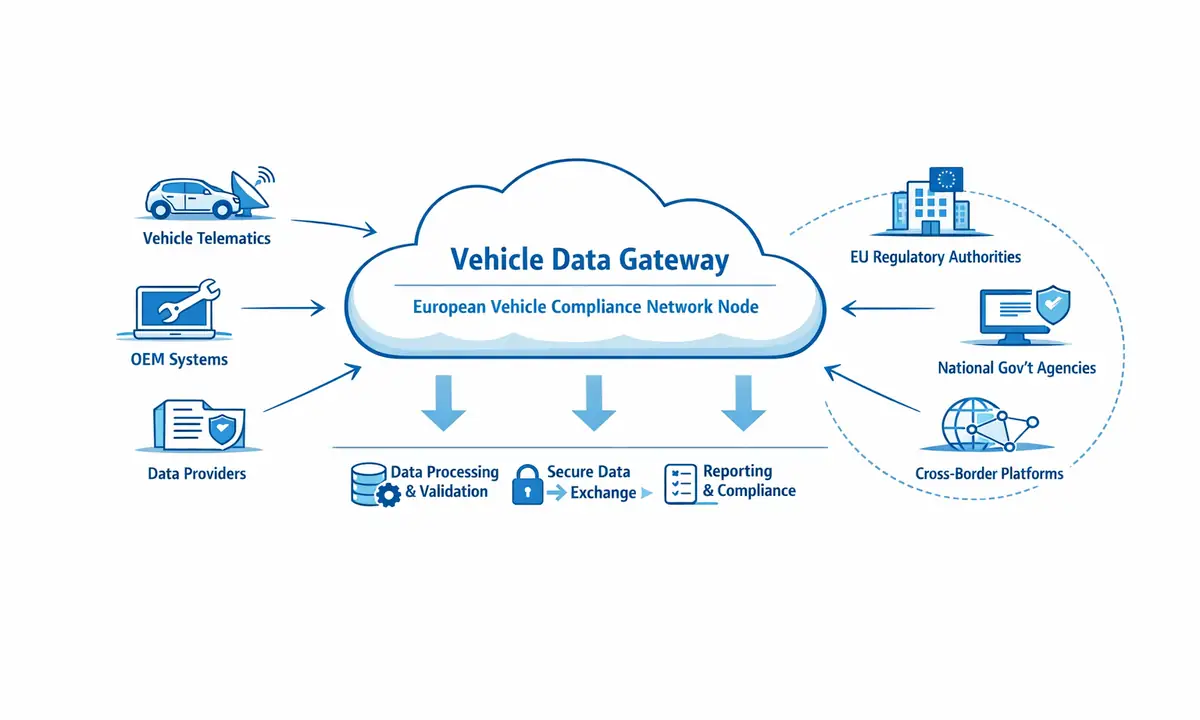
Interaction Between Different Stakeholders
The vehicle compliance ecosystem involves multiple participants, each responsible for different aspects of regulatory verification.
- Vehicle manufacturers responsible for producing compliant vehicles
- Approval authorities responsible for granting vehicle type approvals
- Vehicle registration authorities responsible for registering vehicles
- Information exchange systems that enable communication between these entities
Each stakeholder relies on accurate conformity information to perform their regulatory functions.
Challenges in Managing Compliance Data
Because vehicle compliance information flows across multiple systems and organizations, maintaining consistency becomes an important challenge. Structured vehicle data must remain aligned with approval documentation and regulatory expectations.
Managing these processes often requires careful coordination and specialized knowledge of regulatory data structures.
The Role of Structured Data Systems
Structured data systems help ensure that vehicle compliance information can be exchanged reliably between regulatory stakeholders. By using standardized formats and controlled communication channels, these systems support efficient regulatory workflows.
As the automotive sector continues to digitize regulatory processes, structured vehicle data exchange will become increasingly important.
Frequently Asked Questions
Why is vehicle data exchange important?
Vehicle data exchange allows authorities to verify that vehicles comply with regulatory requirements before they are registered or operated.
Who uses vehicle compliance information?
Manufacturers, approval authorities, and vehicle registration authorities may all rely on vehicle conformity data.
Why is structured data necessary?
Structured data allows regulatory systems to process vehicle information efficiently and consistently.
External references
No external references have been added yet.