What is EUCARIS
EUCARIS stands for the European Car and Driving License Information System. It is the network used by authorized authorities to exchange vehicle and driving licence data across national borders while keeping national registries under local control.
For searchers asking what EUCARIS is, the practical answer is that EUCARIS is one of the core infrastructure layers behind cross-border vehicle data exchange in Europe. It supports cooperation between authorities in areas such as registration, verification, and regulatory oversight.
What this page covers
- What EUCARIS is and what it does
- How cross-border data exchange works in principle
- Why EUCARIS matters in modern vehicle compliance
EUCARIS stands for the European Car and Driving License Information System. It is a secure data exchange platform used by European authorities to share vehicle and driving license information across national borders.
Introduction to EUCARIS
Vehicle registration and driver licensing systems are typically managed at the national level. However, vehicles and drivers frequently move between countries. To support cooperation between authorities, Europe developed systems that allow structured information exchange between national registries.
EUCARIS is one of the systems enabling this exchange.
Purpose of EUCARIS
The primary purpose of EUCARIS is to allow authorized authorities to exchange vehicle and driving license information securely. This supports regulatory oversight, road safety, and administrative cooperation between countries.
Instead of relying on manual communication between authorities, EUCARIS provides a standardized technical infrastructure for exchanging information electronically.
How EUCARIS Works
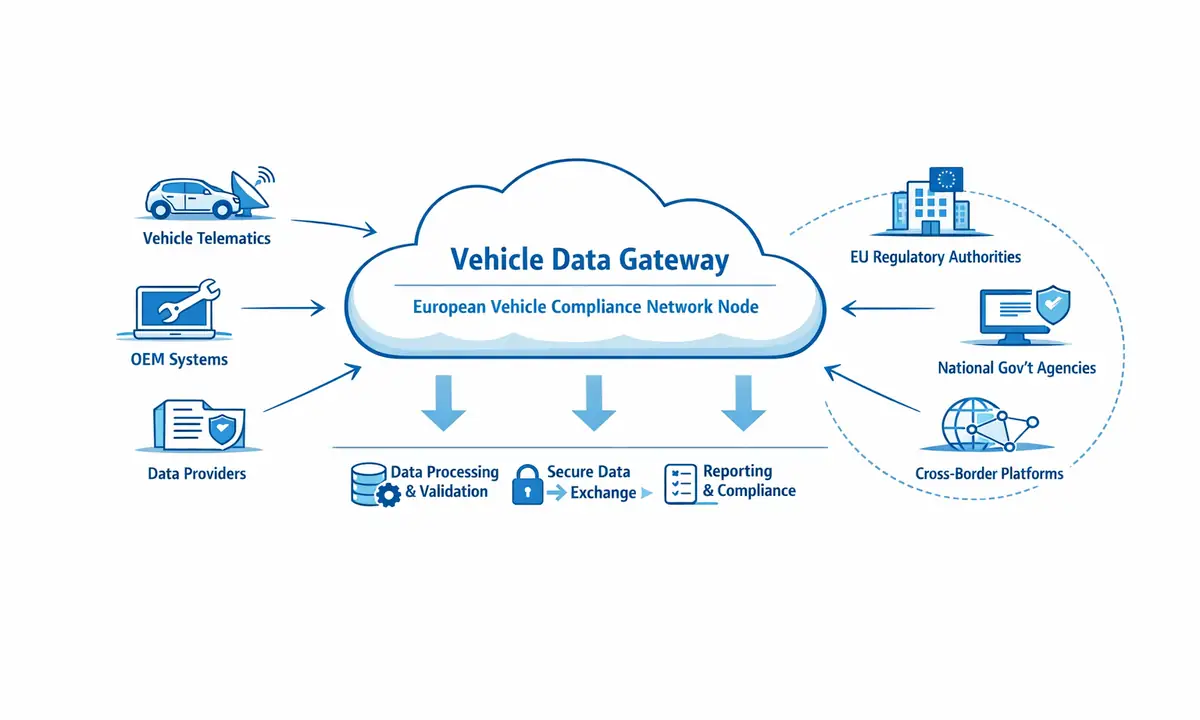
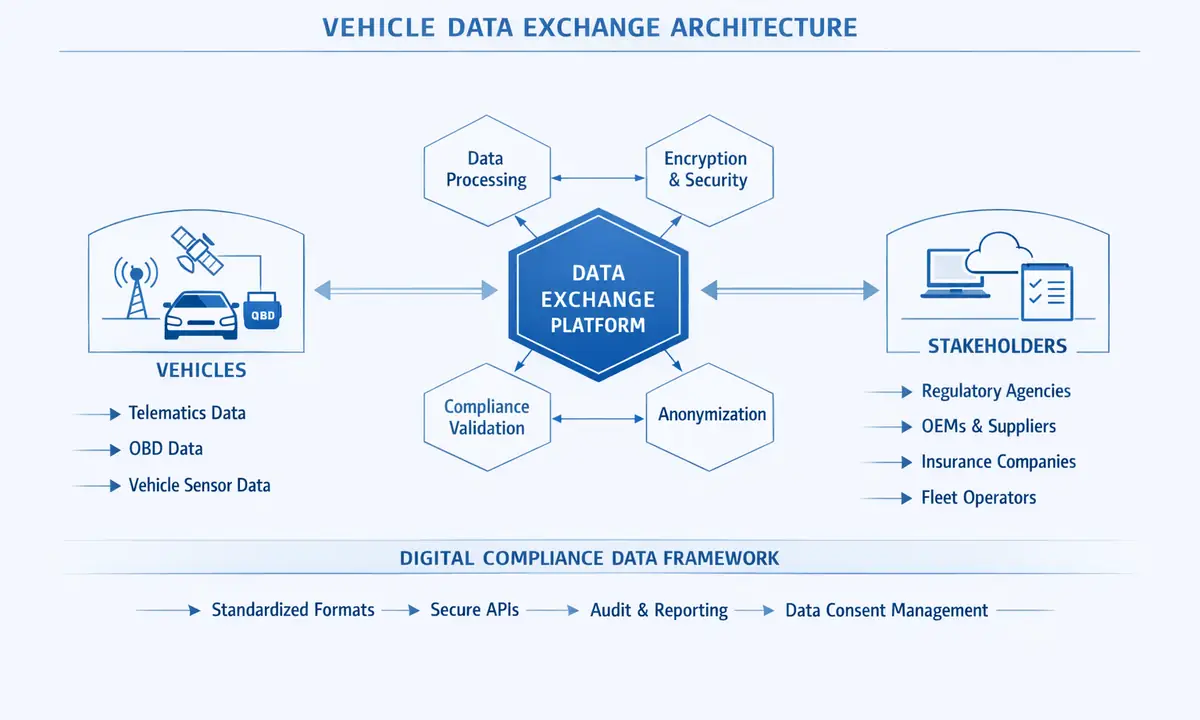
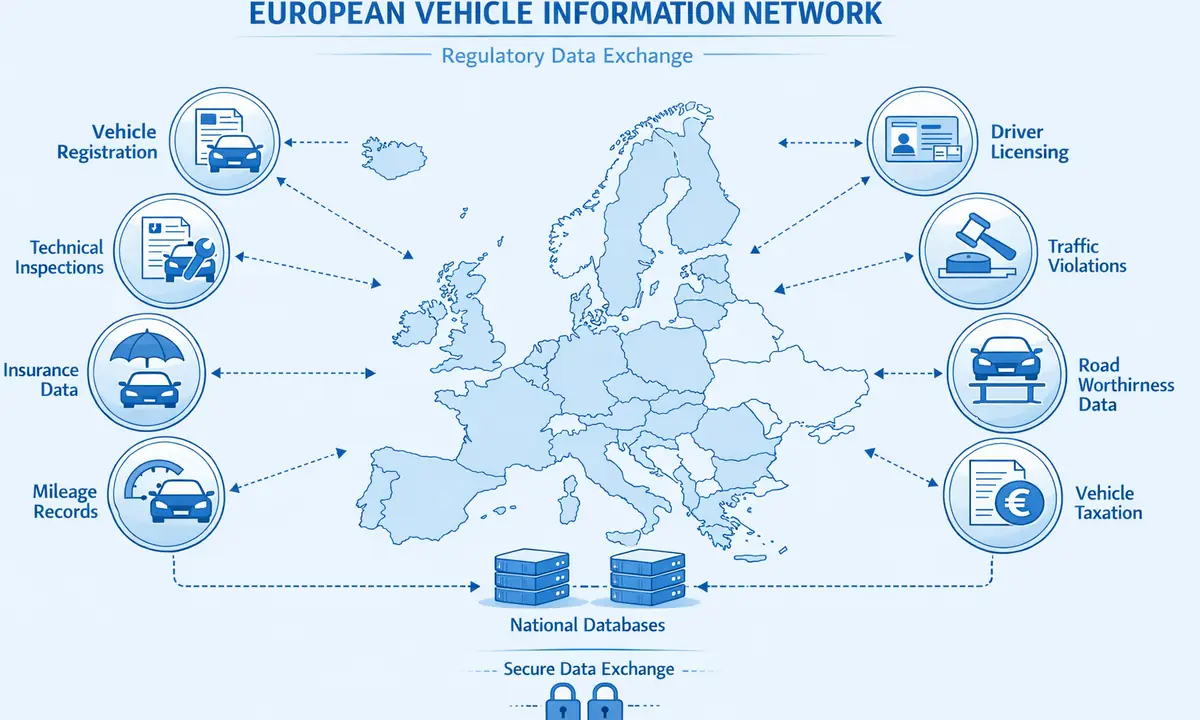
EUCARIS acts as a communication network connecting national vehicle and driving license databases. Each participating country maintains its own registry but can exchange information through the network when necessary.
This architecture allows authorities to query or share information while keeping national data systems independent.
Types of Data Shared Through EUCARIS
The system supports the exchange of several categories of regulatory data.
- Vehicle registration information
- Vehicle identification data
- Driving license information
- Vehicle approval references
- Administrative data related to vehicle ownership
These data exchanges help authorities perform tasks such as verifying vehicle registration information or supporting cross-border regulatory processes.
Benefits of EUCARIS
EUCARIS enables more efficient cooperation between European authorities by allowing structured digital communication between national registries.
- Improved cross-border administrative cooperation
- Faster verification of vehicle information
- Better support for vehicle registration processes
- More reliable exchange of regulatory data
The system contributes to a more integrated European vehicle information environment while allowing each country to maintain control of its own registry.
EUCARIS and Digital Vehicle Regulation
Modern automotive regulation increasingly relies on digital information exchange between authorities. Systems like EUCARIS support this transition by providing infrastructure for structured data communication.
This enables authorities to process vehicle information efficiently while maintaining regulatory oversight.
EUCARIS vs National Access Points
EUCARIS is the broader exchange environment used by authorities, while National Access Points act as country-specific gateways for certain data exchange flows. They are connected concepts, but they do not describe the same layer.
Understanding that difference helps teams see how infrastructure, data formats, and authority systems fit together in cross-border compliance workflows.
Where EUCARIS sits in the compliance stack
EUCARIS is not the approval rulebook and it is not the vehicle record itself. It sits in the exchange layer between authorities. That makes it especially important in workflows where vehicle information needs to move across borders or be checked against data held in another national system.
For teams working on digital vehicle compliance, that distinction matters. eCoC, IVI, approval data, and registration data each describe different layers of the process. EUCARIS helps those layers communicate in a controlled way when the workflow crosses national boundaries.
What EUCARIS does not replace
EUCARIS does not replace national registries and it does not centralize every vehicle record in one place. Participating countries keep their own systems. The network is useful because it enables structured exchange without forcing every country into one shared database model.
That architecture explains why EUCARIS repeatedly appears in discussions about vehicle registration, authority cooperation, and modern European compliance infrastructure.
Frequently Asked Questions
What does EUCARIS stand for?
EUCARIS stands for the European Car and Driving License Information System.
Who uses EUCARIS?
National authorities responsible for vehicle registration and driver licensing may use EUCARIS to exchange information with other countries.
What information is exchanged through EUCARIS?
The system supports the exchange of vehicle registration data, driving license information, and other regulatory information.
Is EUCARIS a central database?
No. Each country maintains its own national registry while the EUCARIS network enables secure communication between them.
How an authority exchange works in principle
A participating authority sends a permitted request through the relevant EUCARIS service. The request contains the identifiers and context needed by the responding national system. That system searches its own register, applies national access controls, and returns the information defined for the service. The source country remains responsible for its register; EUCARIS provides the exchange mechanism rather than replacing national ownership.
This distinction matters when a result is incomplete or appears inconsistent. The requesting authority needs to understand which country supplied the data, which service and purpose were used, and which identifiers produced the match. A response should not be reused outside that context simply because it travelled through the same network.
What EUCARIS means for manufacturers
Manufacturers should distinguish authority-to-authority exchange from their own conformity-data delivery route. Preparing IVI or eCoC information does not create general access to national registers. Likewise, a successful outbound submission does not prove how every later national or cross-border query will be processed. Those events involve different roles, permissions, and operational decisions.
Official and technical references
These sources support the regulatory and technical statements in this guide. Always check the current consolidated text and the instructions of the authority responsible for your submission route.