
Why Cross-Border Vehicle Compliance Requires Coordinated Data Systems
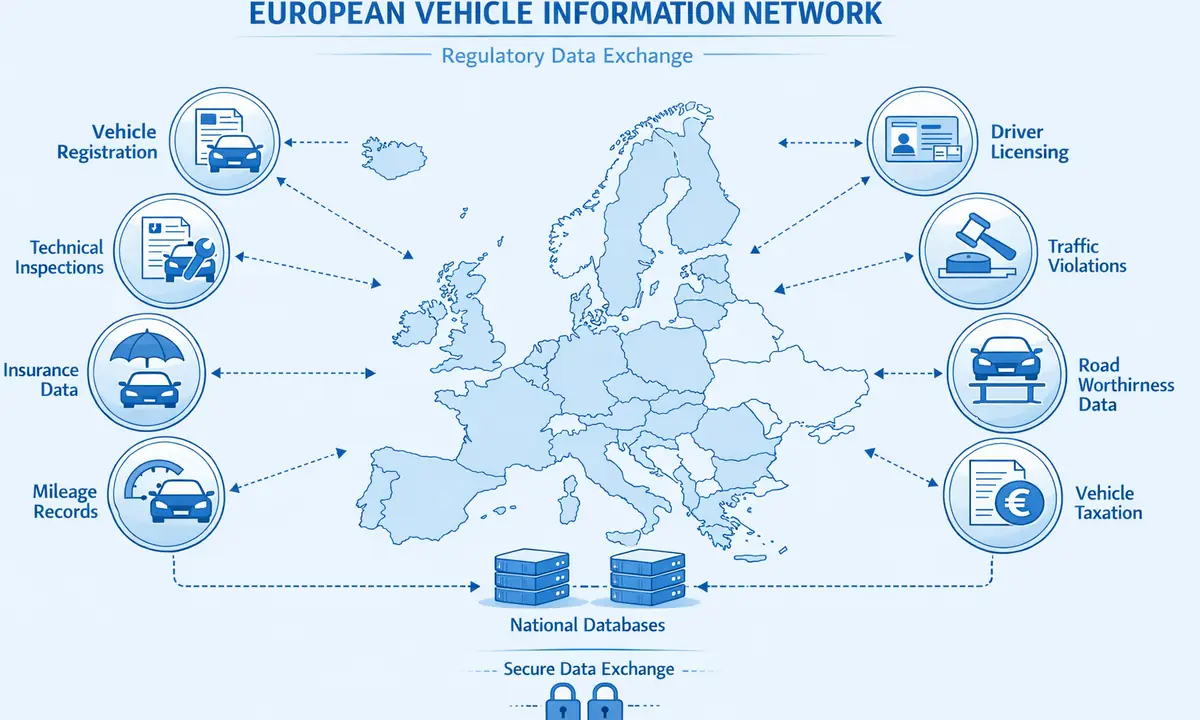
The European automotive market operates across many national jurisdictions. Vehicles may be manufactured in one country, approved in another, and registered in a third. Because of this cross-border environment, regulatory authorities must be able to exchange reliable vehicle information when verifying compliance.
The Cross-Border Nature of the European Automotive Market
Manufacturers distribute vehicles across multiple European markets. A vehicle produced in one member state can be sold and registered in another. To support this mobility, authorities must have access to accurate regulatory information describing the vehicle.
This information allows authorities to confirm that the vehicle complies with the relevant regulatory framework.
Regulatory Verification Across Jurisdictions
When a vehicle is registered in a country different from where it was approved or manufactured, authorities may need to verify approval data and technical vehicle characteristics. Access to reliable regulatory data helps authorities confirm that the vehicle corresponds to its approved type.
Without reliable information exchange, these verification processes could become significantly more complex.
The Importance of Coordinated Data Systems
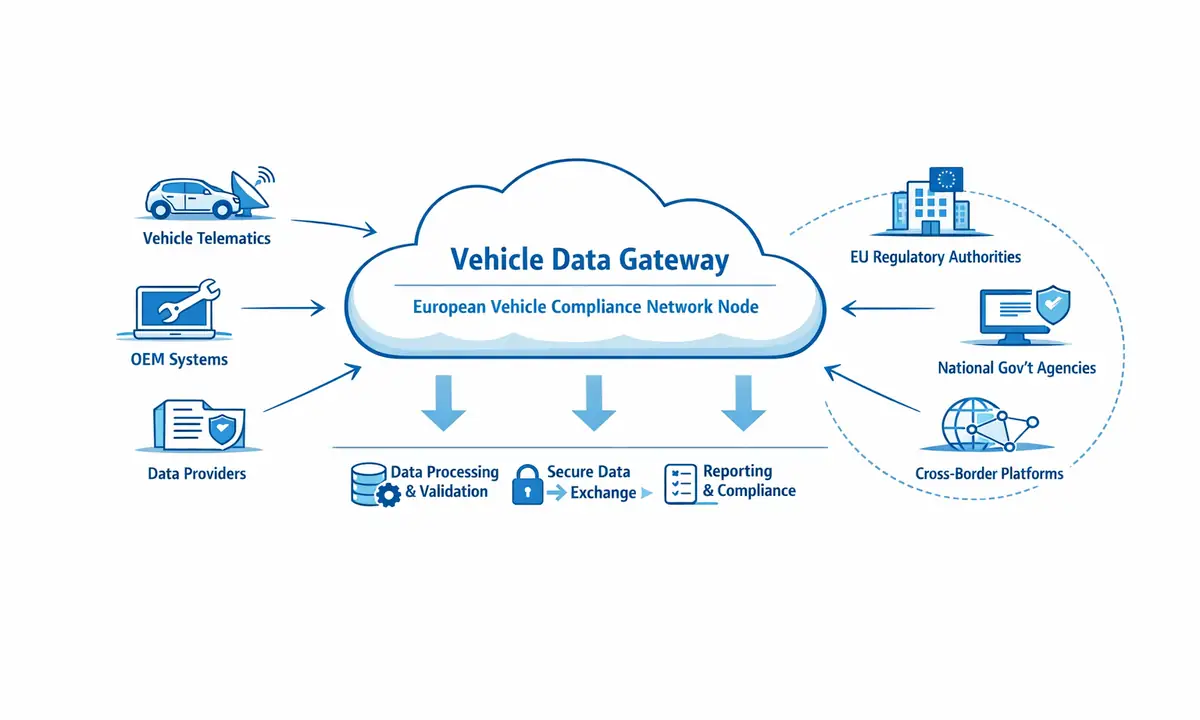
Coordinated data systems allow authorities to exchange structured vehicle information in a consistent and reliable manner. These systems support regulatory cooperation while ensuring that each authority maintains control of its own vehicle registry.
By using standardized communication frameworks, authorities can verify vehicle information more efficiently.
Structured Vehicle Data Exchange
Structured vehicle data formats allow compliance information to be represented in a consistent way. This enables regulatory systems to interpret vehicle characteristics without relying solely on manual document review.
Structured data exchange supports more efficient communication between regulatory stakeholders.
Benefits for Regulatory Authorities
Coordinated data exchange systems provide several advantages for regulatory authorities operating in a cross-border environment.
- Improved verification of vehicle approval information
- Faster vehicle registration procedures
- More reliable regulatory cooperation
- Reduced administrative complexity
These benefits help ensure that vehicles moving across borders continue to comply with regulatory requirements.
Challenges in Cross-Border Data Management
Despite the advantages of coordinated systems, managing vehicle data across multiple jurisdictions can still be complex. Regulatory systems must ensure that vehicle information remains accurate, consistent, and compatible with different administrative procedures.
This often requires careful coordination between authorities and organizations involved in regulatory processes.
Frequently Asked Questions
Why do authorities need cross-border vehicle data?
Authorities use vehicle data to verify that vehicles meet regulatory requirements before they are registered or operated.
How do countries share vehicle information?
Countries rely on coordinated regulatory systems that allow structured vehicle data to be exchanged between authorities.
Why is structured data important in cross-border compliance?
Structured data ensures that vehicle information can be interpreted consistently across different regulatory systems.
External references
No external references have been added yet.