
What Digital Vehicle Compliance Means in Europe
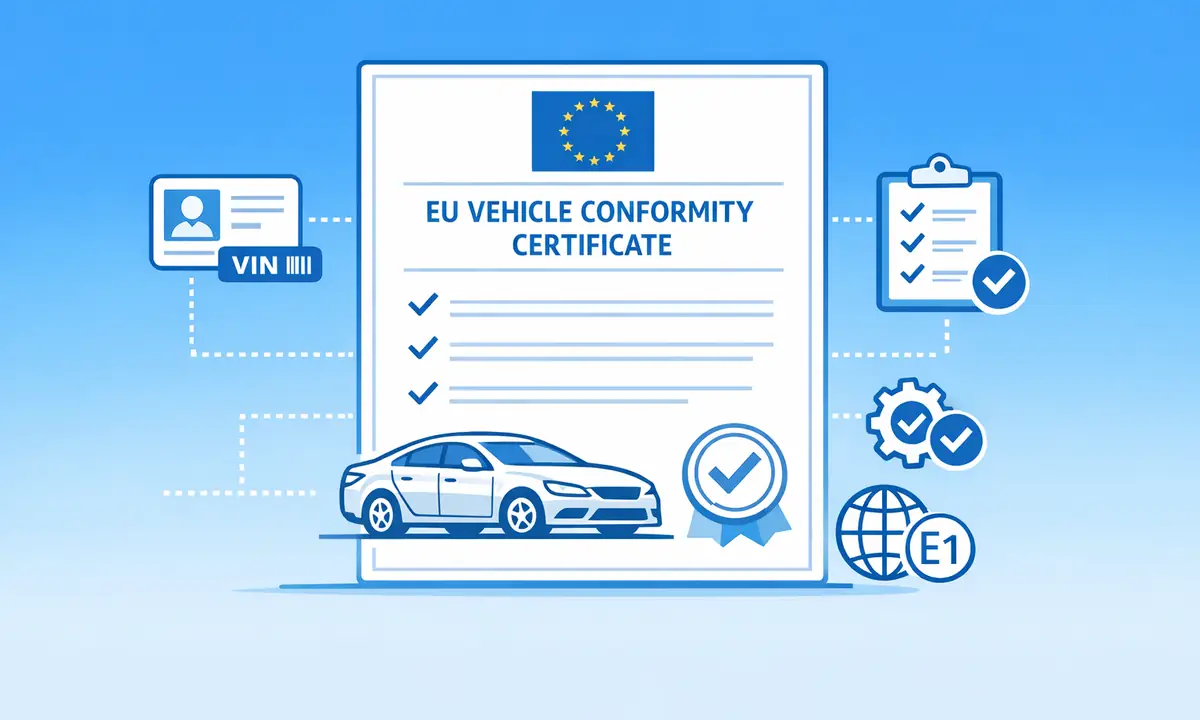
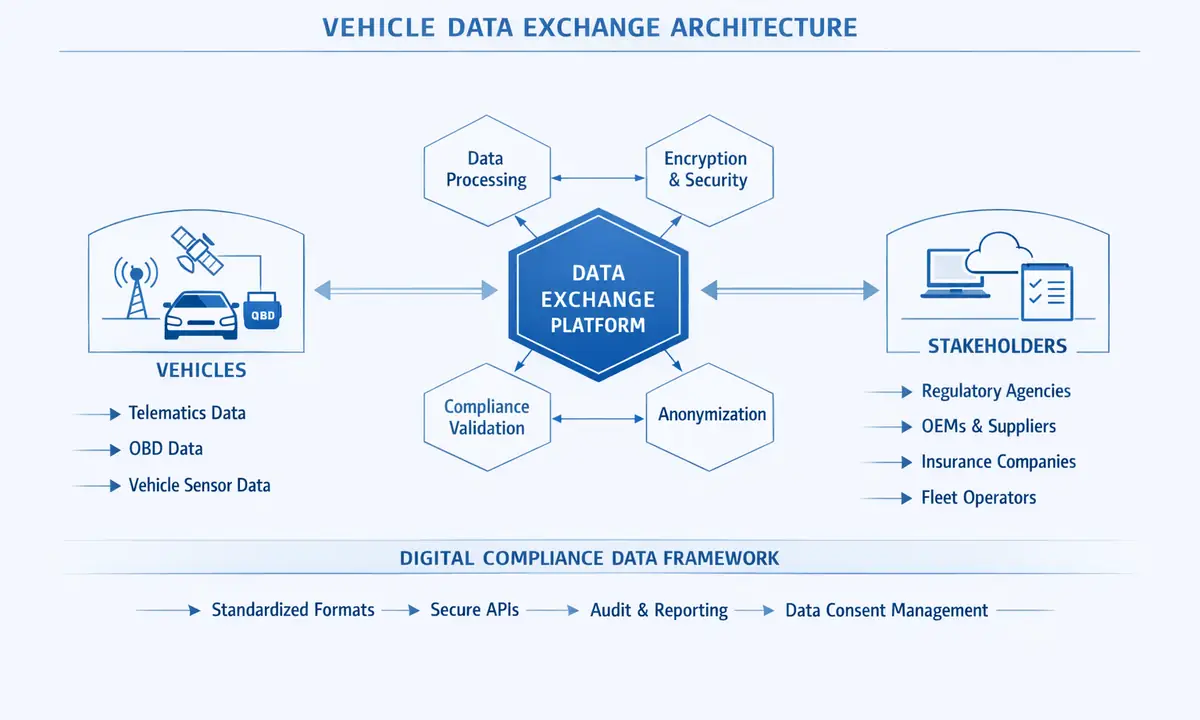
Digital vehicle compliance in Europe means managing approval, conformity, and regulatory vehicle information through structured data systems instead of document-only processes. It reflects the broader shift toward machine-readable workflows across approval, registration, and cross-border exchange environments.
Why compliance is becoming digital
Vehicle compliance now depends on more structured information, more connected systems, and more consistent data handling. Digital workflows make that possible by representing vehicle information in system-ready formats.
What changes in practice
The move is not just about replacing paper. It changes how teams prepare data, validate it, hand it off between systems, and support downstream authority processes.
- More structured data models
- More validation before release
- More emphasis on consistency across systems
Why this matters for manufacturers
Manufacturers need more than output generation. They need a way to manage the underlying data, approval references, and release logic so digital compliance workflows remain reliable.
Frequently Asked Questions
What does digital vehicle compliance mean?
It means using structured data and connected systems to manage approval, conformity, and regulatory workflows more reliably than document-only processes.
Digital compliance is more than replacing paper with PDF
A process becomes meaningfully digital when the underlying vehicle information can be identified, validated, exchanged, corrected, and traced across systems. Scanning a signed document may improve access, but it does not give receiving systems structured values or make relationships between those values testable.
In a structured workflow, approval data, production information, individual-vehicle identifiers, validation rules, release decisions, and authority responses are connected. That allows errors to be detected earlier and corrected at their source. It also creates new responsibilities: mappings, code lists, credentials, message versions, and system states must be governed with the same care previously given to formal documents.
What changes for manufacturers and authorities
Manufacturers need controlled source data and repeatable generation rather than one-off document preparation. Authorities can process defined information more consistently, but they still apply legal purpose, access controls, national implementation, and professional judgement. Automation supports those decisions; it does not remove the responsible actor.
Cross-border exchange adds another boundary. National registers remain under national control even when authorised services connect them. A successful delivery, a local validation result, an authority acknowledgement, and a later registration decision are distinct events and should appear as distinct states in an operational system.
A practical digital-compliance maturity test
- Can every released value be traced to a controlled source and applicable approval?
- Can the team reproduce the output with the recorded mapping and rule versions?
- Are local preparation, external submission, acceptance, and correction separate states?
- Can affected vehicles be identified when a source value or rule changes?
- Are authority-specific instructions separated from general regulatory interpretation?
The information lifecycle behind a digital process
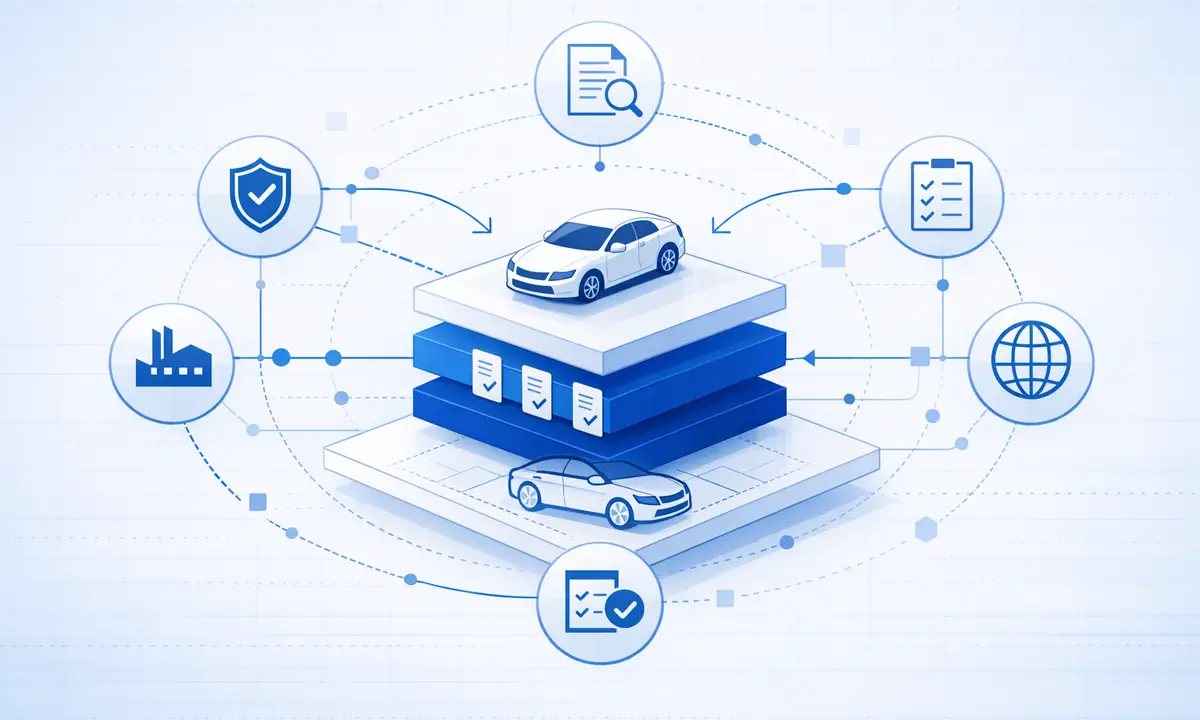
A useful lifecycle begins with applicable requirements and approval evidence, continues through controlled vehicle definitions and production data, and produces structured information for release or exchange. Validation results, signatures or seals, delivery events, acknowledgements, corrections, and retained versions complete the record. Each stage should identify its owner and the event that allows the next stage to begin.
This lifecycle prevents a dashboard from showing one ambiguous “complete” state. A record can be complete for local preparation but waiting for authorised release; released but not delivered; delivered but rejected; or accepted and later corrected. Those distinctions matter operationally and should remain visible.
Interoperability without losing national responsibility
European digital processes need common structures and exchange mechanisms because vehicles, manufacturers, approvals, and registrations cross borders. At the same time, national authorities keep responsibility for their registers, access decisions, and implementation. Interoperability therefore means exchanging defined information under controlled purposes—not making every system or national procedure identical.
Manufacturers should design integrations around the actual authority route, accepted specification, credentials, and acknowledgement model. A generic European concept page can explain the ecosystem, but production configuration must be grounded in current route-specific evidence.
Common digitalisation mistakes
- Turning a paper form into fields without defining authoritative sources.
- Using one status for generation, validation, submission, and acceptance.
- Correcting final XML while leaving the source or mapping unchanged.
- Changing visible dates without a substantive content or rule review.
- Assuming that automation transfers legal responsibility to the software.
What good digital evidence looks like
Good evidence is understandable outside the system that created it. A reviewer should be able to identify the vehicle, applicable approval and rule versions, source data, material transformations, validation outcome, responsible decision, external response, and any later correction. Screenshots without underlying versions or raw data without context are both incomplete.
Retention should be proportionate and secure. Store the evidence needed to reproduce and explain a decision while keeping credentials, private signing material, and unnecessary copies of full payloads out of general logs and support exports.
That audit trail is also what allows digital compliance to improve over time: recurring failures can be corrected at their common source instead of being handled as isolated document errors.
Official and technical references
These sources support the regulatory and technical statements in this guide. Always check the current consolidated text and the instructions of the authority responsible for your submission route.