How Manufacturers Manage eCoC Data at Scale
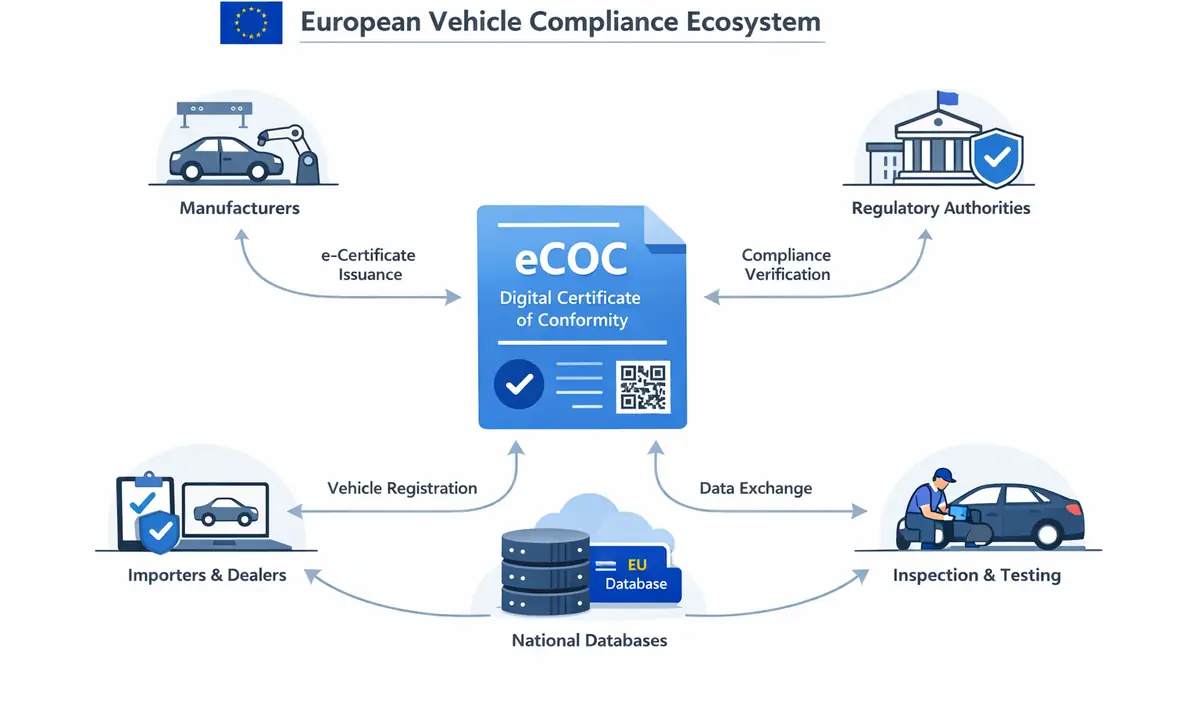
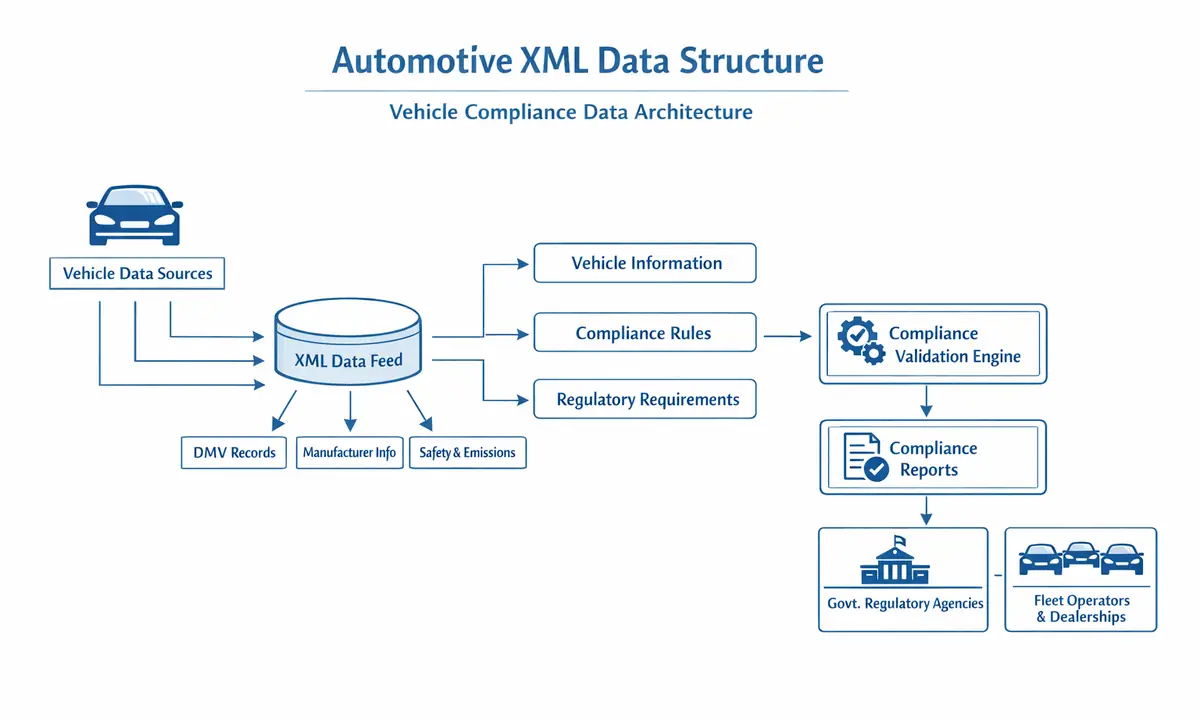
Manufacturers manage eCoC data at scale by treating conformity information as a structured operational asset rather than as isolated certificate output. That means combining governed source data, validation steps, and repeatable release workflows.
Why scale changes the problem
At low volume, teams can often work around fragmented data handling. At manufacturer scale, the same approach becomes harder to control because more programs, variants, markets, and approvals depend on the same operational logic.
What strong eCoC data management looks like
Strong eCoC operations are built on governed records, validation before output release, and clearer handoffs between technical, compliance, and operational teams.
- One structured source for approval-related data
- Clear checks before XML generation or release
- Consistent handling across programs and markets
Why data governance matters
The difficulty of eCoC management is not only technical. It is operational. Teams need confidence that the vehicle data used to support conformity workflows is still aligned with the approved basis and with downstream exchange requirements.
Frequently Asked Questions
Why is eCoC data management difficult at scale?
Because the same approval-sensitive information needs to stay accurate and consistent across more programs, markets, systems, and workflows.
Separate reusable definitions from individual-vehicle data
At scale, repeatedly copying full certificate records creates inconsistency and unnecessary review. Manufacturers need a governed model in which stable approval and configuration definitions can be reused while VIN-specific, production, market, and release information remains attached to the individual vehicle. The model should make inheritance visible without allowing a change to rewrite released outputs silently.
Templates can support this approach, but they need controlled scope. A template should identify the vehicle types and configurations for which it is valid, the source of each mapped field, its rule and schema versions, and any values that still require confirmation. A template is not evidence that every vehicle using it is compliant.
Validation and exception handling at production volume
Run inexpensive deterministic checks early, before a vehicle reaches the release queue. Cross-field and approval checks can then focus on records that are otherwise complete. Errors should be grouped by cause so one mapping correction can resolve a fleet-wide problem without hiding VIN-specific exceptions.
Exceptions need explicit ownership, supporting evidence, and expiry or resolution. If users can bypass a warning without recording why, the organisation cannot distinguish an accepted edge case from a repeated control failure. Dashboards should therefore measure unresolved causes and affected vehicles, not merely count generated files.
Safe bulk correction
When a defect is discovered, identify the source version, mapping, rule, and outputs affected. Correct the governed source, regenerate in a controlled batch, compare material changes, and require approval before replacement or resubmission. Released records should remain available as historical evidence together with the corrected version and reason.
This process allows throughput to increase without turning automation into uncontrolled multiplication. The operational goal is repeatability with accountability: the same approved inputs and versions should produce the same output, while every intentional exception remains explainable.
Designing the production release queue
A release queue should admit only records that meet defined prerequisites: applicable approval and configuration, complete individual identifiers, required market data, successful validation, and resolved exceptions. Records that fail should remain visible with a cause and owner rather than disappearing into a general error list. This lets teams separate source-data defects from mapping, infrastructure, and authority-route problems.
Prioritisation should reflect operational need without bypassing controls. Urgent vehicles may move ahead in the queue, but they should pass the same rules and authorised decision. If an exception process is required, it needs evidence and a clear limit so that an emergency path does not become the normal production workflow.
Monitoring quality at scale
Useful measures include first-pass validation rate, failures by rule and source, time to resolve an exception, number of vehicles affected by a shared defect, regenerated outputs, rejected deliveries, and corrections after release. Raw certificate volume says little about quality when the same error can be reproduced automatically.
Teams should review changes as well as failures. A new approval version, code list, mapping, or schema can alter many records without producing an immediate system error. Impact analysis and representative regression cases help show whether the updated process still describes every supported configuration correctly.
Operational safeguards for bulk actions
- Preview affected vehicles and changed fields before applying a bulk update.
- Require a bounded selection instead of an unrestricted “all records” action.
- Keep previous released outputs and the reason for replacement.
- Make retries idempotent so a timeout does not duplicate release or delivery.
- Reauthorise the user and scope at the point of a sensitive release action.
Scaling teams as well as systems
Higher volume increases the number of exceptions, approvals, corrections, and handovers—not only the number of generated files. Define who owns source quality, mapping changes, rule updates, release approval, failed deliveries, and customer or authority communication. Service levels should distinguish a blocked production record from a platform incident and from an external route outage.
Official and technical references
These sources support the regulatory and technical statements in this guide. Always check the current consolidated text and the instructions of the authority responsible for your submission route.