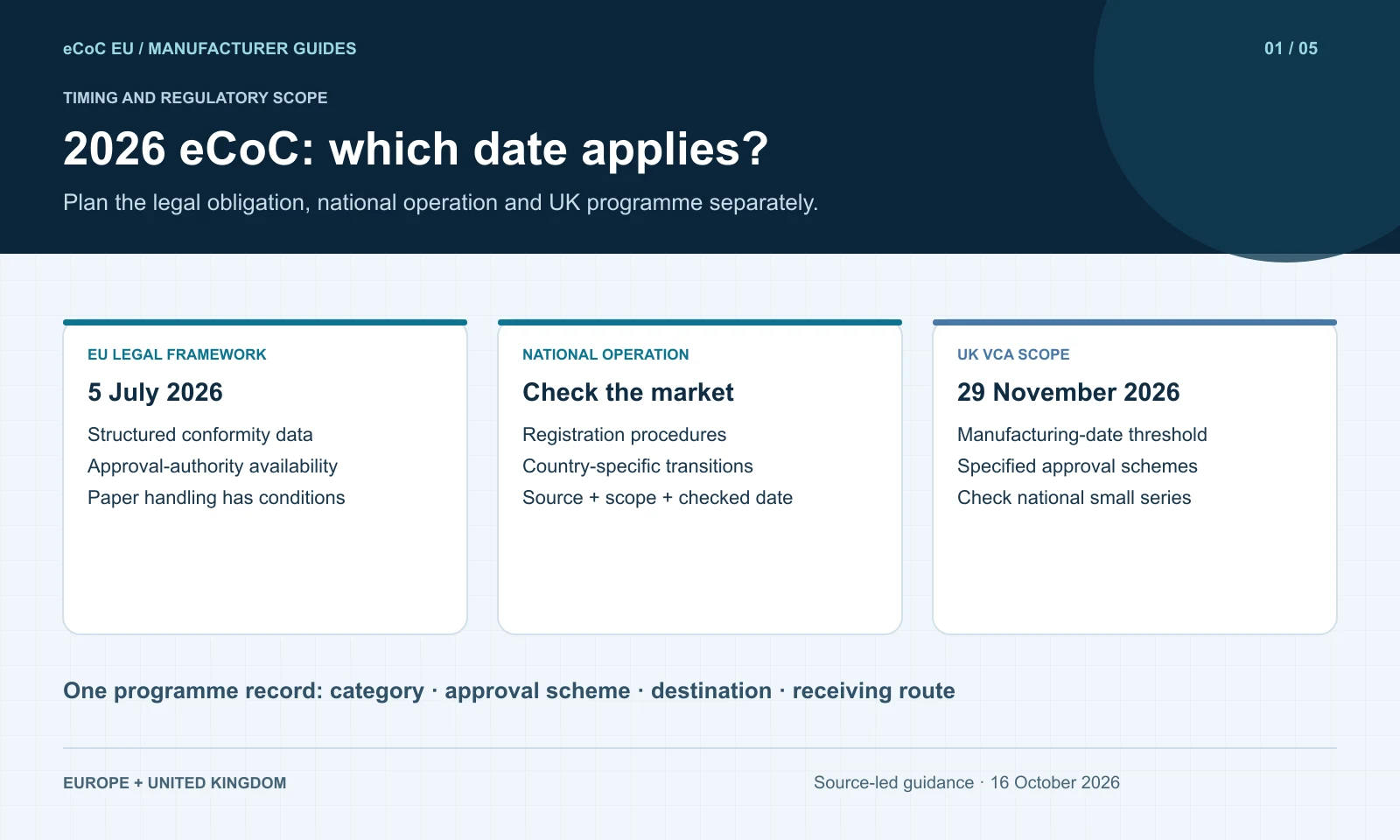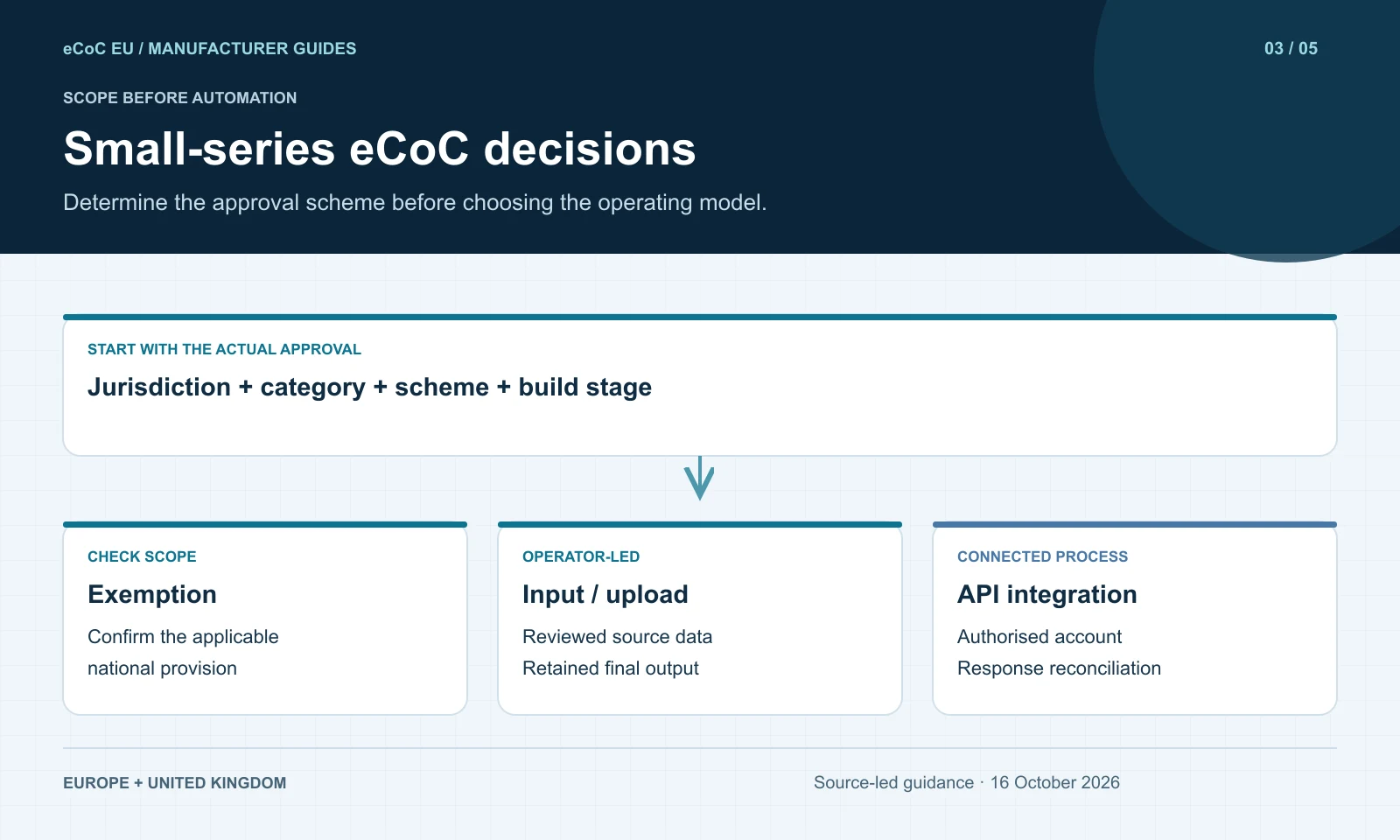
Small-series eCoC requirements depend on the approval scheme and jurisdiction, not simply annual output. EU provisions distinguish national small-series exemptions from simplified electronic input/upload. UK VCA guidance exempts GB/UKNI national small series, while GB medium series and UKNI EU small series remain within scope. Confirm the scheme before selecting software or an API.
Why production volume is the wrong first filter
A workshop producing a few dozen specialised vehicles may use an approval route different from another workshop with similar output. “Small manufacturer” is a commercial description; the approval scheme is the starting point for the regulatory decision.
Take the actual approval certificate to the assessment. Record the approval holder, category, scheme, type identifier and the entity issuing the conformity information. For a multistage build, identify your own stage and the evidence you receive from the previous manufacturer. A spreadsheet labelled “small series” cannot establish these facts.
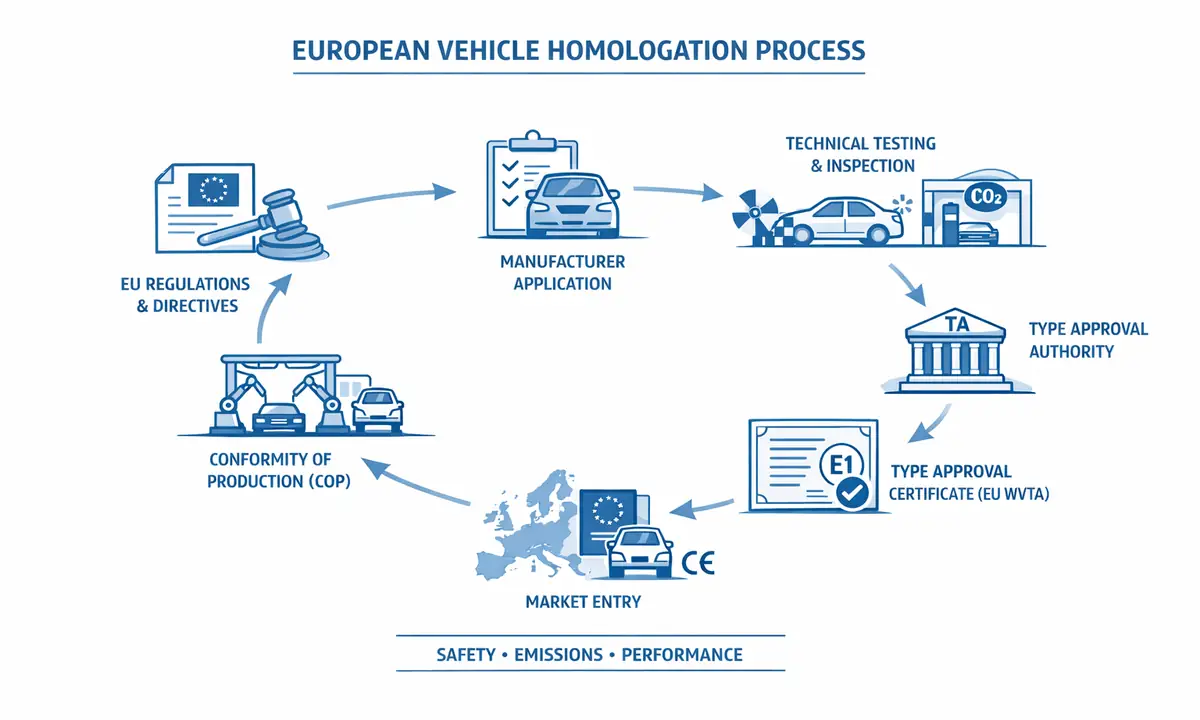
The vehicle type-approval guide provides the foundation. The decision below concerns the eCoC process attached to the programme; it does not create a new approval or change the conditions of an existing one.
| Situation | What the source establishes | Evidence to obtain |
|---|---|---|
| EU national small series | Article 37(4) allows Member States to exempt the relevant national small-series types. | The applicable national decision and confirmation that the approval falls within its scope. |
| EU simplified submission | Article 3a of Regulation 2021/133, inserted by 2024/1061, provides manual input or IVI XML upload for the specified small-series context. | The receiving procedure, access arrangement and accepted specification. |
| GB/UKNI national small series | VCA identifies these schemes as exempt from mandatory eCoC submission. | The approval scheme and the paper-CoC process retained for the vehicles. |
| GB medium series / UKNI EU small series | VCA includes these schemes within its eCoC requirements. | A UK output and submission plan appropriate to the programme. |
Read Article 37(4) in the EU framework together with the 2024/1061 small-series input provision. The second provision is a submission accommodation, rather than a statement that all small-series manufacturers can abandon structured electronic data. For UK schemes, use VCA's scope guidance independently.
Manual input, XML upload or API?
Choose the operating model after confirming scope. A low-volume programme with a stable type and occasional releases may be well served by operator-led preparation. A higher-throughput operation with several source systems may benefit from automation. Neither production volume nor an integration sales pitch should replace a review of the actual handovers.
| Option | Potential fit | Control to establish |
|---|---|---|
| Manual entry | Occasional records and an authorised input tool. | Independent checking, field provenance and a retained final output. |
| XML file upload | A controlled source already produces complete destination-specific XML. | Correct schema, signing where applicable, submission outcome and correction ownership. |
| API integration | Frequent releases or connected production systems. | Environment separation, authorised account, retry control, monitoring and response reconciliation. |
These are operating choices, not promises that every authority offers every option. The EUCARIS implementation guidance explains manufacturer access in the European system. Confirm what the chosen receiving route actually supports before designing the solution.
A minimum working process for a small team
- Maintain one approved template. Identify the type, variant/version, source approval revision and conditional fields.
- Enter vehicle-specific values once. Preserve the VIN and production characteristics against the right programme.
- Review exceptions before release. Give missing or contradictory values a named owner and a clear next action.
- Retain the final artefact. Keep the released XML, relevant checks and signing evidence together.
- Close the submission loop. Store the receiving outcome and investigate records without a confirmed result.
- Keep a correction path. A small team still needs to identify which original record a later correction replaces.
One person may perform several roles, but the roles should remain visible. If your organisation permits a single operator to enter and release a record, document the compensating review and the procedure for exceptions. That decision should be deliberate rather than an accidental consequence of limited staffing.
How to create a CoC template
Learn how to create a CoC template and reuse vehicle data across records.
Example: moving from document folders to controlled release
A specialist manufacturer starts with one approval family and a modest monthly output. Its first implementation can focus on a reviewed template, a small set of vehicle-specific fields and a queue showing records awaiting review. There is no need to begin with an ERP integration if source data is not yet consistent.
The acceptance exercise should include one routine vehicle and one vehicle with a changed production value. Ask the operator to show the supporting evidence, explain the difference and locate the final receiving response. This reveals whether the system reduces work while retaining control.
As output grows, the same data model can support a different input method. A useful migration preserves template revisions and release evidence so that automation does not create a second, disconnected certificate history.
What to ask when comparing eCoC software
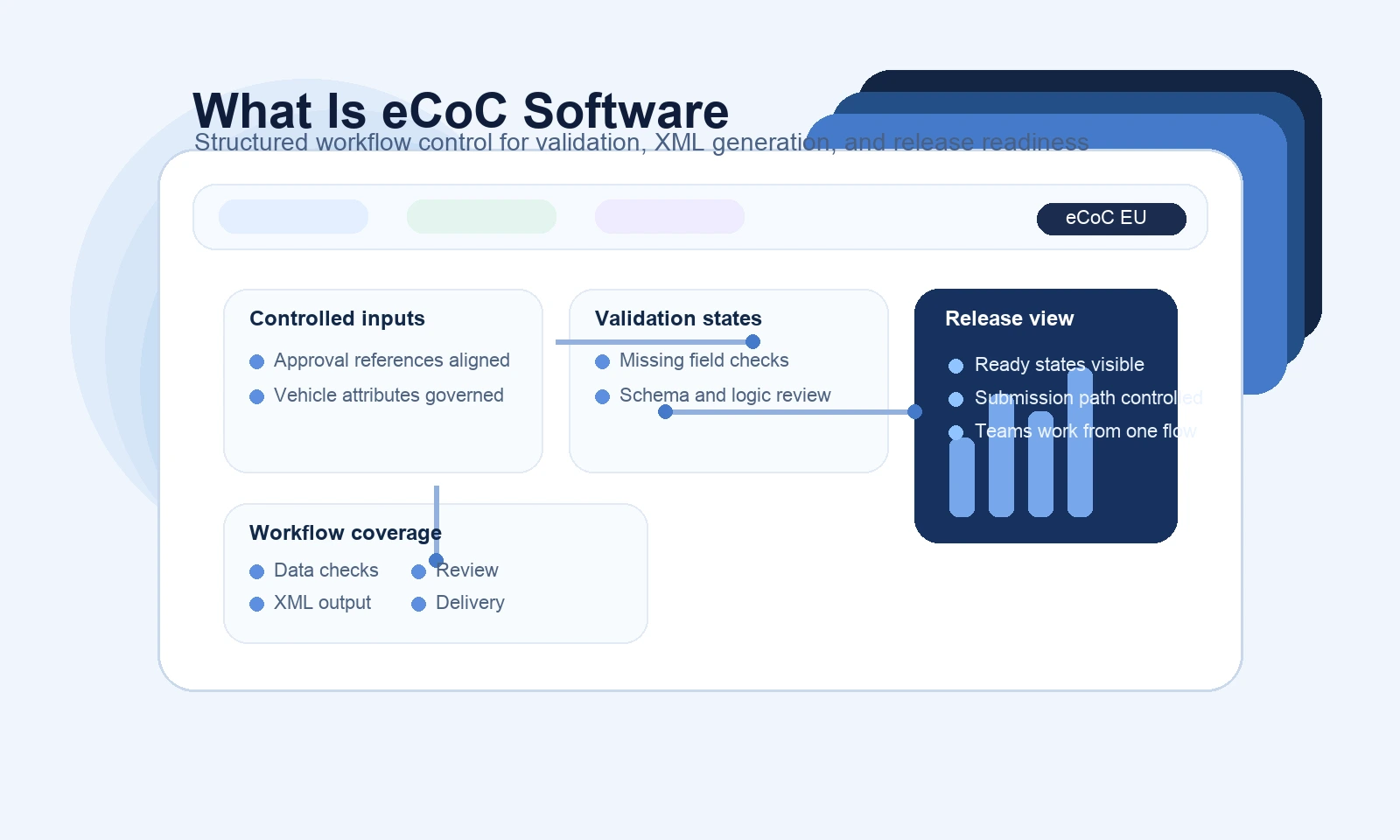
Ask for a demonstration using your approval route, vehicle category and realistic source format. Review how setup work, user access, certificate volume and integration scope affect the proposal. Establish who maintains mappings and how a rejected submission returns to the operator.
For the wider context, use the manufacturer knowledge hub. Explore eCoC software and manufacturer implementation support with a programme-specific checklist. The agreed demonstration should show operational fit and make any authority-onboarding work explicit.
Frequently asked questions
Are all low-volume manufacturers exempt from eCoC?
No. Determine the approval scheme and jurisdiction. EU national small-series exemptions require the relevant national position; simplified electronic input is a separate provision. UK scope also distinguishes national small series from other limited-volume schemes.
Does a small manufacturer need an API?
An API is an operating choice rather than a universal starting requirement. Confirm the available receiving routes and compare operator workload, source-data quality, traceability and anticipated volume before deciding.
Can we start with one type approval?
A bounded first implementation can be useful. Define its approval family, vehicle category, output specification, account and acceptance cases. Do not treat successful testing of that programme as evidence that every other programme is covered.
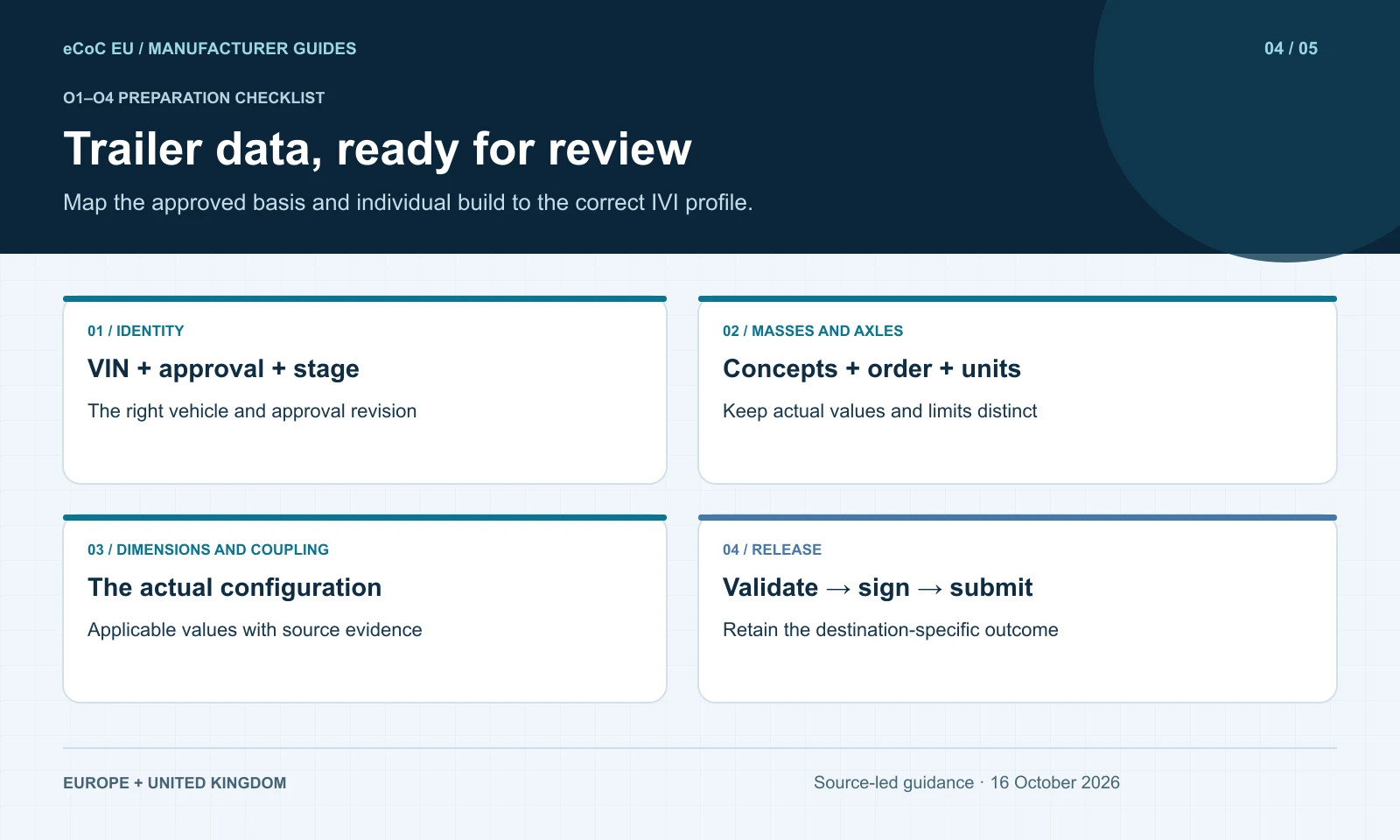
Trailer programmes have additional data questions. Continue with the O1–O4 trailer eCoC preparation checklist.
Official and technical references
These sources support the regulatory and technical statements in this guide. Always check the current consolidated text and the instructions of the authority responsible for your submission route.