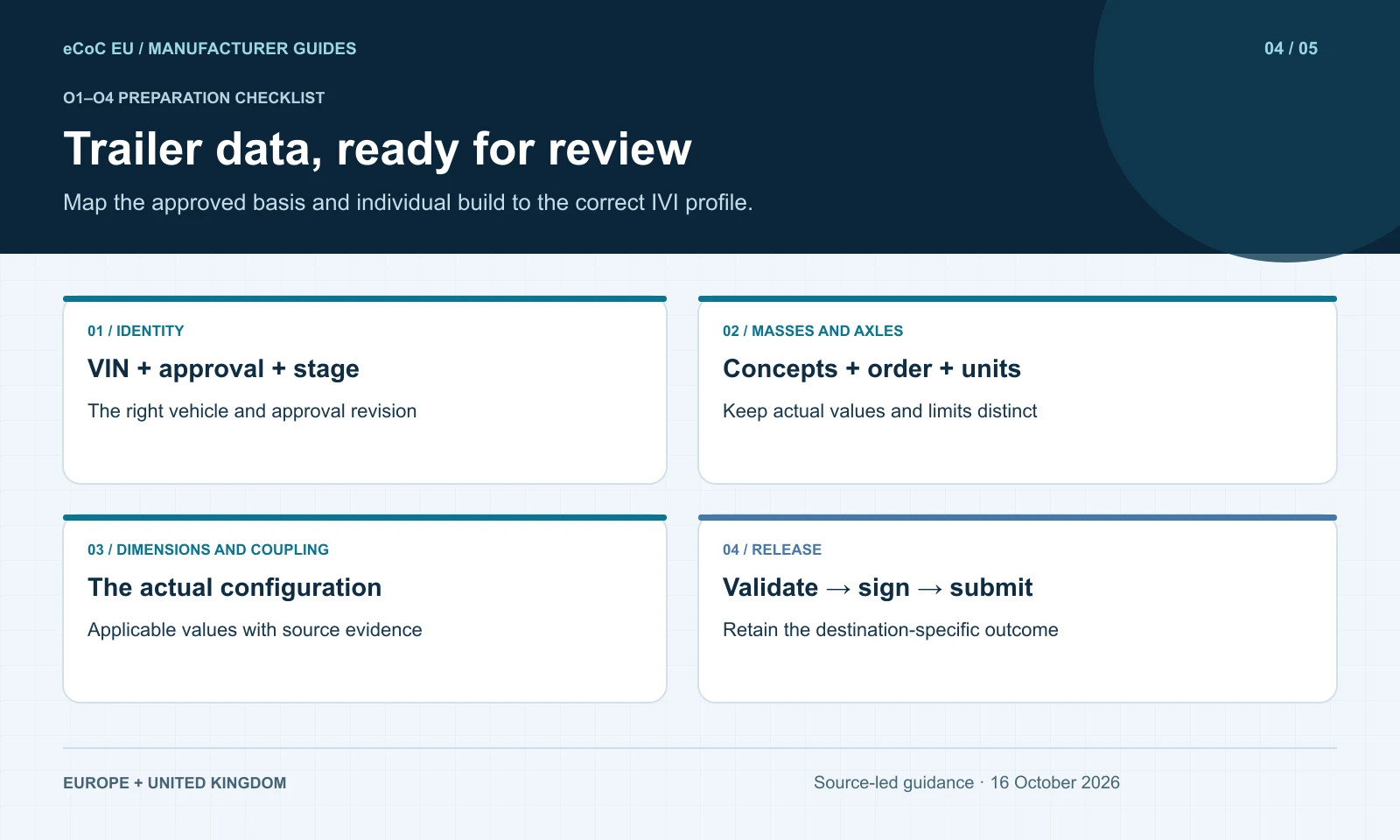
A trailer eCoC checklist should establish the approval scheme and O-category first, then reconcile vehicle identity, masses, axles, dimensions and applicable coupling information with the individual build. Map the reviewed values to the IVI specification required by the receiving route. O1–O4 category alone does not decide an exemption or complete the submission process.
Which trailer programme are you preparing?
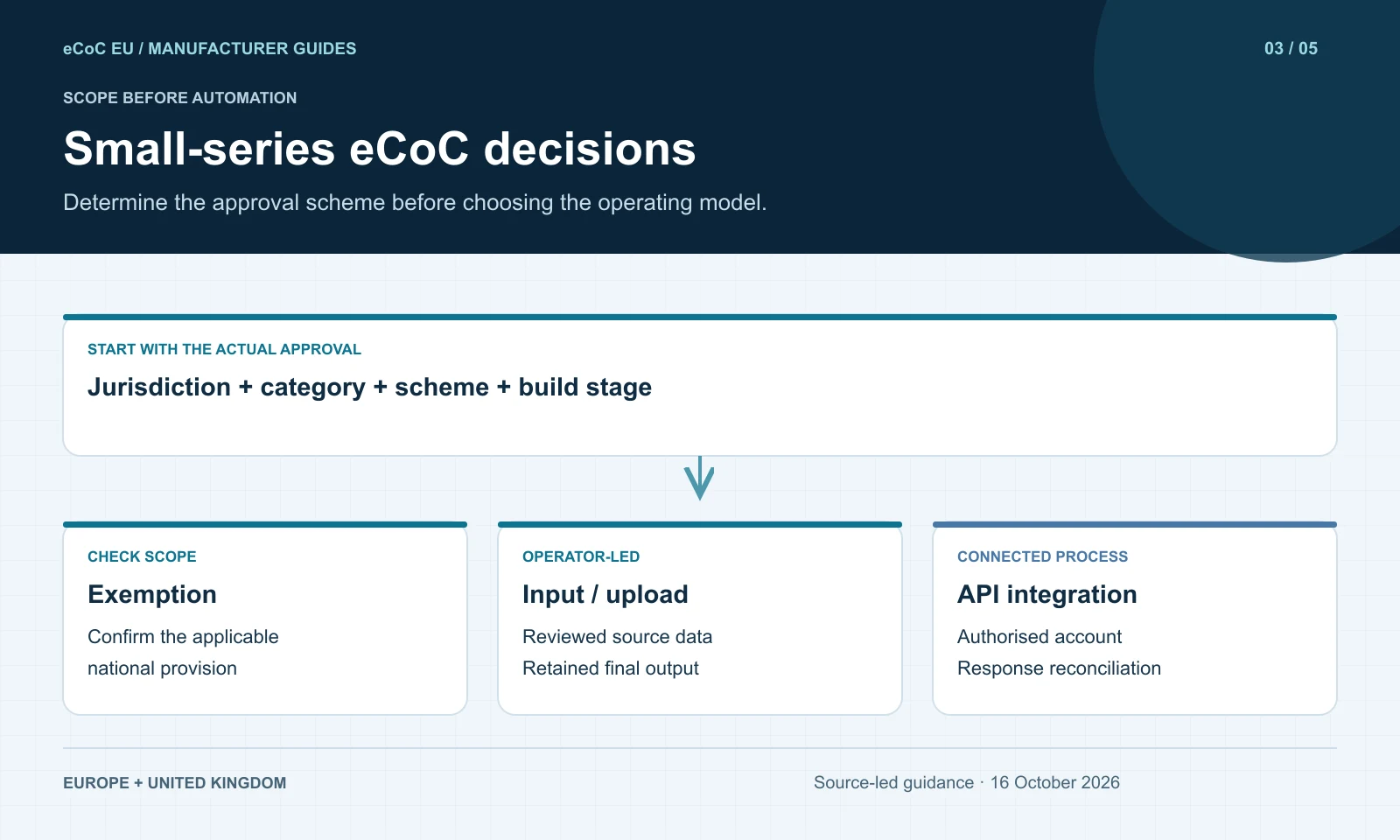
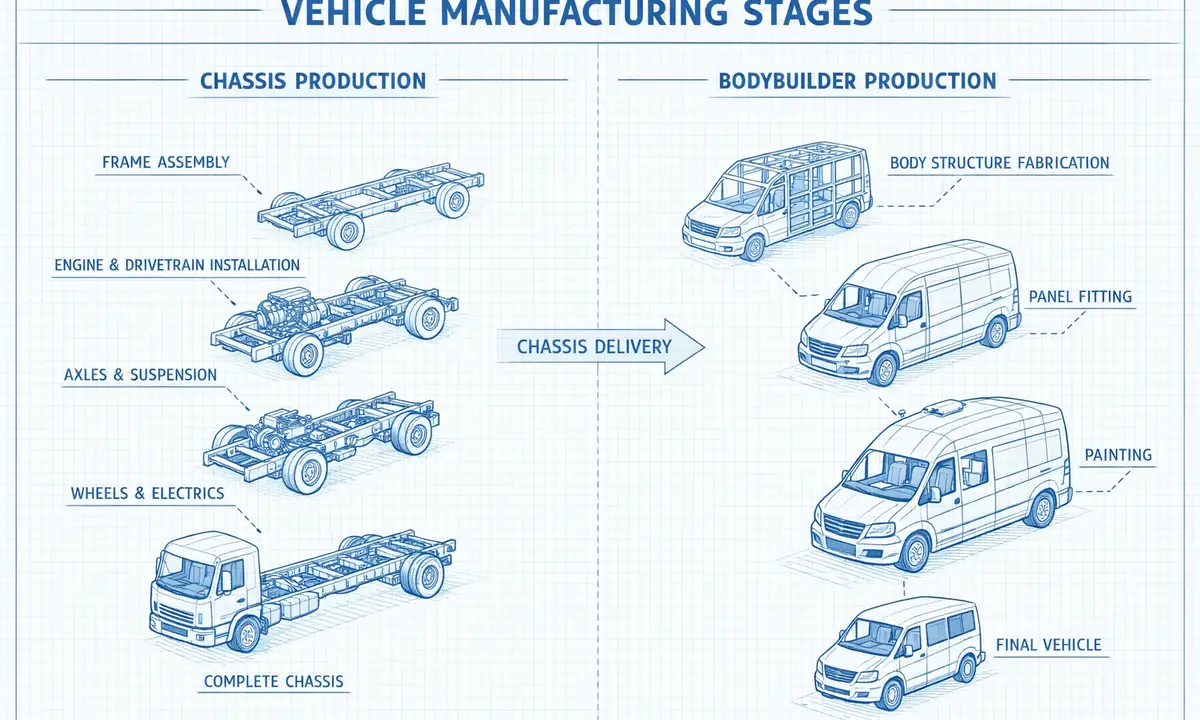
Confirm the approval holder, type/variant/version, build stage and intended delivery route before opening an XML template. Distinguish a complete trailer from an incomplete or completed vehicle. Also identify whether the programme uses EU, GB or UKNI approval and whether a national small-series provision applies.
Article 4 of Regulation (EU) 2018/858 divides category O by maximum mass: O1 up to 0.75 tonnes; O2 above 0.75 and up to 3.5 tonnes; O3 above 3.5 and up to 10 tonnes; O4 above 10 tonnes. Apply the detailed categorisation criteria to the actual vehicle, rather than classifying it from a sales description or an informal payload figure.
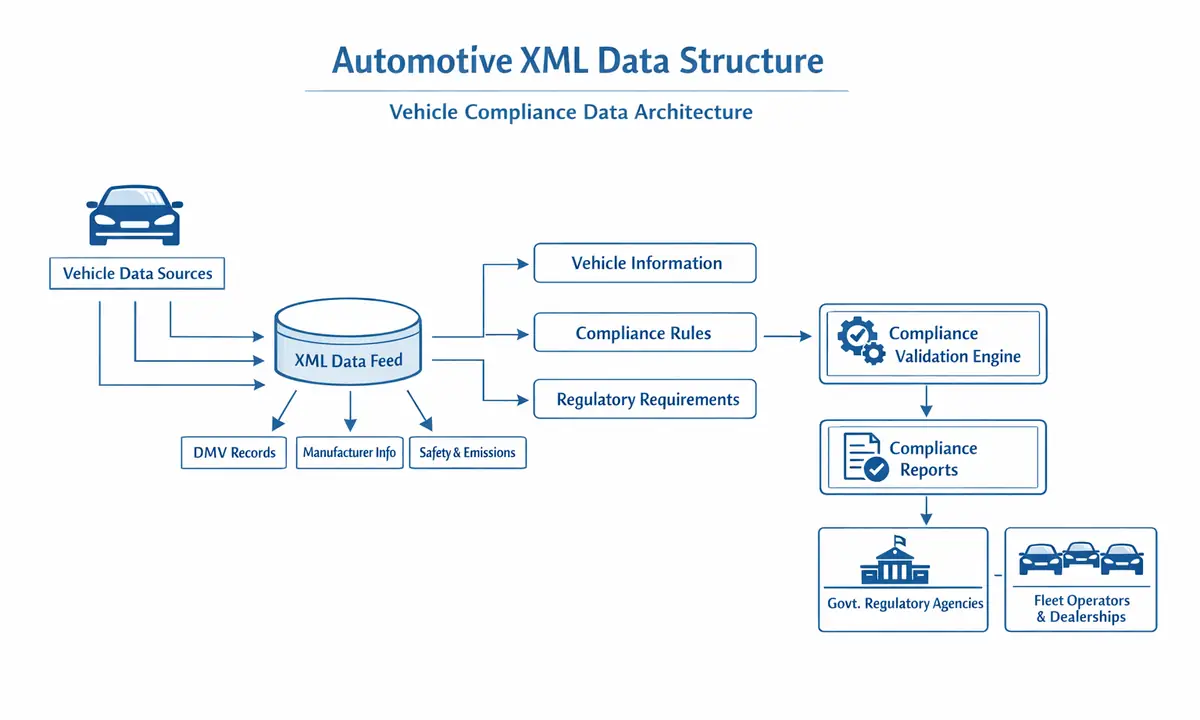
The applicable conformity information differs by category and completion status. Annex VIII of Regulation 2020/683 provides category-specific CoC templates; the electronic representation follows the electronic-format rules and IVI specification. A paper field label is a mapping reference, not necessarily an XML element name.
The core trailer data preparation checklist
| Data group | Source to reconcile | Practical release check |
|---|---|---|
| Identity and approval | VIN, manufacturer, manufacturing date, approved type/variant/version and approval references. | The record belongs to the actual build and the correct approval revision. |
| Masses | Approved mass limits and the applicable individual-vehicle mass evidence. | Keep technically permissible values distinct from actual and registration/in-service values. |
| Axles and wheels | Axle count, configuration, applicable axle/group masses and tyre/wheel information. | Axle order and applicability agree throughout the record. |
| Dimensions | Category-relevant length, width, height, wheelbase and other applicable measurements. | Units and the measured/configured build agree with the approved basis. |
| Coupling | Trailer design, approval/marking and applicable coupling characteristics. | The selected data belongs to the installed or permitted configuration. |
| Special or conditional data | Applicable body, equipment, environmental and stage-specific information. | Omission or a not-applicable code has an evidence-based reason. |
This matrix is a preparation aid, not an exhaustive list of mandatory XML elements. The schema, messagebook, approval evidence and applicable rules determine which fields are required for the specific vehicle. Keep a field-level mapping register beside the checklist so that an operator can trace a questioned value to its source.
Prevent the mass and axle mistakes that are easy to repeat
Mass values can look plausible while describing different concepts. Name each source column precisely and preserve its unit. An approved maximum, a measured actual mass and a national registration limit should never share an unlabeled “weight” column.
Use the same discipline for axles. Preserve their numbering when importing axle records and verify how grouped axles are represented. A reordered spreadsheet should not silently move one axle's data into another axle's position. Review the full configuration when the build changes, rather than changing a single number in isolation.
Where a production measurement needs engineering or homologation assessment, send it to the responsible owner before release. XML validation can identify structural or consistency problems; it does not decide whether a physical departure from the approved configuration is acceptable.
Example: a semi-trailer with a changed production configuration
Consider a semi-trailer for which the final production record differs from the initial planning record. The operator should compare the released configuration evidence with the approved basis, then resolve which dimensions, actual values and conditional information need updating.
Do not assume every other field remains correct simply because the VIN is unchanged. Record the assessment, identify the source revision used for each changed value and regenerate the output from the controlled record. If the review reveals a change outside the approved configuration, escalate it before preparing a conformity release.
A useful demonstration includes an axle-order mismatch and a mass value with the wrong unit. These are synthetic acceptance cases for the manufacturer's workflow. They should be labelled as such and should not be presented as published authority error codes.
Handling multistage trailer records
Where several manufacturers contribute to the build, keep previous-stage evidence identifiable. Separate inherited data, your own changes and information still awaiting confirmation. A copied previous-stage value needs the same source traceability as a value entered manually.
Use the multistage vehicle guide for the responsibility model. A completion-stage workflow should show what the current manufacturer reviewed and released, without obscuring the origin of the base information.
EU and UK receiving routes need separate release checks
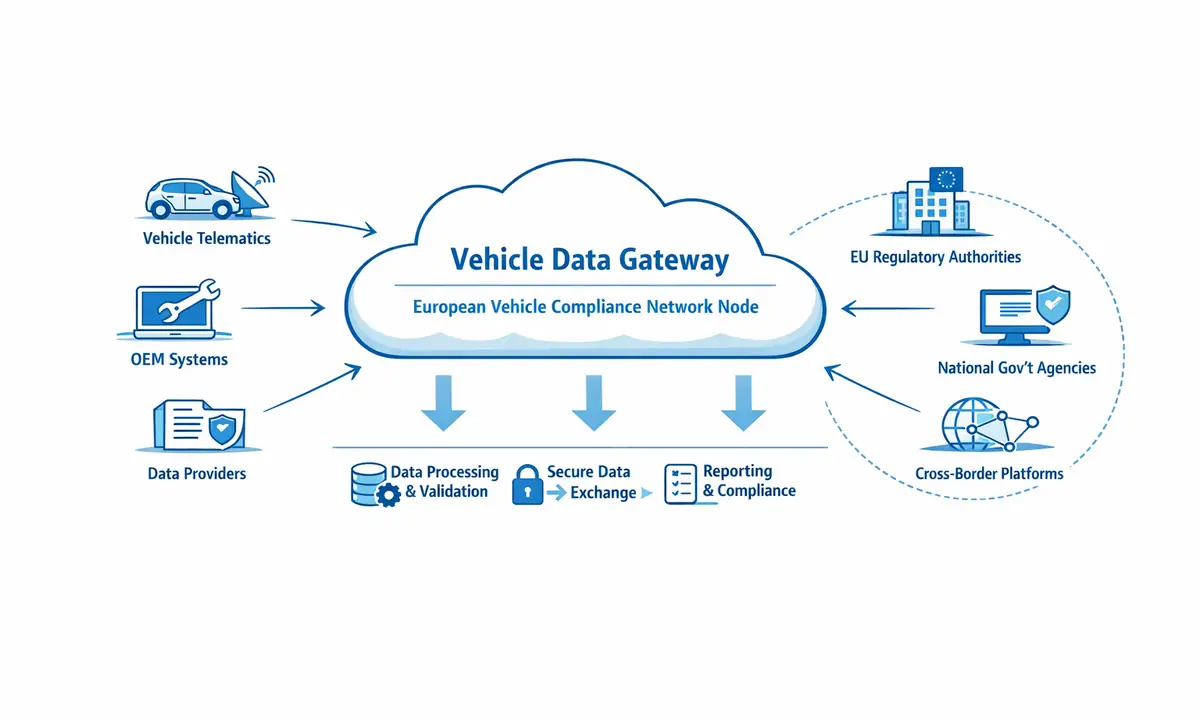
For an EU programme, establish the chosen access arrangement, specification and receiving response. The EUCARIS implementation page provides the exchange context. For a UK programme, check the VCA's category and approval-scheme scope and use its UK-specific output requirements.
The same trailer source database can support both programmes, but the release evidence should identify each output separately. Confirm that an accepted response belongs to the exact file, manufacturer account and destination being reported to the customer.
A practical go-live acceptance exercise
- Select one representative approval family and document its category and stage.
- Trace identity, masses, dimensions, axles and coupling data to their approved or production sources.
- Resolve conditional fields with the relevant specification and record the rationale.
- Generate, validate and sign the final output through the agreed workflow.
- Submit through the authorised test route and reconcile the returned outcome.
- Repeat with an exception and demonstrate the correction trail.
The eCoC and IVI knowledge hub connects these preparation steps to the wider system. For an implementation review, compare eCoC software with the manufacturer workflow requirements of your trailer programme.
Frequently asked questions
Do all O1–O4 trailers follow the same eCoC process?
They belong to category O, but the applicable data and route depend on category, approval scheme, build stage and jurisdiction. Confirm these before selecting a template or deciding whether an exemption applies.
Can a generic vehicle template be reused for trailers?
Only after category-specific mapping and conditional rules have been checked. Do not assume a passenger-car or powered-vehicle template expresses the information required for a trailer programme.
Does a successful XML check prove the trailer conforms?
No. The released values must also match the actual vehicle and approved configuration. Technical validation and receiving-system feedback are separate from the manufacturer's conformity responsibilities.
For low-volume programmes, check small-series scope and submission options before assuming that category O or production volume provides an exemption.
Official and technical references
These sources support the regulatory and technical statements in this guide. Always check the current consolidated text and the instructions of the authority responsible for your submission route.