IVI vs eCoC: What Is the Difference
IVI and eCoC are closely related concepts in European vehicle compliance, but they do not describe the same thing. IVI focuses on structured vehicle information, while eCoC focuses on vehicle conformity information used in approval and registration workflows.
What IVI represents
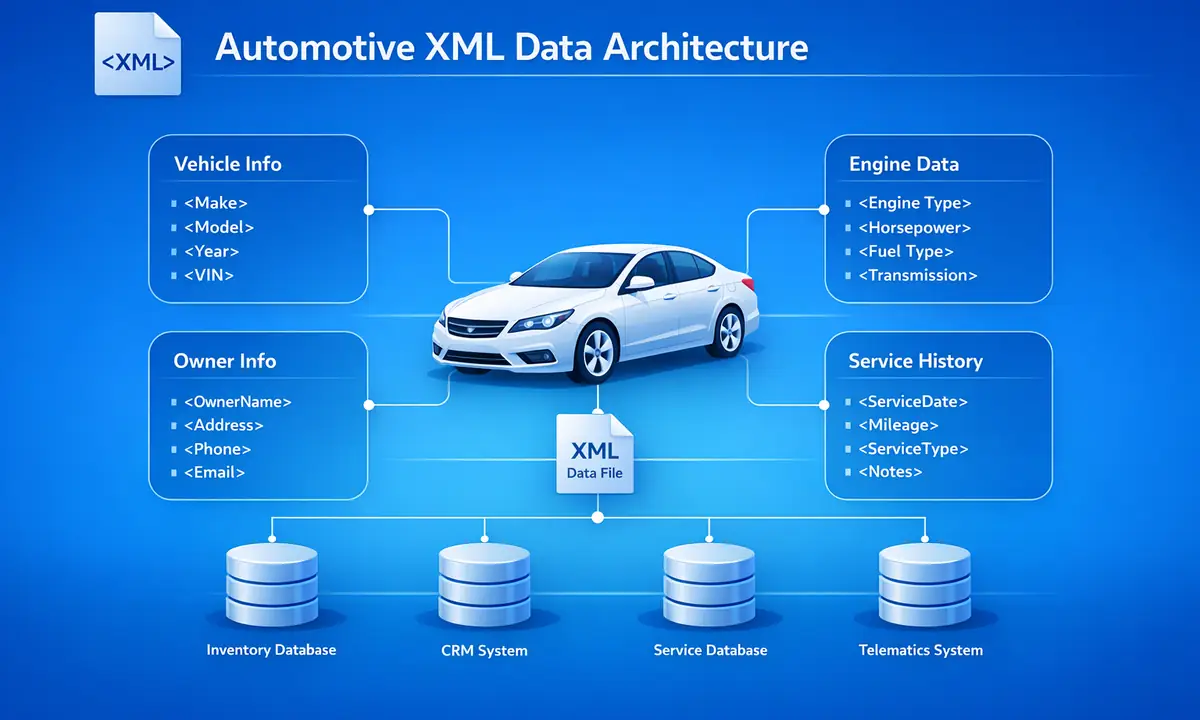
Initial Vehicle Information represents structured vehicle data in a format that systems can exchange and interpret consistently. It is about the organized representation of vehicle characteristics inside digital compliance processes.
What eCoC represents
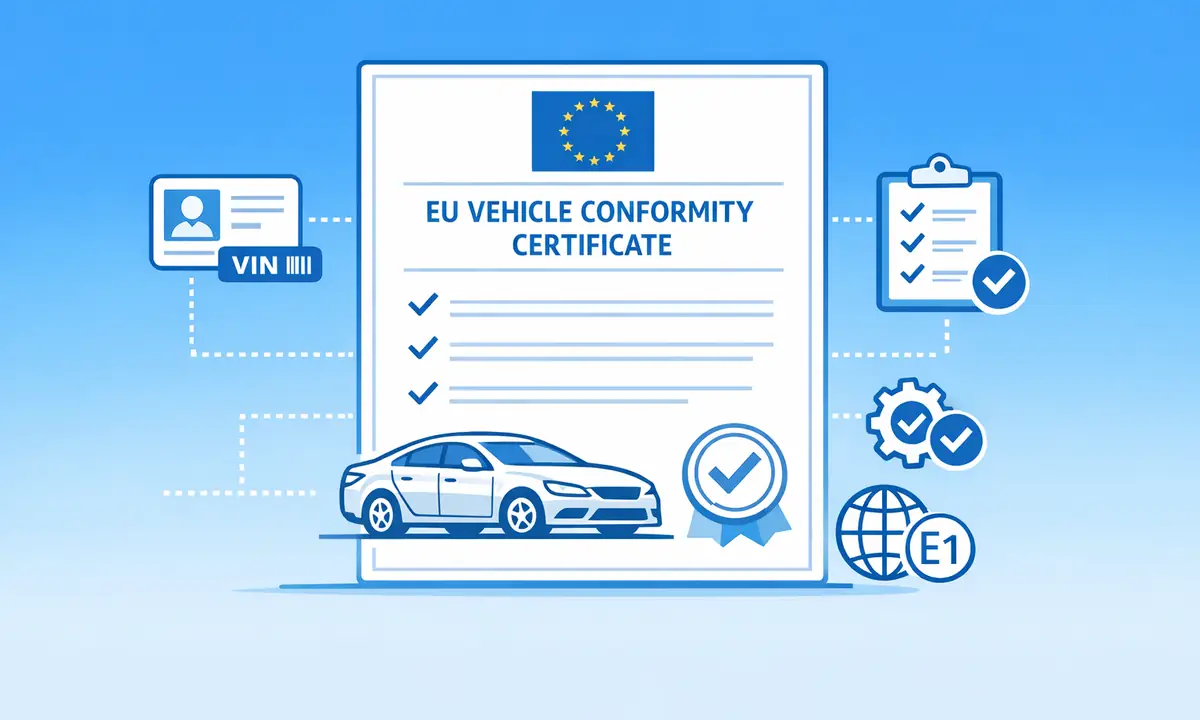
The electronic Certificate of Conformity represents the conformity confirmation of a produced vehicle within the approval framework. It is closely tied to the approved specifications of a vehicle type and the downstream need to confirm that a vehicle corresponds to those specifications.
Why the difference matters
Teams often use the terms as if they were interchangeable, but that creates confusion. IVI is more about the structured vehicle information layer, while eCoC is about the conformity confirmation layer used in approval and registration-related processes.
Understanding the difference helps manufacturers and compliance teams map the right data, infrastructure, and workflow responsibilities to the right system components.
How IVI and eCoC work together
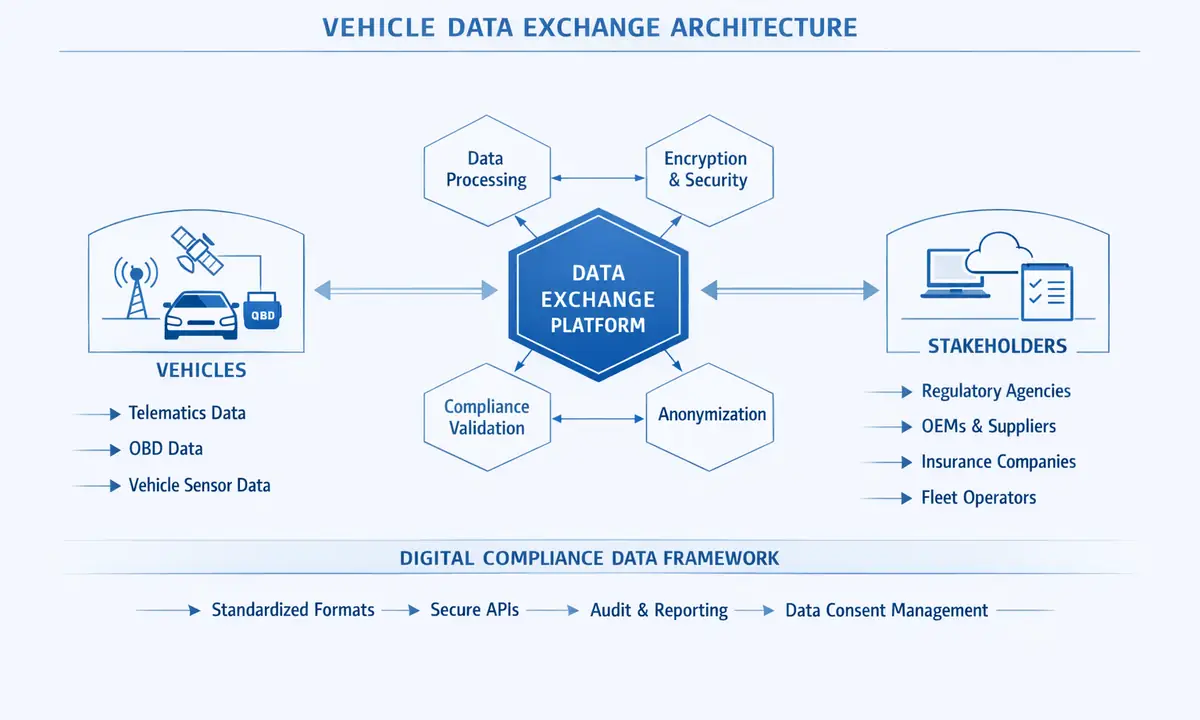
In practice, IVI and eCoC often support the same digital ecosystem. Structured vehicle information helps systems interpret data consistently, while conformity workflows use approved information to support registration and verification activities.
Frequently Asked Questions
What is the difference between IVI and eCoC?
IVI is the structured vehicle information layer, while eCoC is the digital conformity confirmation used in approval and registration workflows.
Are IVI and eCoC used together?
Yes. They support related parts of the same digital compliance ecosystem, but they represent different functions inside that ecosystem.
Compare the purpose before comparing fields
IVI describes structured vehicle information used within the digital exchange environment. eCoC expresses conformity information for an individual vehicle produced under an approved type. Their data can overlap because both refer to the same vehicle and approval context, but the messages have different purposes and should not be treated as interchangeable copies.
For example, a characteristic may be required in both flows while its position, code, condition, or validation relationship differs. The correct implementation starts from the semantic definition in each specification and maps both back to a governed source. Copying the value from one generated output into the other can carry formatting assumptions or an earlier error into a second process.
Where IVI and eCoC meet in practice
The manufacturer needs consistent identity and approval context across both records. Vehicle identifiers, type information, technical values, and category-dependent conditions should resolve to the same controlled basis. Consistency does not mean the XML structures will look alike; it means that two systems do not make contradictory claims about the same vehicle.
Validation and acceptance also remain separate. An IVI message may pass its local rules while an eCoC output fails a conformity or route-specific check, and the reverse can occur. Each result should retain its own specification version, rule set, environment, and external acknowledgement.
Questions for an integration design
- Which source system owns each value shared by IVI and eCoC?
- Which transformations, code lists, and conditional rules differ?
- How are corrections propagated without changing released records silently?
- Which local status represents preparation, and which status comes from an authority?
Example: one vehicle characteristic in two flows
Consider a technical characteristic held in the manufacturer’s approved configuration. An IVI mapping may require that characteristic in a coded vehicle-information structure. The eCoC process may use the same source when preparing conformity information for a produced vehicle. The source meaning should remain stable, but the target element, condition, or code can differ. The mapping for each output therefore needs its own validation.
If the two results disagree, teams should not choose the value from whichever file passed first. They should return to the approved source, confirm the vehicle configuration and units, review both mappings, and regenerate the affected outputs. This preserves one governed interpretation instead of allowing two generated files to become competing sources.
Which record should a team inspect?
Use the IVI record when investigating how structured vehicle information was prepared and exchanged through the relevant IVI route. Use the eCoC record when investigating conformity information and release for the individual vehicle. Use the approval and production records when the disagreement concerns the underlying vehicle definition. The generated message is evidence of an output, not automatically the master source for the value it contains.
For both flows, retain the source version, mapping, target specification, validation result, release approval, and external response. This makes it possible to prove that the records were consistent when released and to identify which outputs require review after a correction.
Use the name of the actual process
Teams should avoid using IVI, eCoC, certificate, submission, and registration as interchangeable labels in requirements or support tickets. Naming the actual message, version, vehicle, environment, and failed step makes ownership clearer and prevents a correction intended for one flow from being applied to another.
Official and technical references
These sources support the regulatory and technical statements in this guide. Always check the current consolidated text and the instructions of the authority responsible for your submission route.