
How eCoC, IVI, and EUCARIS Work Together
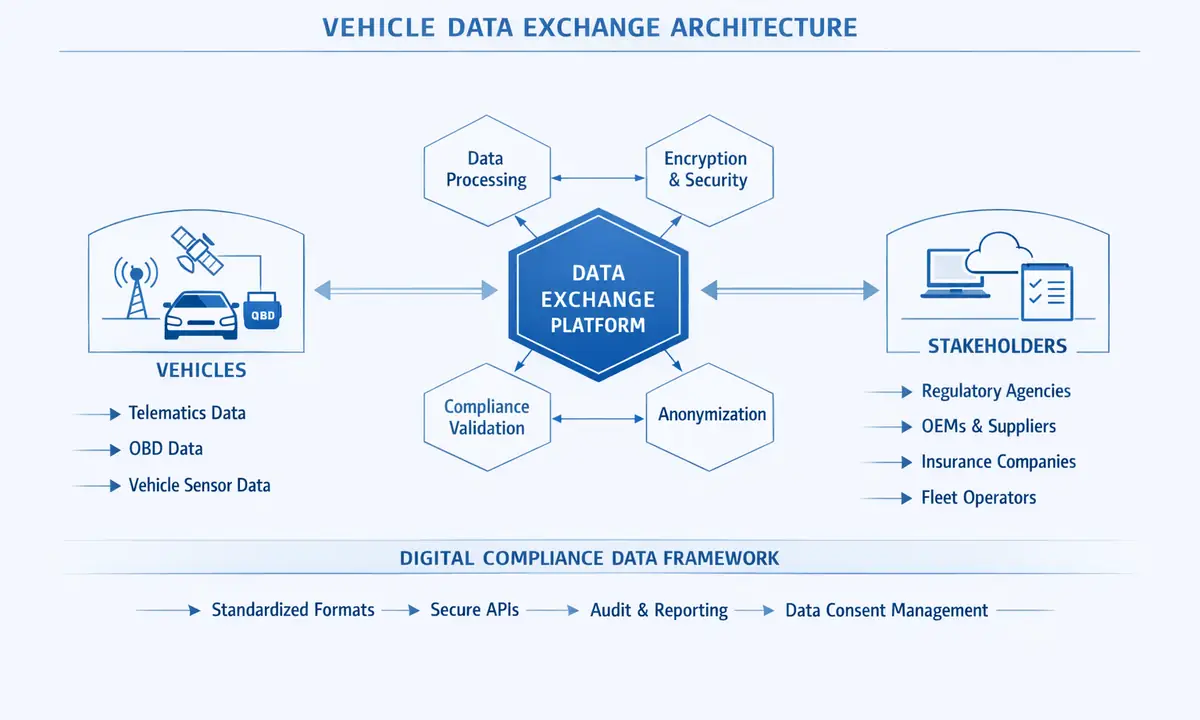
eCoC, IVI, and EUCARIS are different parts of the same digital vehicle compliance ecosystem. eCoC represents conformity information, IVI structures vehicle data, and EUCARIS supports cross-border authority exchange.
The role of eCoC
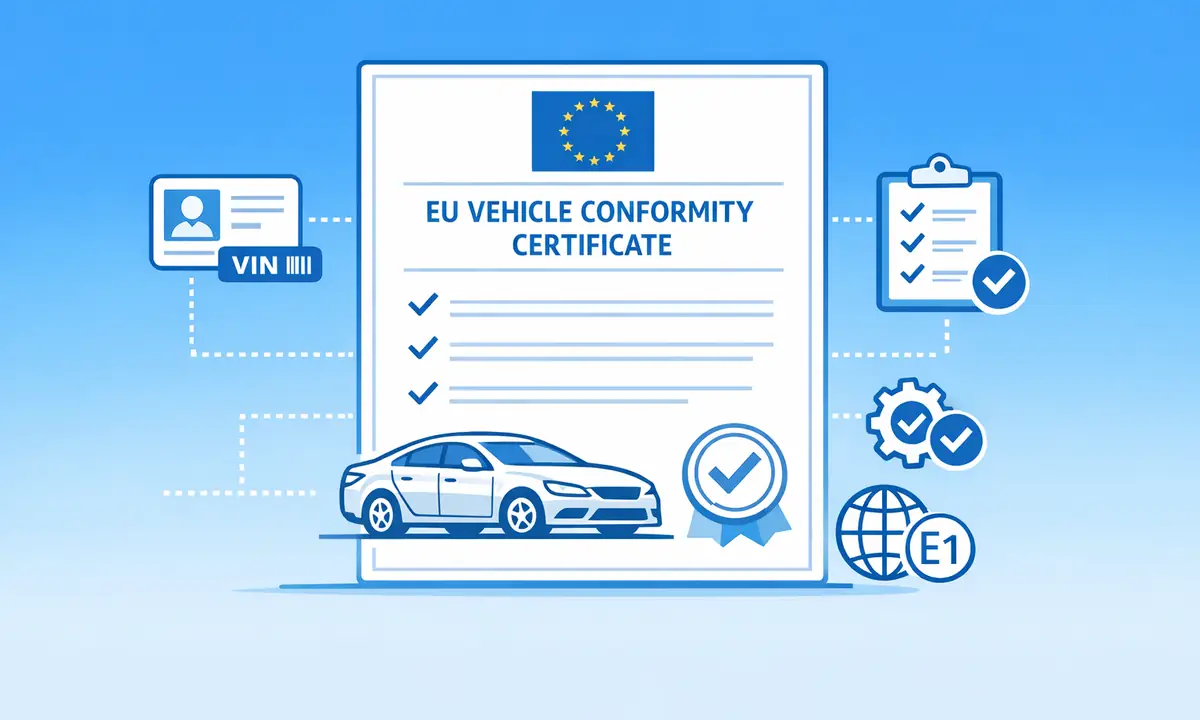
eCoC is the conformity confirmation layer. It expresses how a vehicle relates to the approved basis and how that conformity information can support downstream workflows such as registration.
The role of IVI
IVI is the structured vehicle information layer. It helps systems work with vehicle characteristics in a more consistent and machine-readable way.
The role of EUCARIS
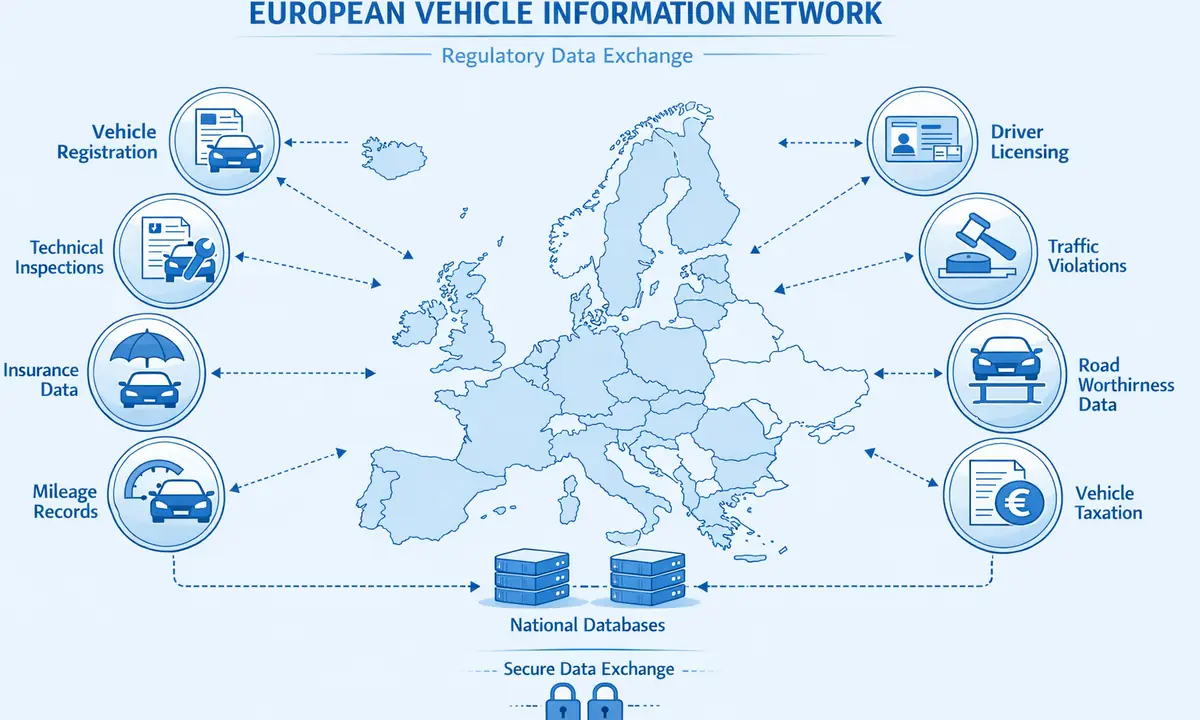
EUCARIS is part of the exchange infrastructure used by authorities. It helps support cross-border communication of vehicle-related information without replacing national systems.
Why the combination matters
Modern vehicle compliance depends on more than one concept. The data model, the conformity logic, and the exchange layer all need to align if digital workflows are going to remain reliable.
Frequently Asked Questions
Do eCoC, IVI, and EUCARIS mean the same thing?
No. They describe different layers of the vehicle compliance ecosystem: conformity information, structured vehicle data, and cross-border exchange infrastructure.
The relationship is a chain of responsibilities
The manufacturer governs the vehicle and approval information used to prepare structured conformity data. IVI provides a defined vehicle-information structure for the relevant exchange flow. eCoC represents conformity information associated with an individual vehicle. EUCARIS supports authorised exchange services between participating national authorities. These layers connect, but none replaces the legal or operational responsibility of the others.
A useful architecture therefore avoids a single status called “sent to Europe.” It records which message or certificate was prepared, which specification and route were used, who authorised release, what acknowledgement was received, and whether a later authority or registration process produced another result.
How data remains consistent across the chain
Shared vehicle identifiers and approval context should resolve to controlled sources. Each output can then apply its own hierarchy, code list, conditional fields, and validation rules without creating a second independent version of the vehicle. When a shared value changes, impact analysis should show which IVI and eCoC records need review.
Consistency also requires semantic checks. Two messages can be individually valid while describing the same characteristic differently. Comparing governed meanings before generation is safer than comparing the final XML text, because equivalent concepts can have different representations and identical-looking values can carry different conditions.
Operational boundaries to keep visible
- Local validation does not equal National Access Point or authority acceptance.
- Manufacturer delivery is not the same event as authority-to-authority EUCARIS exchange.
- EUCARIS connects authorised national systems; it is not one central public vehicle database.
- A corrected source value should trigger controlled regeneration rather than manual XML editing.
- Credentials, endpoints, versions, acknowledgements, and exceptions need separate audit records.
Keeping these boundaries explicit gives compliance teams an accurate view of readiness and outcome. It also prevents a technical success in one layer from being reported as a regulatory decision made in another.
Example sequence from manufacturer data to authority use
A manufacturer first identifies the approved configuration and the individual vehicle. It prepares the required structured information, validates the applicable IVI or conformity output, and releases it through the authorised route. The receiving national infrastructure processes that delivery according to its rules. Later authority-to-authority services may use information from national registers for a permitted verification or registration purpose.
This is an illustrative sequence, not proof that every country uses one identical technical path. The responsible authority defines the endpoint, credentials, supported version, acknowledgements, and correction process. EUCARIS-supported exchange between authorities may occur later and under a different legal purpose from the manufacturer’s original delivery.
Diagnosing a break in the chain
Start by identifying the last confirmed event. If local validation failed, inspect source data, mappings, and rules. If delivery failed, inspect credentials, endpoint, message version, transport response, and idempotency. If an authority cannot match the vehicle later, inspect identifiers, national source records, and the service purpose rather than assuming the original XML was never sent.
Keep payload content and credentials protected during diagnosis. Operational logs should record correlation identifiers, versions, status, and sanitised error details—not full vehicle messages, signing material, or access secrets. The evidence must be useful without creating a second uncontrolled copy of regulated data.
What a complete audit trail should connect
- The approved and production source records.
- The IVI or eCoC mapping and specification version.
- Local validation and authorised release.
- Delivery attempt, acknowledgement, and safe retry history.
- Authority-side outcome where it is available to the manufacturer.
- Any correction, replacement, or later impact assessment.
One final distinction
eCoC and IVI describe information prepared around the vehicle and its conformity context; EUCARIS describes an exchange environment used by authorised authorities. Their relationship is best understood through data lineage and events, not by presenting them as three competing file formats.
This distinction keeps system boundaries, responsibilities, and authority outcomes clear.
Official and technical references
These sources support the regulatory and technical statements in this guide. Always check the current consolidated text and the instructions of the authority responsible for your submission route.