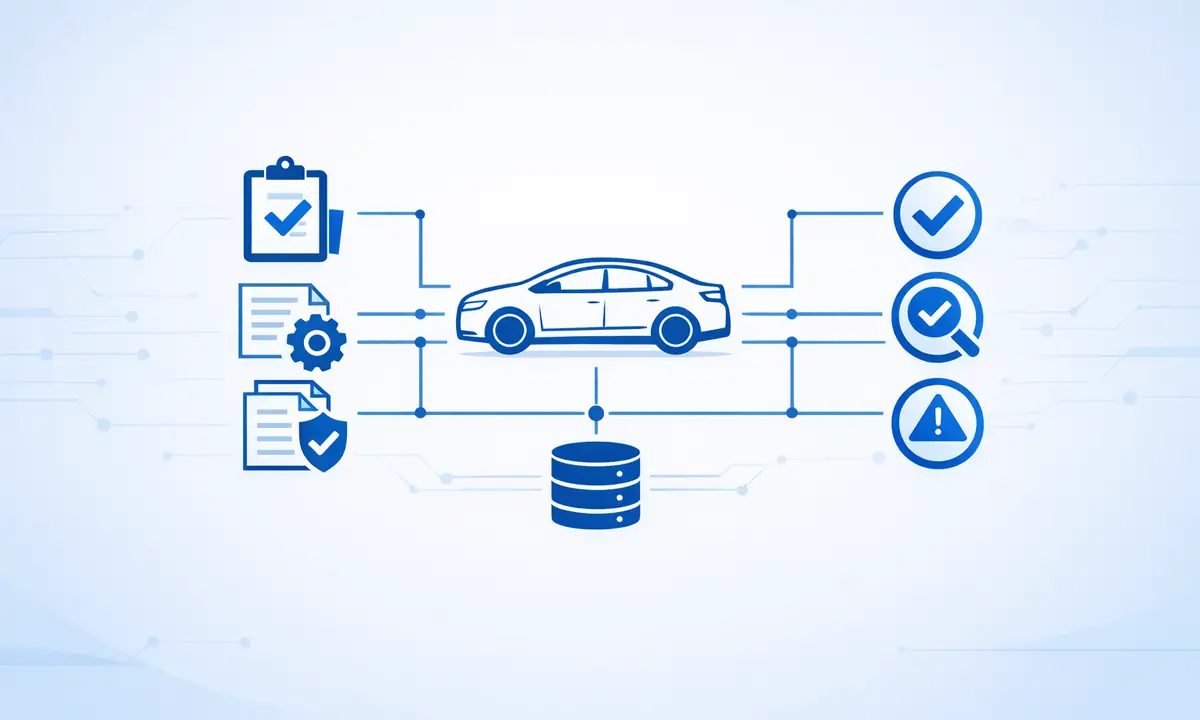
Why Vehicle Type Approval Data Must Remain Accurate
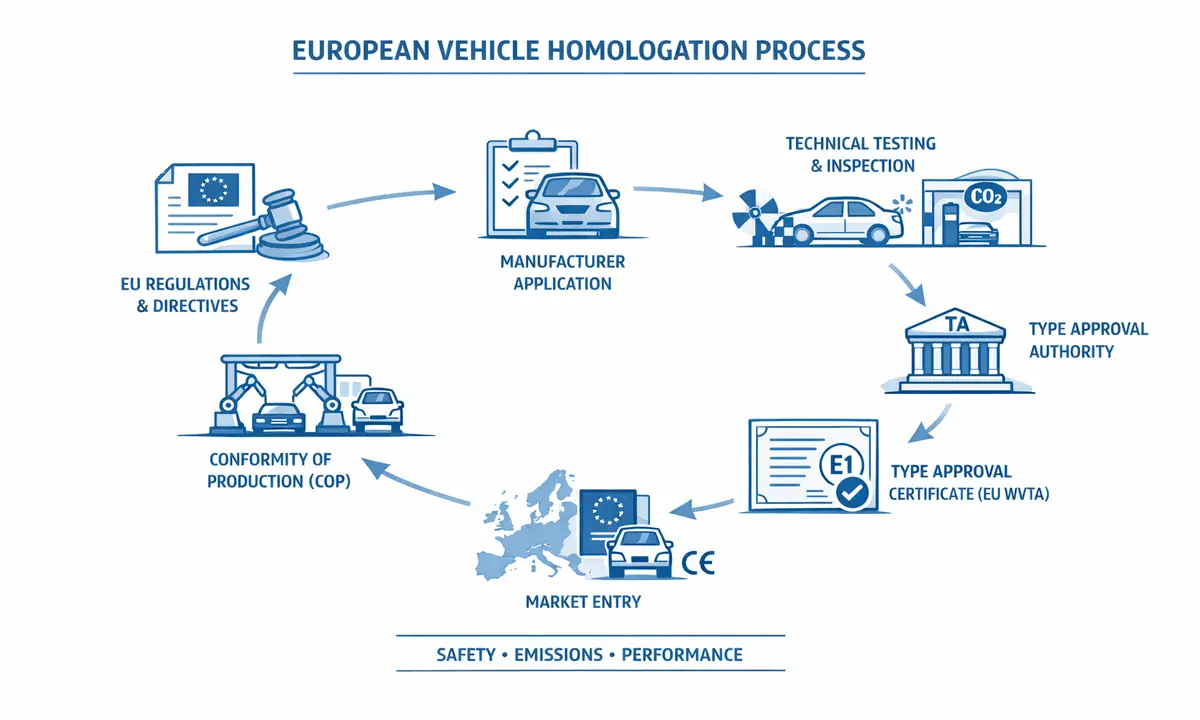
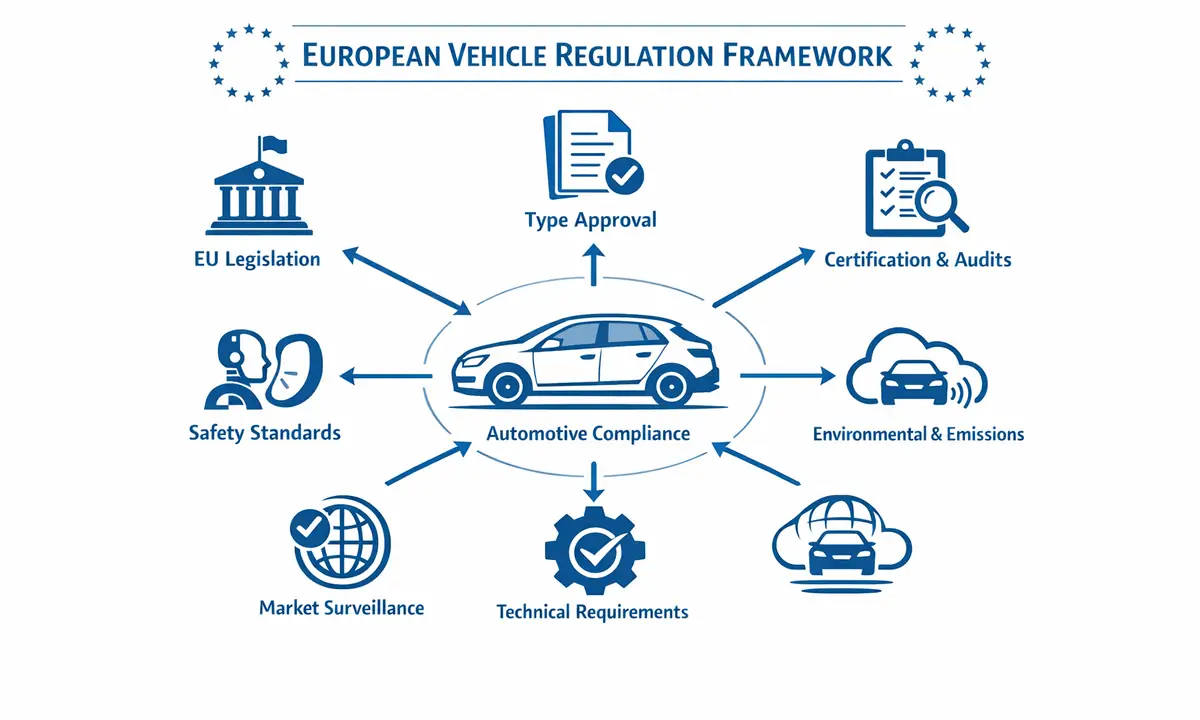
Vehicle type approval data represents the technical and regulatory characteristics of an approved vehicle design. This information confirms that a vehicle type meets the requirements defined by the European vehicle approval framework.
Because this data is used throughout the lifecycle of a vehicle, maintaining its accuracy is essential for regulatory compliance.
The Role of Type Approval Information
Type approval information describes the approved characteristics of a vehicle type. This information is evaluated during the approval process and forms the basis for verifying that production vehicles correspond to the approved design.
Authorities rely on this data to confirm that vehicles placed on the market meet regulatory requirements.
Consistency Between Approval and Production
Once a vehicle type receives approval, the vehicles produced under that type must correspond to the approved specifications. This means that the technical data describing the vehicle must remain consistent with the original approval documentation.
Maintaining this consistency is an important aspect of regulatory compliance.
Impact of Inaccurate Approval Data
If vehicle approval information becomes inconsistent or inaccurate, it can create complications during regulatory verification processes. Authorities must be able to rely on the approval data to confirm that a vehicle corresponds to its approved type.
Accurate regulatory information therefore plays a critical role in ensuring reliable compliance processes.
Structured Representation of Approval Information
Modern regulatory systems increasingly represent approval information using structured data formats. These formats allow approval data to be processed automatically by compliance and registration systems.
Maintaining the accuracy of these structured datasets requires careful management of technical vehicle information.
Managing Approval Data Across Systems
Vehicle approval information may be used by several regulatory systems during the lifecycle of a vehicle. These systems may include approval authorities, regulatory oversight organizations, and vehicle registration systems.
Ensuring that these systems operate with consistent approval information is an important challenge in modern regulatory environments.
Importance of Reliable Data Governance
Organizations responsible for managing approval information often rely on controlled processes to maintain data accuracy. These processes help ensure that technical information remains aligned with the approved vehicle specifications.
Maintaining reliable approval datasets helps support regulatory verification and vehicle registration procedures.
What breaks when approval data drifts
Approval data is not isolated reference material. It is reused by conformity records, structured certificate workflows, registration checks, and authority-side verification. When the approved basis is described inconsistently, downstream teams have to spend more time proving what should already be clear from the approved vehicle definition.
That creates operational cost in addition to regulatory risk. Small mismatches in approval references, variant descriptions, or technical characteristics can ripple into several systems at once because those systems all assume the approval basis is stable.
Why accurate approval data affects eCoC and registration
Electronic conformity workflows depend on a reliable relationship between the produced vehicle and the approved type. Registration authorities and downstream systems need to interpret that relationship without repeatedly resolving the same ambiguity. Accurate type approval data makes that possible.
In other words, approval data accuracy is not only a documentation issue. It is one of the structural requirements behind dependable eCoC, vehicle registration, and regulatory verification workflows.
Frequently Asked Questions
What is vehicle type approval data?
Type approval data describes the technical and regulatory characteristics of a vehicle that has received approval under the European vehicle approval framework.
Why must approval data remain accurate?
Authorities rely on this information to confirm that vehicles correspond to the approved specifications.
Who manages vehicle approval information?
Manufacturers, approval authorities, and regulatory systems may all interact with vehicle approval data during compliance processes.
How approval-data drift starts
Drift often begins with a local copy. A team exports an approval table, adds production columns, corrects a value in the spreadsheet, and later treats that working file as the approval source. Similar problems occur when a variant or version is renamed for internal use, units are converted without preserving the original value, or a regulatory reference is updated in one system but not in the systems that generate conformity information.
The control is not to prohibit working copies; it is to make their authority clear. The approved source, internal representation, transformation rules, and downstream use should be traceable. A change that affects the approved definition needs the appropriate approval process. A correction that affects only an individual production record should remain at that level.
Checks before approval data is reused
Confirm the approval number and status, vehicle category, type, variant and version, applicable regulatory references, and the technical characteristics needed by the downstream workflow. Check conditional values in context rather than validating fields independently. The same numeric value can be plausible and still be wrong for the selected configuration.
Released certificates and structured messages should retain a reference to the approval-data version used. If a discrepancy is discovered later, teams can determine whether it affects one vehicle, one configuration, or every output generated from the same mapping. This is the practical difference between correcting data and merely overwriting it.
Official and technical references
These sources support the regulatory and technical statements in this guide. Always check the current consolidated text and the instructions of the authority responsible for your submission route.