How eCoC XML Works
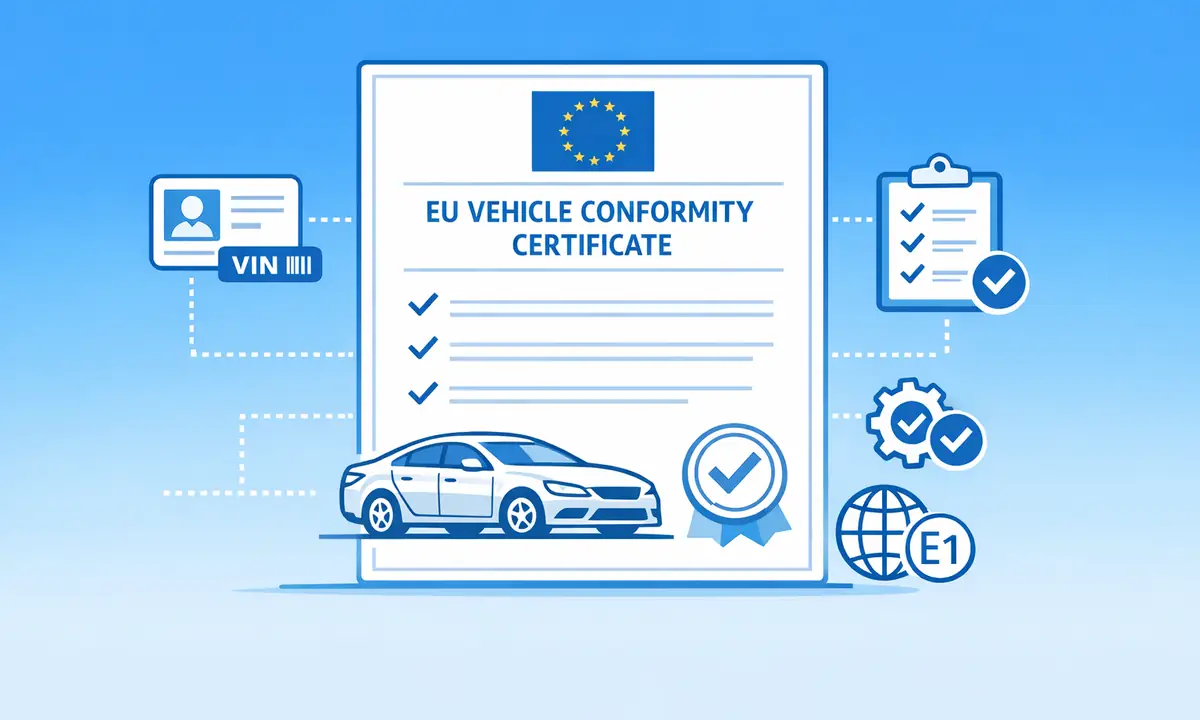
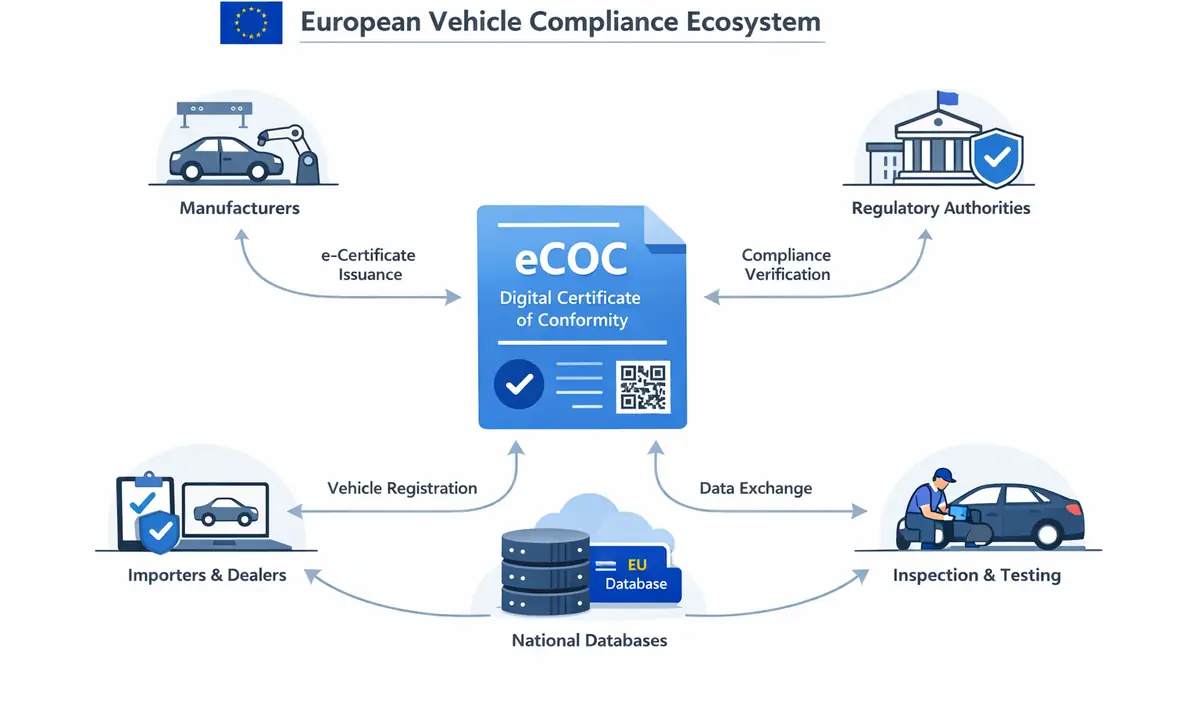
eCoC XML is the XML structure used to represent electronic Certificate of Conformity data in machine-readable form. Instead of relying on manual document handling alone, systems can work with a structured record of approved vehicle conformity information.
For teams searching how eCoC XML works, the key idea is that XML is not just a technical output format. It is the structure that allows vehicle conformity data to be validated, exchanged, and processed more consistently across digital compliance workflows.
What this page covers
- What an eCoC XML file represents
- Why XML matters in digital conformity workflows
- How XML supports validation and system-to-system exchange
The electronic Certificate of Conformity relies on structured digital data formats to represent vehicle conformity information. One of the most common ways to structure this information is through XML, which allows complex vehicle data to be organized in a standardized and machine-readable format.
Introduction to eCoC XML
In modern vehicle compliance systems, conformity information is no longer exchanged only through documents. Instead, structured digital formats are used to represent regulatory data in a way that can be processed automatically by information systems.
XML, or Extensible Markup Language, is widely used for this purpose because it provides a flexible structure for representing hierarchical data.
Why XML is Used for Vehicle Data
Vehicle conformity information contains many interconnected technical data elements. These elements include identification information, regulatory references, technical characteristics, and manufacturer details.
XML is particularly well suited for this type of information because it allows complex datasets to be organized clearly and consistently.
Structure of eCoC XML Data
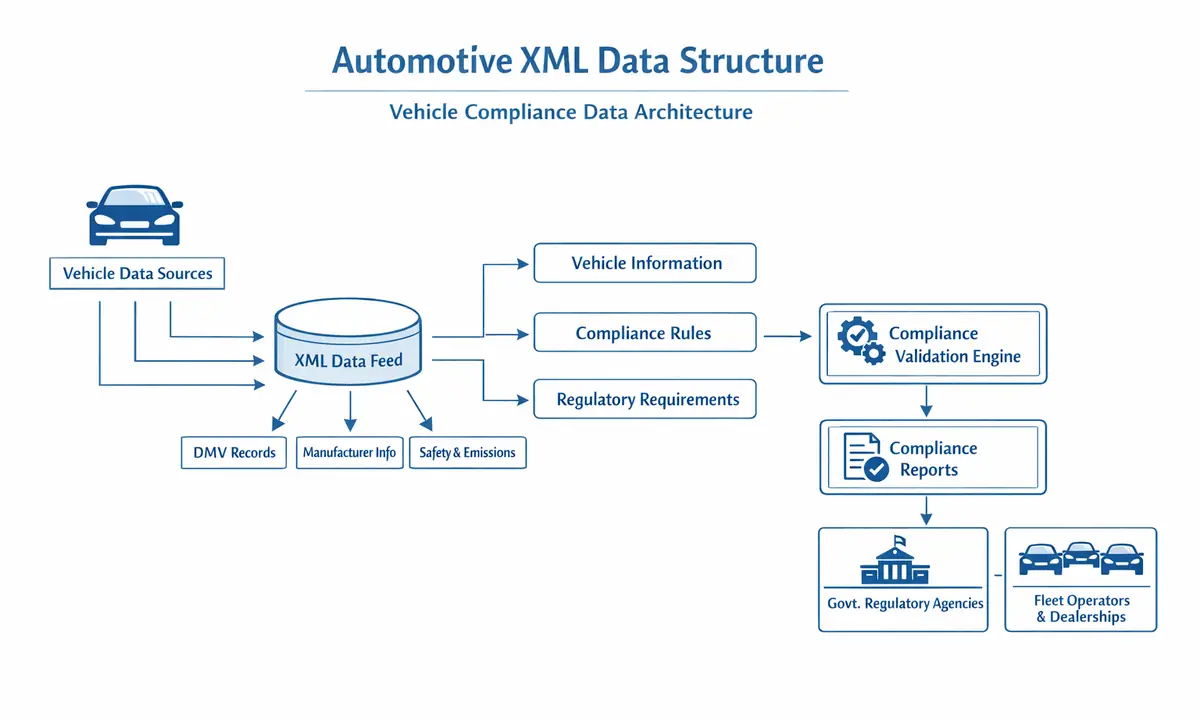
An XML document representing vehicle conformity data typically follows a hierarchical structure. This structure organizes information into logical groups that describe different aspects of a vehicle.
- Vehicle identification data
- Manufacturer information
- Vehicle category and classification
- Technical specifications
- Regulatory approval references
Each of these groups can contain multiple data elements describing specific characteristics of the vehicle.
How Structured Vehicle Data is Organized
XML structures represent information through nested elements. Each element describes a particular piece of data and can contain additional sub-elements.
This hierarchical approach allows vehicle data to be represented in a clear and organized format, making it easier for regulatory systems to interpret and process the information.
Benefits of Structured Data Formats
Using structured formats such as XML provides several advantages for regulatory systems and data exchange processes.
- Standardized data representation
- Improved interoperability between systems
- More efficient data processing
- Reduced risk of misinterpreting regulatory information
These advantages make structured formats essential for modern digital compliance systems.
XML and Digital Vehicle Compliance
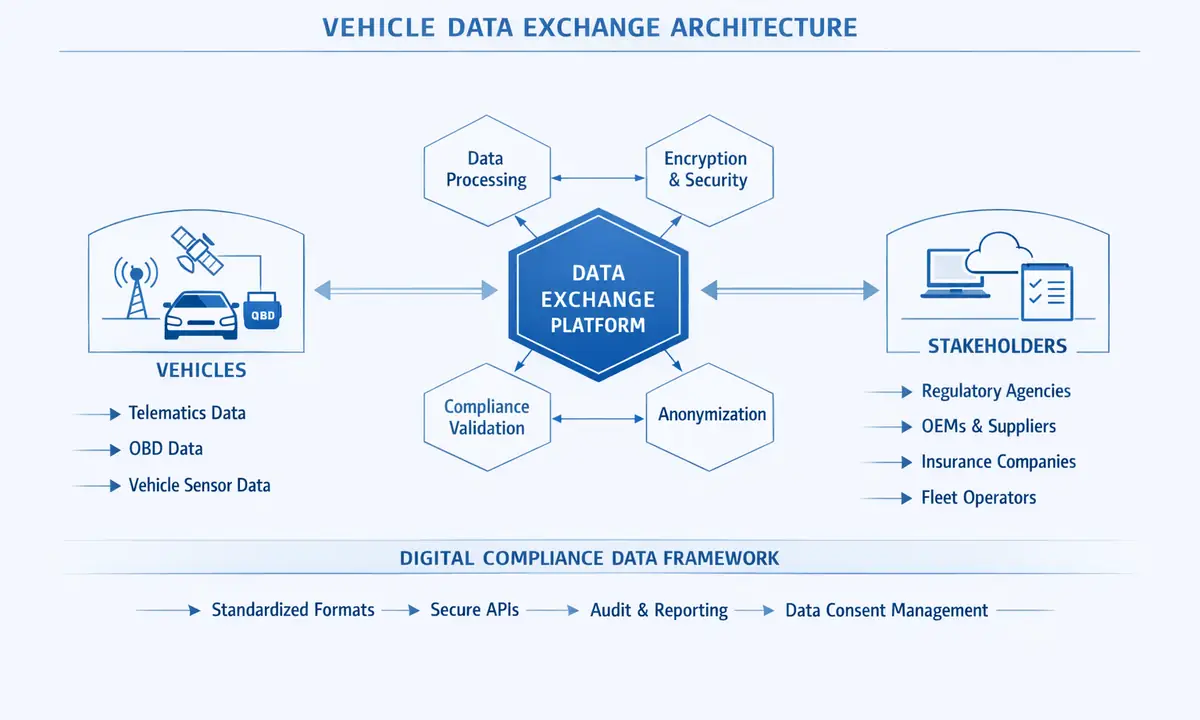
As vehicle regulation becomes increasingly data-driven, structured digital formats play a critical role in ensuring that vehicle information can be exchanged reliably between systems.
XML-based structures allow regulatory authorities and manufacturers to work with consistent datasets that accurately represent vehicle conformity information.
eCoC XML vs document-only conformity handling
Document-only workflows depend heavily on human interpretation and manual handling. eCoC XML creates a structured representation that systems can validate and process with more consistency.
This is one of the reasons digital vehicle compliance workflows are becoming more dependent on structured data rather than static documents alone.
Frequently Asked Questions
What is XML?
XML stands for Extensible Markup Language and is used to represent structured data in a hierarchical format.
Why is XML used for vehicle data?
XML provides a flexible and standardized way to represent complex technical information such as vehicle conformity data.
Is XML a document format?
XML is a data structure format rather than a document format. It allows systems to exchange structured information.
What kind of information can be stored in XML?
XML can represent many types of structured data, including technical specifications, identification information, and regulatory references.
From approved data to a controlled XML output
The safest generation process starts with governed vehicle and approval data. A mapping layer assigns each source value to the correct XML element, applies the required format or code, and preserves conditional relationships. The generator then creates the hierarchy required by the applicable schema. This is different from copying visible text out of a certificate or spreadsheet.
Validation should run in layers. Schema validation checks the technical grammar. Business rules check relationships that the schema cannot express completely. Approval-context checks compare the output with the applicable type, variant, version, category, and production record. A release check confirms that unresolved exceptions have an owner and that the authorised output is the one being signed or delivered.
Correct the source, not only the file
If validation fails, the error should be traced to the source value, transformation, or rule interpretation. Directly editing the generated XML may make one file pass while leaving the defect in the next output. Correcting the governed record or mapping, regenerating the XML, and retaining both validation results creates a repeatable and auditable correction.
A controlled generator should also produce a stable audit reference so the exact released XML can be matched to its source and validation result.
Official and technical references
These sources support the regulatory and technical statements in this guide. Always check the current consolidated text and the instructions of the authority responsible for your submission route.