Why eCoC Data Management is Difficult
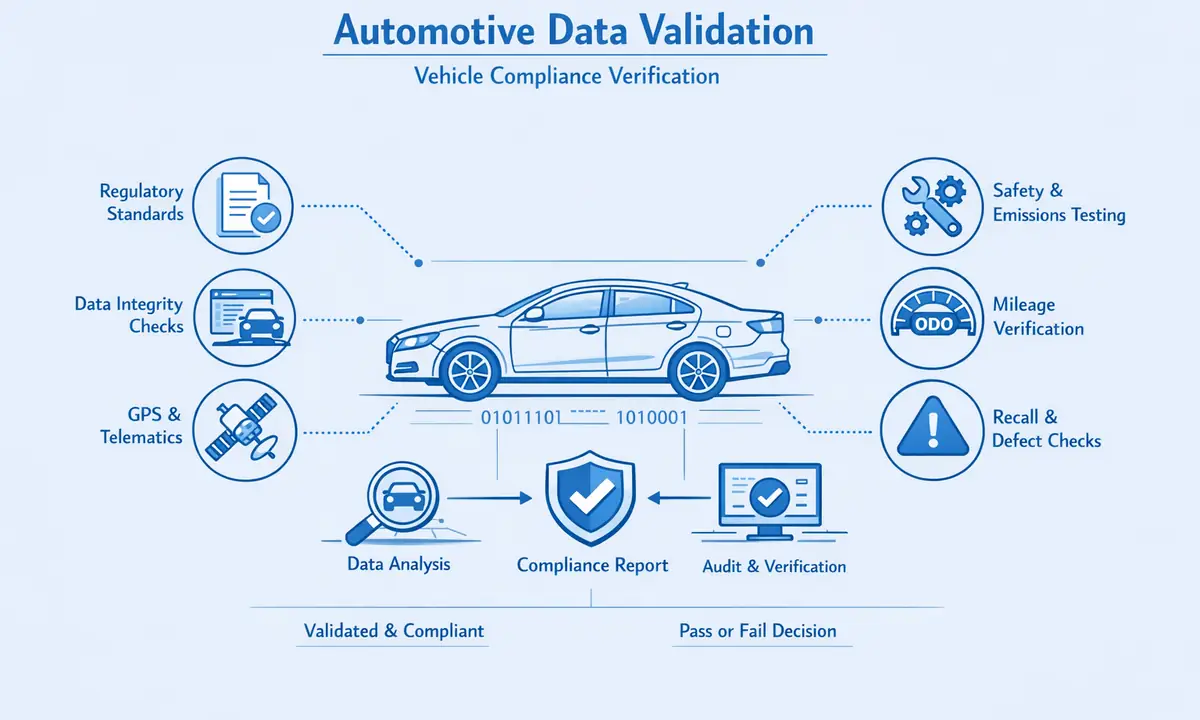
Electronic Certificates of Conformity rely on structured technical vehicle information that must remain consistent with the vehicle type approval documentation. While the concept of digital conformity data may appear straightforward, managing this information in practice can become complex for manufacturers and regulatory stakeholders.
The Nature of Vehicle Conformity Data
Vehicle conformity data describes the approved characteristics of a vehicle type. This information typically includes technical specifications, manufacturer references, and regulatory identifiers that together define the approved configuration of the vehicle.
Because these data elements are interconnected, managing them in a consistent and structured way requires careful coordination.
Large Volumes of Technical Information
Modern vehicles contain extensive technical information covering mechanical systems, environmental characteristics, safety components, and regulatory identifiers. Each of these data elements may be relevant to vehicle conformity documentation.
Ensuring that all relevant data points remain aligned with approval documentation can become a complex administrative task.
Consistency Between Approval and Production
Vehicle conformity information must accurately reflect the characteristics of the approved vehicle type. At the same time, the vehicles produced by manufacturers must remain consistent with that approval.
This means that the data describing each vehicle must correspond to the approved specifications throughout the production process.
Structured Data Requirements
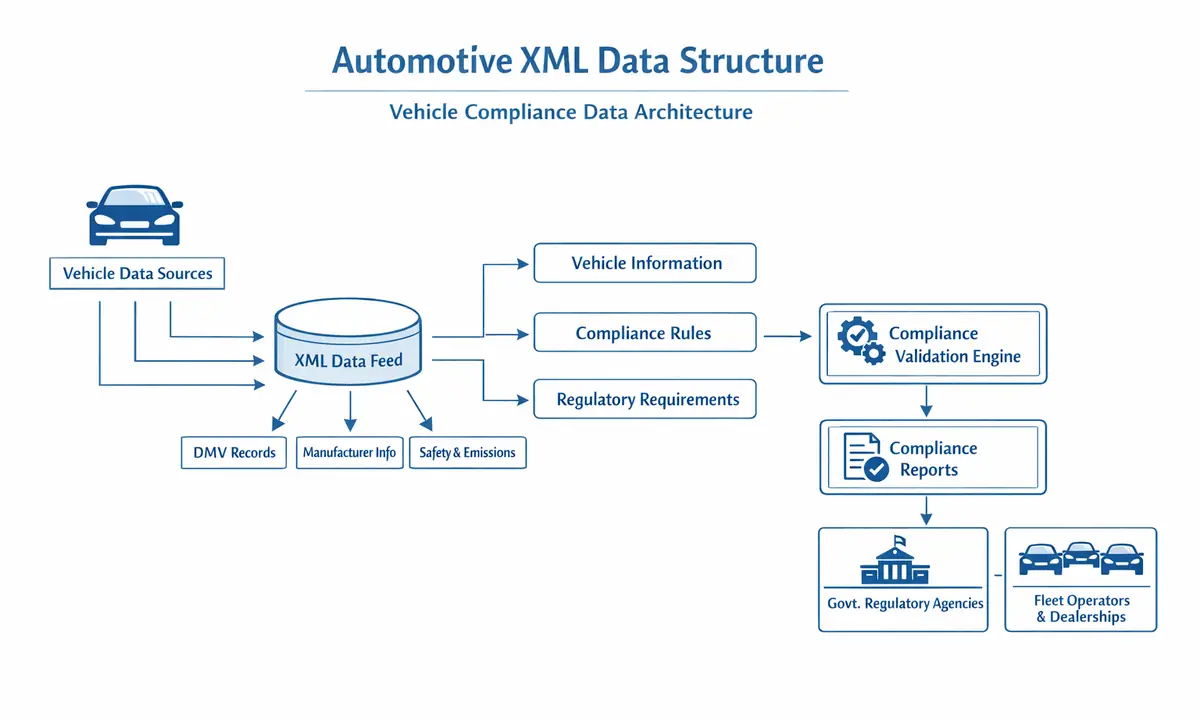
Electronic conformity systems typically require vehicle information to be represented in structured formats. These formats organize vehicle data into clearly defined categories and elements.
Managing structured data requires attention to detail because each element must be placed in the correct context within the overall data structure.
Coordination Between Multiple Stakeholders
Vehicle compliance processes often involve multiple organizations. These may include manufacturers, regulatory authorities, and registration systems operating in different countries.
Each of these stakeholders may rely on the same conformity information for different purposes. As a result, maintaining consistent vehicle data across systems becomes an important challenge.
Regulatory Complexity
Automotive regulations define numerous technical requirements that vehicles must satisfy before they can be placed on the market. These requirements influence the information that must be included in conformity data.
Understanding how these regulatory elements relate to structured vehicle information often requires specialized expertise.
The Importance of Reliable Data Management
Reliable data management helps ensure that vehicle conformity information remains accurate and consistent. When structured vehicle data is maintained correctly, regulatory verification and vehicle registration processes can operate more smoothly.
Because of the complexity involved, organizations responsible for managing conformity data often rely on specialized expertise and dedicated compliance systems.
Frequently Asked Questions
Why is eCoC data complex?
Vehicle conformity information includes many interconnected technical data elements that must remain consistent with regulatory approval specifications.
Does every vehicle require conformity data?
Vehicles produced under a type approval must be able to demonstrate conformity with the approved specifications.
Why do manufacturers use specialized compliance systems?
Managing structured regulatory data across multiple systems can become complex without dedicated tools or expertise.
The difficulty is preserving meaning, not storing more fields
eCoC data comes from approval records, engineering systems, production systems, supplier information, and individual-vehicle events. Two sources may use the same label for different concepts or different labels for the same approved value. A central database does not solve that problem unless every field has a defined owner, source, unit, permitted format, and relationship to the approved type.
The data also changes at different speeds. Approval information may remain stable for a vehicle type while production characteristics, market configuration, or individual identifiers vary for every vehicle. A useful model separates those levels so that a correction to one VIN does not alter the type definition and a type-level change does not silently rewrite certificates that were already released.
Controls that make eCoC data manageable
Start with governed source records and explicit mappings to the target XML or certificate fields. Run validation before generation, after material changes, and again on the exact output selected for release. Exceptions need owners and reasons; otherwise teams learn to ignore warnings without knowing whether the underlying mismatch is acceptable.
Version the approval basis, mapping, schema, business rules, and generated result together. That evidence allows a later reviewer to answer which data produced a certificate and why it passed at the time. It also makes bulk correction possible: when a mapping or source issue is found, affected records can be identified instead of reviewing the entire fleet manually.
Example: correcting a shared mapping
Suppose several certificate records show the wrong unit because one transformation was configured incorrectly. Editing each XML file would hide the common cause. A governed process corrects the mapping, identifies every output created with the affected version, regenerates those records, compares the changed values, and records why replacement was necessary.
This example also shows why data quality cannot be measured only by the number of files that pass. A repeatable error may produce thousands of structurally valid outputs. Useful controls measure source completeness, mapping coverage, unresolved exceptions, rule failures by cause, and the relationship between corrected and previously released records.
Official and technical references
These sources support the regulatory and technical statements in this guide. Always check the current consolidated text and the instructions of the authority responsible for your submission route.